

KUALA LUMPUR, Jan 1 — Three generations in a Perak family can finally officially call themselves Malaysians; they will no longer be stateless and deprived of opportunities for a better life.
This is because the Malaysian government has chosen not to challenge a court ruling which found that all three stateless generations in this family are actually Malaysians.
The family’s lawyer Shugan Raman confirmed that the Malaysian government had not filed any appeal by December 26, which was the last day any appeal could be filed.
“I have been informed that the government will not appeal the Court of Appeal’s decision.
“I am relieved and deeply moved that there will finally be closure for this family.
“For them, this is not just a court victory. It is the end of a lifetime of being treated as if they did not belong,” the lawyer told Malay Mail.
These are the six persons which the Court of Appeal ruled as being entitled to Malaysian citizenship: 47-year old K. Kamaladevi, her daughter T aged 27, her son M aged 24, T’s three children aged 10, eight and three.
What’s next for the family?
Previously, Kamaladevi, her two children, and her three grandchildren had won their citizenship case at the High Court in May 2024 and again at the Court of Appeal on November 26.
Among other things, the High Court declared that all six of them are entitled to be issued birth certificates and identity cards stating their status as “Warganegara” or Citizen.
The High Court had also declared that Kamaladevi and her daughter T are entitled to register their marriages with the National Registration Department (NRD).
Since the Court of Appeal upheld the High Court’s decision, all those High Court orders also remain valid.
Shugan told Malay Mail that the Perak family now has to do three things next at the NRD:
- To get their birth certificates updated to reflect their status as Malaysian citizens;
- To get their Malaysian identity cards;
- And for Kamaladevi and her daughter T to register their marriages to their Malaysian husbands.
Why is marriage registration so important for this family?
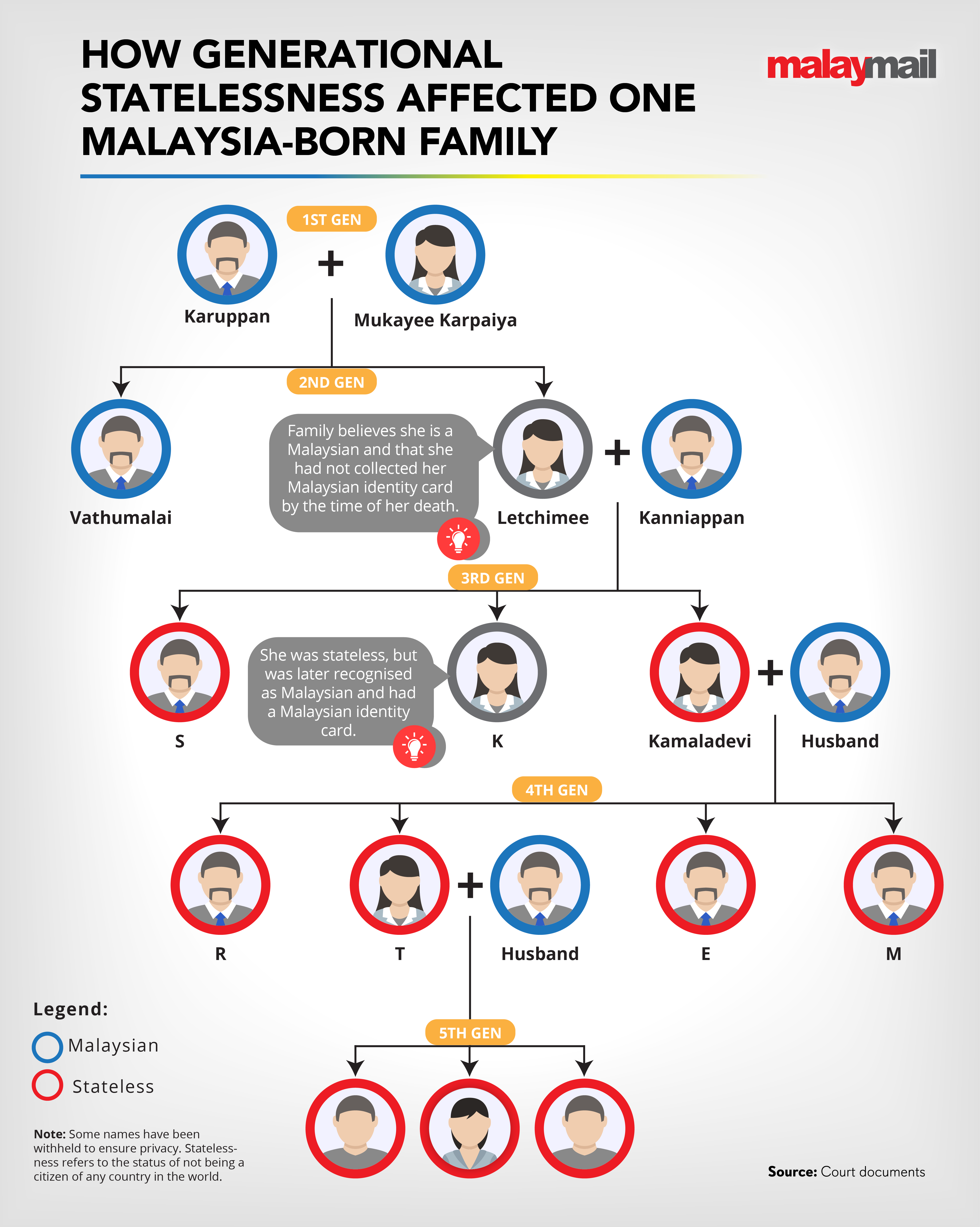
The Perak family had been stateless for decades, despite having spent their whole lives in the country and being able to trace their roots all the way back to Kamaladevi’s Malaysian grandparents.
How did this happen?
Kamaladevi’s mother Letchimee was stateless and could not register her marriage to her Malaysian husband, as she did not have a Malaysian identity card.
This resulted in the next three generations including Kamaladevi becoming stateless too, as children born outside of a registered marriage can only inherit the mother’s stateless status instead of the father’s Malaysian citizenship.
Statelessness was passed down through all the stateless women in the family who could not register their marriages to their Malaysian husbands.
Under Malaysian law, if a Malaysian man and stateless woman are able to register their marriage with the NRD, their children can inherit the father’s Malaysian citizenship status and avoid becoming stateless.

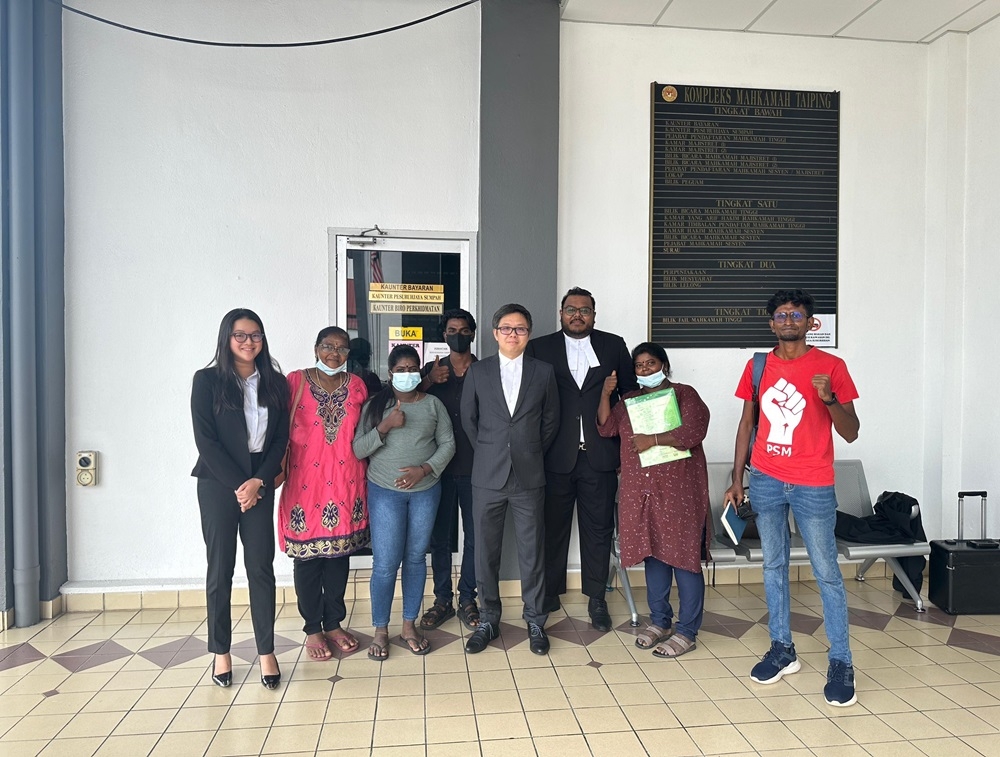
Lawyer Shugan Raman said couples who are in a similar situation as the couples in the Perak family should be allowed to register their marriages even without a MyKad, instead of being forced to spend years in court to register their marriages. — Picture courtesy of Shugan Raman
Wider impact: Other families in Malaysia can prevent their children from becoming stateless too
Previously, lawyer New Sin Yew – who also represented the Perak family – told Malay Mail that the Court of Appeal’s decision is a “landmark” ruling.
New had said that the court’s recognition that stateless persons have the right to marry under Malaysian laws is “extremely important”, as registered marriages would prevent statelessness from being passed down the generations.
With the Court of Appeal decision now standing as precedent, Shugan said it is clear now that not having a Malaysian identity card or MyKad would not prevent marriages from being registered in Malaysia.
“The Court of Appeal has now authoritatively interpreted the Law Reform (Marriage and Divorce) Act 1976 and clarified that the absence of a MyKad is not, in law, a basis to refuse registration of a civil marriage,” he said.
Shugan said the NRD should now apply the law – as decided by the Court of Appeal – consistently by allowing marriage registrations for all similar cases.
“The important thing now is consistent implementation, so families do not have to spend years in court just to register a marriage and protect their children from intergenerational statelessness,” he said.
He said the Court of Appeal’s decision should be reflected consistently in the authorities’ standard operating procedures (SOPs) and decision-making so that couples in similar situations would not be denied registration of marriages just because of a lack of MyKad.
“If the law is clear, the administrative practice should match it,” Shugan added.
Recommended reading:
