FEBRUARY 2 — Malaysia’s persistently low tax collection — hovering at around 13 per cent of GDP — is no longer a narrow technical issue best left to accountants or budget specialists.
It is a political, social, and ultimately civilisational challenge. A state that collects so little cannot indefinitely promise so much. At some point, arithmetic catches up with aspiration.
By regional comparison alone, Malaysia’s position is increasingly untenable.
Thailand, often portrayed domestically as fiscally less disciplined, collects up to 16 per cent of its GDP in taxes — at least three percentage points higher than Malaysia. In fiscal terms, that gap is enormous.
Three percentage points translate into tens of billions of ringgit annually, enough to meaningfully strengthen healthcare systems, shore up pension obligations, improve public education, and invest in long-term productivity without excessive borrowing.
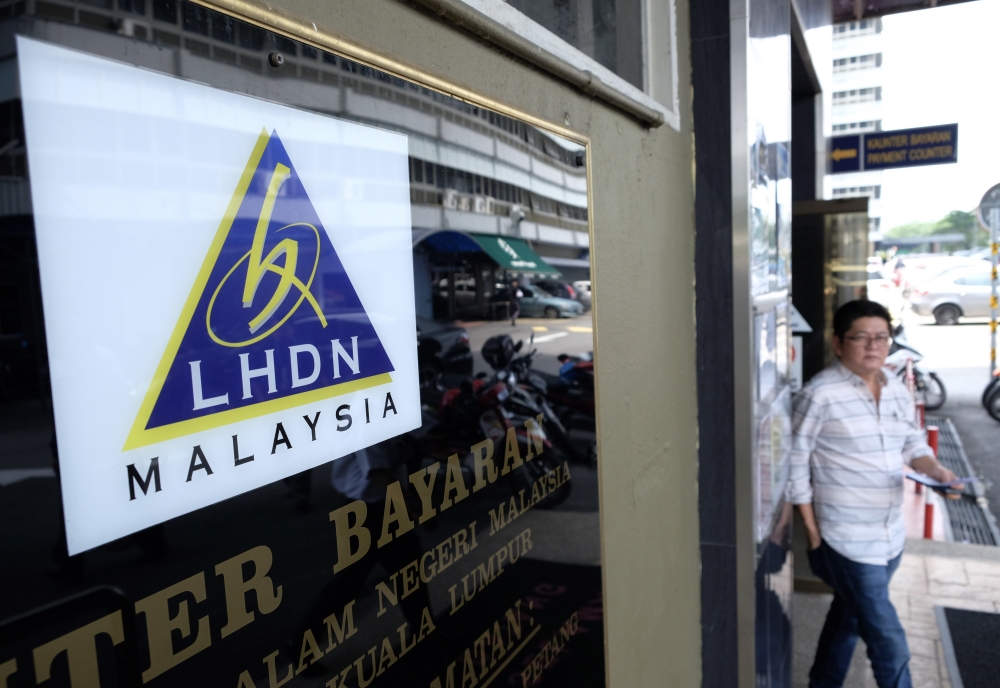
According to the author, the current push by LHDN, including toward the digital economy, is therefore not about targeting influencers or policing lifestyles. It is about normalising responsibility in a rapidly changing economic landscape. — Bernama pic
Against this background, recent moves by Lembaga Hasil Dalam Negeri Malaysia (LHDN) to tighten tax compliance — including among social media influencers and digital content creators — should not be misconstrued as punitive or heavy-handed.
They are, rather, a delayed but necessary response to a structural weakness that Malaysia has long chosen to ignore.
A structural weakness, not a passing problem
By the standards of the Organisation for Economic Co-operation and Development (OECD), where tax-to-GDP ratios typically exceed 25 per cent, Malaysia is a clear outlier.
Yet Malaysians routinely expect public services, infrastructure, and social protection comparable to far wealthier and more fiscally robust societies.
This contradiction cannot hold indefinitely.
Malaysia must sustain:
1.8 million civil servants, forming the backbone of public administration.
A rapidly expanding pool of retirees with full pension entitlements
Long-term obligations to teachers, headmasters, healthcare workers, and security personnel, many of whom serve well beyond three decades.
These are not indulgences. They are the institutional foundations of a functioning state.
Without a broader and deeper tax base, the government faces only unpalatable choices: rising public debt, chronic underinvestment, or future retrenchment of services. None offers a stable path forward.
The subsidy mindset and fiscal illiteracy:
Malaysia’s deeper problem lies not merely in low revenue but in low public understanding of public finance.
Decades of subsidies — fuel, electricity, education, healthcare, tolls, and price controls — have cultivated a political culture in which the state is expected to absorb costs while citizens recoil from taxation.
Any attempt to broaden the tax base, most notably through the Goods and Services Tax (GST), has historically been met with hostility and derision.
Taxation, in the public imagination, became synonymous with exploitation rather than collective responsibility.
This reaction was once understandable. A kleptocratic system forfeits its moral authority to tax.
Citizens cannot be asked to contribute when public funds are routinely looted, contracts inflated, and accountability absent.
In such circumstances, tax resistance becomes a form of protest.
But that justification is no longer sufficient.
Why this moment is different?
A unity government that places anti-corruption enforcement, institutional repair, and fiscal discipline at the centre of governance changes the moral equation.
When corruption is actively prosecuted and leakages are systematically plugged, taxation regains legitimacy. It becomes not extraction, but participation in a shared national project.
This is why the focus on digital income matters.
The rise of influencers, streamers, content creators, and platform-based entrepreneurs has produced a fast-growing, largely informal economy.
Cash payments, sponsored products, free accommodation, paid travel, and affiliate commissions all constitute real income.
Under existing law, they are taxable. What has been missing is clarity and enforcement.
To exempt such income while salaried workers are taxed at source is not progressivism. It is inequity.
Thailand’s quiet but important lesson:
Thailand’s higher tax ratio did not emerge overnight.
It reflects a gradual acceptance that state capacity has a price, and that compliance is a civic obligation rather than a discretionary act.
Thailand still debates taxation intensely, but it does not pretend that a modern state can be run on goodwill, borrowing, or subsidies alone.
Malaysia, by contrast, often wants Scandinavian outcomes with developing-country revenue. This mismatch is fiscally and politically unsustainable.
Unless Malaysians develop a stronger and more empathetic understanding of why taxes must be paid, future governments — regardless of ideology — will find themselves constrained, reactive, and fiscally paralysed. Unable to invest in growth, unable to protect the vulnerable, and unable to respond decisively to crises.
The social contract at stake:
Taxes are not merely instruments of revenue. They are expressions of trust between state and society.
When citizens pay, they acquire the right — and the power — to demand accountability, efficiency, and integrity. When they refuse, the state weakens, and governance degenerates into ad hoc populism.
The current push by LHDN, including toward the digital economy, is therefore not about targeting influencers or policing lifestyles. It is about normalising responsibility in a rapidly changing economic landscape.
Malaysia can no longer afford selective morality: demanding world-class services while condemning taxation; celebrating entrepreneurship while tolerating non-compliance; condemning corruption while undermining the very fiscal foundations needed to defeat it.
If Malaysia is serious about becoming a resilient, credible, and forward-looking state, it must confront a simple truth: a low-tax society cannot sustain high expectations indefinitely.
Paying taxes is not an act of submission. It is an act of state-building. And without it, struggle to fend for itself, let alone lead.
* Phar Kim Beng is a professor of Asean Studies at the Institute of International and Asean Studies, International Islamic University of Malaysia.
** This is the personal opinion of the writer or publication and does not necessarily represent the views of Malay Mail.