

KUALA LUMPUR, March 3 — The Malaysian government is proposing one of the country’s biggest legal reforms in history, namely separating the Attorney General (AG) and Public Prosecutor (PP) roles.
Here’s a quick and simplified guide to what it’s all about, based on the Bill and proposed changes to the Federal Constitution to enable this to happen:
1. Letting two different persons handle advising and prosecuting – how?
Currently, Malaysia’s Attorney-General plays two roles: the government’s chief legal adviser, and also the one who decides whether to pursue or drop criminal charges.
This has led to concerns of potential conflict of interest and questions over the prosecutor’s independence, especially in high-profile criminal trials involving politicians or senior government officials.
The Malaysian government now wants to separate these roles, so two different persons will handle the duties of being the AG and PP:
To put it simply, the PP will be the one who gives advice to the government on criminal law; decides on prosecutions; and takes over the AG’s previous role in the process of pardoning convicted persons.
The PP shall have precedence over anyone when appearing in court.
But if both PP and AG are in the same court, the AG may take precedence over the PP.
2. Who will appoint the AG and the PP?
The Yang di-Pertuan Agong will appoint both, but the biggest difference is that the prime minister will only have a role in “advising” who should be appointed as AG.
Recently, AG Tan Sri Mohd Dusuki Mokhtar reportedly explained that politicians including the PM have no role in the PP’s appointment, as the aim is to avoid political interference or influence over the PP.
Instead, it will be the Judicial and Legal Services Commission (JLSC) that recommends candidates to the Agong to appoint as a PP.
3. Who can be a PP?
A PP will have to have at least 10 years of experience handling court cases, with Dusuki reportedly saying that this means retired judges, lawyers, government servants with such experience can be eligible.
The proposed new law also makes it clear that both the AG and PP are not part of the Public Service.
Just like how High Court, Court of Appeal and Federal Court judges are not part of the Public Service, for example.
- (What is the “Public Service”? In Malaysia, it refers to civil servants such as those in the armed forces, judicial and legal service, the police and in education service, based on the Federal Constitution.)
- (The judicial service includes magistrates, Session Court judges, registrars.)
- (The legal service includes the Attorney General’s Chambers’ officers such as the solicitor general, deputy public prosecutors, federal counsels, legal advisers to state governments or ministries.)
Remember that the AG and PP will not be part of the Public Service (including the judicial and legal service)?
So for anyone who is selected to be AG or PP, the Agong may require them to first “retire” from the judicial and legal service for “national interest”, before they take up the new job.
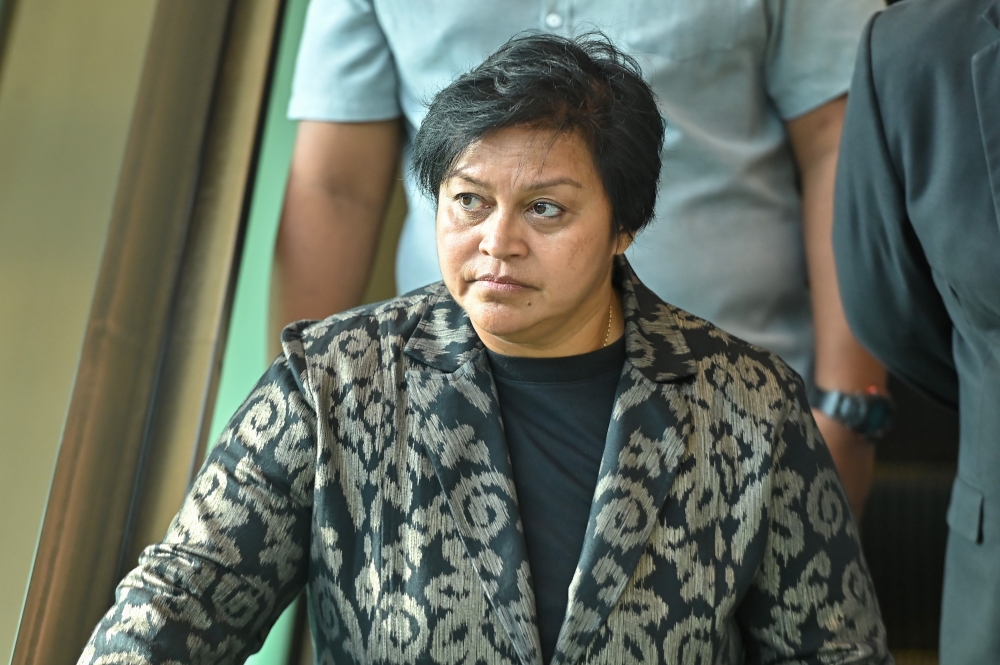
Minister Datuk Seri Azalina Othman Said said it is possible for a public prosecutor to serve more than the seven-year term, but a PP who wants to do so would have to apply and undergo evaluation. — Picture by Shafwan Zaidon
4. What about the salaries of the AG and PP?
Currently, it is the Agong who decides the AG’s remuneration or pay.
Under the proposed new law, Parliament will make federal laws on the AG’s and PP’s pay, and the pay will be charged on the government’s Consolidated Fund.
(This is similar to how judges’ remuneration are stated in a federal law made by Parliament.)
Minister in the Prime Minister’s Department (Law and Institutional Reform) Datuk Seri Azalina Othman Said reportedly said that a PP is not answerable to Parliament, as the PP is independent and not a political appointment.
5. How long can you be the PP?
The Bill says the PP’s term of office is seven years.
The Bill does not say if the PP’s term can be renewed, but Azalina reportedly said this can be done.
Azalina said a PP will have to apply to the JLSC to be reappointed or to have an extended tenure.
Azalina said the PP’s tenure will not be automatically renewed and would depend on the JLSC’s re-evaluation, also noting that the government of the day could have another preferred candidate by the end of the seven-year term.
6. How can the PP be removed?
The PP can quit the job at any time through a written resignation addressed to the Agong.
But during the seven-year term, a PP’s position is secure, which means there is no pressure of having to make certain decisions in order to keep the job.
Because you can’t simply fire or sack a PP.
Under the proposed new law, there will be safeguards on how a PP can be removed.
It’s a three-step process:
- The Agong receives a “representation” or suggestion for the PP’s removal;
- The Agong sets up a Tribunal to consider the “representation”; and
- The Agong removes the PP if the Tribunal recommends it.
In fact, the protection of the PP’s tenure is broadly similar to the Federal Constitution’s protection of Federal Court judges’ tenure.
For example, there’s also a three-step process: The PM or the Chief Justice (after consulting with the PM) suggests judges’ removal to the Agong; the Agong sets up a tribunal; and the Agong may remove the judge if the tribunal recommends it.
7. Bonus: What will the JLSC look like?
Under the proposed new law, the Judicial and Legal Service Commission (JLSC) gets new roles: nominating a PP, proposing a PP’s removal or suspension.
The JLSC also gets a restructuring, with new members: the PP, and two top judges that directly supervise the inferior courts (Sessions Court, Magistrates’ Court), and the Solicitor General (since the SG will take over the AG’s role as head of the judicial and legal service after the AG-PP split).
To balance the new JLSC composition, the Agong will only be appointing one person (a judge/ former judge/ qualified to be judge) after consulting the Chief Justice, as there will already be two top judges as permanent members.
Currently, the JLSC is chaired by PSC chairman Datuk Seri Ahmad Jailani Muhamed Yunus, and its members now are AG Dusuki; President of the Court of Appeal Datuk Seri Abu Bakar Jais; Chief Judge of Malaya Datuk Seri Hashim Hamzah; Chief Judge of Sabah and Sarawak Datuk Azizah Nawawi; Federal Court judges Datuk Nordin Hassan and Tan Sri Ahmad Terrirudin Mohd Salleh.
The proposed new law states different JLSC compositions depending on the role it is carrying out, such as recommending the PP’s appointment or suspension.
This is important as it shows who gets a say.
You can read the full Bill here.
