

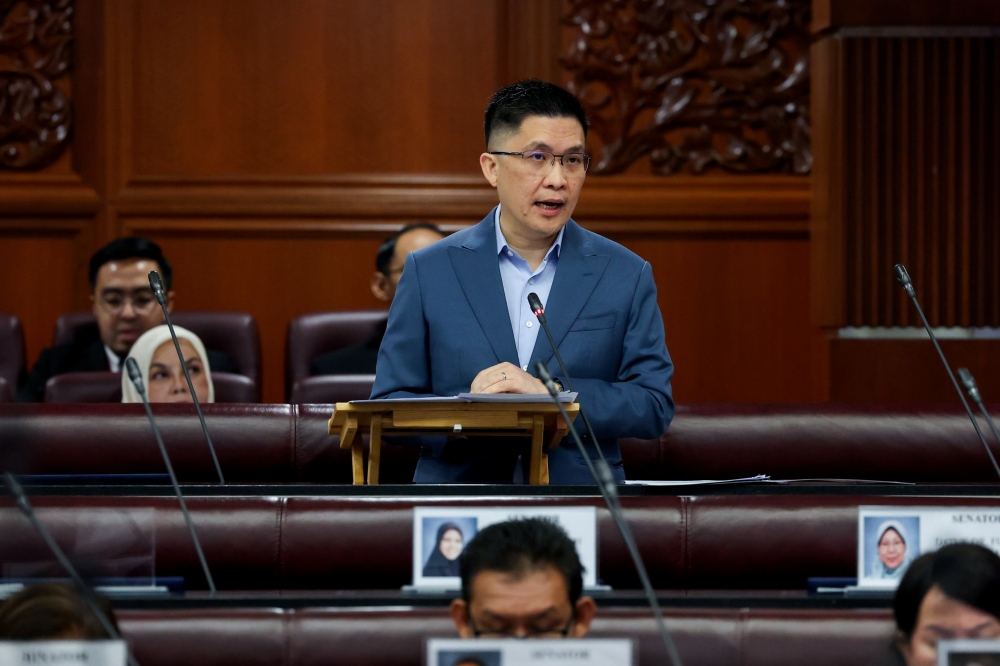
KUALA LUMPUR, March 11 — The Dewan Negara was informed today that no education development projects in Selangor have been classified as “sick projects” so far, based on a review of records by the Ministry of Education (MOE).
Deputy Education Minister Wong Kah Woh said a project is categorised as a “sick project” when the physical work progress is delayed by more than two months or 20 per cent compared with the schedule stipulated in the contract, whichever comes first.
He said MOE has implemented several monitoring mechanisms to ensure that new school construction and upgrading projects, particularly in rapidly growing areas including Selangor, are completed on schedule without becoming sick projects.
He added that to accommodate the increase in student numbers in rapidly developing areas, the construction of a new secondary school — Sekolah Menengah Kebangsaan Kota Kemuning 2 in Shah Alam — has been approved under the 13th Malaysia Plan (13MP) First Rolling Plan (RP1) 2026.
“The project will include 42 classrooms and other facilities according to standard specifications, including an administrative block, elective workshops, a canteen, surau and a school hall, as well as the Integrated Special Education Programme (PPKI) block. The school will be built on a 4.612-hectare site,” he said.
He said this when responding to a question from Senator Tiew Way Keng regarding the monitoring mechanisms for new school construction or upgrading projects in rapidly growing areas in Selangor, as well as measures to protect students from cyberbullying and online scams.
Wong explained that as of November 5, the Education Works Branch of the Public Works Department (JKR) had been appointed as the programme manager, with preliminary works and integrated site visits already carried out.
Meanwhile, Wong said MOE, together with the Ministry of Digital, through CyberSecurity Malaysia, has developed the National Cyber Ethics Module (ESN) to support the implementation of the CyberSAFE® in Schools programme for students aged seven to 17.
“The module covers six key topics, namely digital health and well-being, digital fluency, digital etiquette, digital privacy and security, digital rights and responsibilities, and digital commerce,” he said.
In addition, he said MOE is drafting an AI literacy guideline to help teachers and students use the technology ethically, covering aspects such as data security and academic integrity, and it is expected to be finalised in April 2026. — Bernama


