MARCH 16 — Recent data from Malaysia’s Household Income and Expenditure Survey (HIES) 2024 has renewed public discussion on the cost of living and the financial wellbeing of households. Beyond headline inflation figures, the data reveals a clear shift in how Malaysians allocate their spending, reflecting not only price pressures but also evolving lifestyles, urbanisation and changing consumption preferences.
According to the Department of Statistics Malaysia (DOSM), average monthly household expenditure rose to RM5,566 in 2024, an increase of 3.9 per cent as against 2022. While inflation has certainly contributed to higher spending, the increase is also driven by behavioural changes rather than price effects alone. This distinction is important as it suggests that cost-of-living pressures cannot be assessed purely through price indices.
Housing, utilities and fuel remain the largest component of household spending, accounting for 23.5 per cent of total monthly expenditure. More noteworthy, however, is the growing share allocated to restaurants and accommodation services, which now stands at 17.0 per cent, surpassing spending on food prepared at home. Transport follows at 11.0 per cent, reflecting continued reliance on private vehicles, rising fuel costs and limited alternatives in certain locations. Additionally, more Malaysians spend holidays abroad in neighbouring countries, especially Thailand whereby in 2025, Malaysian tourists were the top tourists in Thailand who spent approximately RM11.5 billion there.
This shift suggests that Malaysian households, particularly in urban centres are increasingly prioritising convenience and service-based consumptions. Dining out, food delivery services as well as short domestic travel have become routine expenses rather than occasional indulgences. While this trend reflects post-pandemic economic normalisation and greater social mobility, it also raises concerns about long-term affordability and household financial resilience.
Disposable income has shown modest improvement. DOSM data indicates that average disposable household income increased to RM7,584 in 2024, while median disposable income rose to RM5,999. These gains, however, remain uneven across income groups and regions. For many households, income growth has not fully kept pace with rising costs in essential categories such as food, dining services, childcare and transport.
Bank Negara Malaysia data further suggests that food prices have increased more rapidly than wage growth since 2020, particularly affecting low- and middle-income households. As a result, higher spending does not necessarily indicate improved living standards. In many cases, it reflects the higher cost of maintaining a basic lifestyle, especially for families with children and those living in urban areas. Apparently, most of the finished product prices will never go down despite lower prices of the relevant raw materials, duties and many more afterwards.
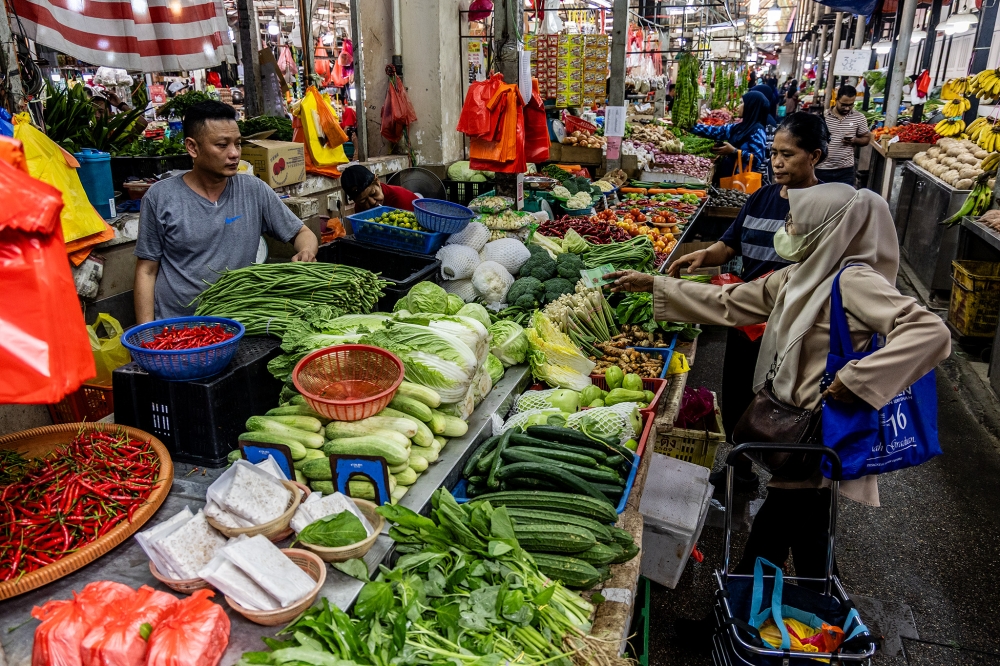
Vegetables are displayed for sale at the Chow Kit wet market in Kuala Lumpur on June 25, 2025. — Picture by Firdaus Latif
Spending patterns also differ significantly by locations. Households in Putrajaya, Kuala Lumpur and Selangor record substantially higher monthly expenditures than those in other states, largely due to higher housing, childcare, transport plus service-related costs. Urban households therefore face greater exposure to income shocks, interest rate changes and employment uncertainty. Comparatively, Chinese communities generally have higher costs compared to other races in childcare, funeral management, weddings just to name a few.
These changing expenditure patterns carry important implications for household financial health. Rising discretionary spending can reduce households’ capacity to save, particularly when supported by easy access to credit. Malaysia’s relatively high household debt levels mean that sustained consumption growth without corresponding income growth could increase financial vulnerability over time. Furthermore, now it is easy at present to purchase many items via Buy Now Pay Later (BNPL) and small personal credits online.
From a policy perspective, cost-of-living measures should go beyond short-term assistance and price controls. Strengthening income growth through productivity improvements, skills development and wage progression remains critical. Targeted support in key expenditure areas such as housing, food security, childcare and public transport would also be more effective than broad-based subsidies. Apparently, one of the best examples to replicate is what have been promised and implemented by the latest New York Mayor; Zohran Kwame Mamdani for the working people there. For instance, fast and free buses, a rent freeze, city-run grocery stores, universal childcare and baby baskets as well as affordable housings. These proactive actions receive remarkable feedback from the citizens.
Simultaneously, greater emphasis on financial literacy can help households make informed decisions about spending, savings and debt management. Improved access to open data platforms such as DOSM’s OpenDOSM initiative can further support evidence-based policymaking and enhance public understanding of economic trends.
Malaysia’s household expenditure data reveals more than rising prices. It reflects structural changes in consumption behaviour shaped by urban living, lifestyle shifts together with income constraints. Addressing cost-of-living concerns therefore requires policies that enhance real income growth and financial resilience, ensuring that rising expenditure translates into improved wellbeing rather than greater financial strain.
Notably, this indirectly signify that most of the steps taken by Malaysia Madani initiatives to ease Malaysians cost of livings have been fruitful but the additional disposable income have been diverted to much better perks namely more exclusive dining, transportations, vacations just to name a few which indirectly make them “feel” like their income does not increase, prices are going up coupled with less assistance from government, whereby in reality, their feelings might not be true in several situations.
* Dr Hasroleffendy Hassan is a senior fecturer at the Faculty of Business and Management, Universiti Teknologi Mara Kedah Branch
** This is the personal opinion of the writer or publication and does not necessarily represent the views of Malay Mail.