

KUALA LUMPUR, Mar 29 — What is an osteria?
The word itself comes from the Old French for “host,” reflecting its origins as a place where travellers could stop for wine, simple food and, traditionally, a place to spend the night.
Over the centuries, it evolved — like its slightly more formal counterpart, the trattoria — into a casual restaurant serving rustic, nourishing dishes at relatively low prices.
In recent years, however, the term has been adopted by more ambitious establishments, none more so than Massimo Bottura’s Osteria Francescana, a three-Michelin-star restaurant twice named the best in the world by the World’s 50 Best Restaurants, whose complex, refined dishes are a far cry from the traditional fare once associated with an osteria.
In Kuala Lumpur, only a handful of restaurants currently refer to themselves as osteria, and the newest — Stefania Osteria — comes from an unlikely source.
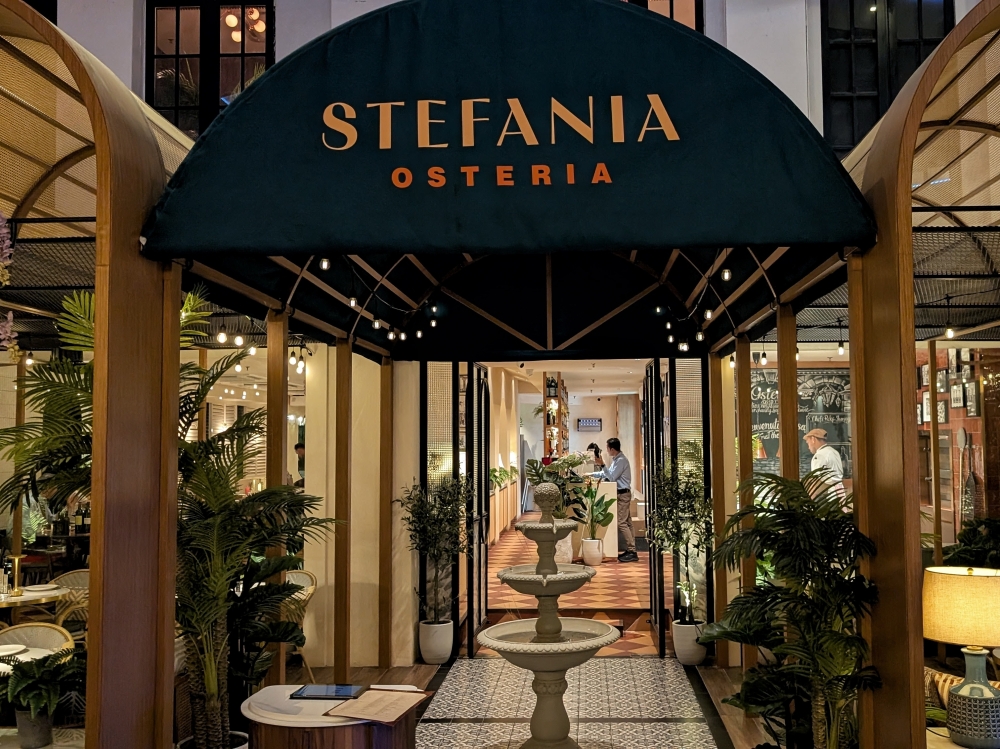
The front of Stefania Osteria. — Picture by Ethan Lau
It is a casual spinoff of Stefania Restaurant in Naza Tower, with both concepts fronted by chef Diego Reali, previously of Natalina and Brasa.
Together, they sit under the umbrella of Continuum, a hospitality group whose portfolio spans restaurants and nightlife projects, which raises the question: can a restaurant group truly recreate the familial, homely charm of an osteria, but without the family?
Stefania Osteria is located in Republik Damansara Heights, occupying the ground-floor lot previously home to Blonde.
The interior is in keeping with the neighbourhood’s upper-end tastes, with a hidden lounge tucked to one side of the entrance.
In stark contrast to the more indulgent, glitz-and-glam messaging of its sister restaurant in the city centre — where the chef and his many tattoos also receive no small amount of screentime — much of the marketing here has focused on smaller plates at more approachable prices.
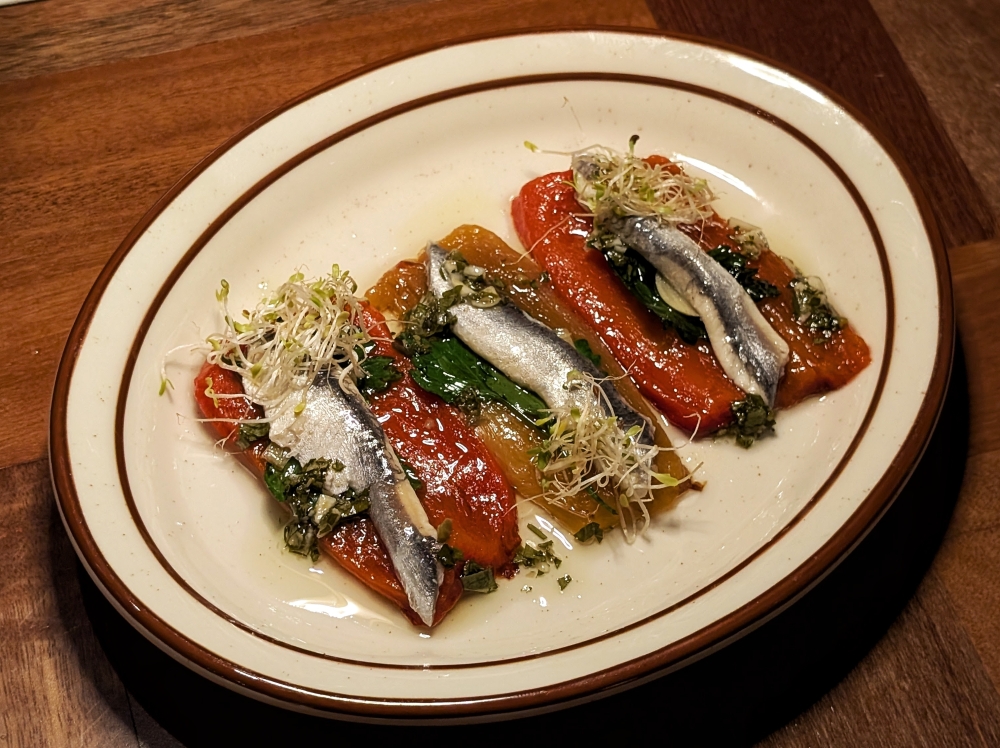
Spanish white anchovies on roasted peppers are a palate-opening starter. — Picture by Ethan Lau
To that end, it would seem, they have delivered.
A glance at the pork-free menu shows that most antipasti and pasta dishes fall in the RM30–40 range, while larger mains average around RM65.
A starting duo of Alici Marinate (RM36), three briny Spanish white anchovies on slippery slices of roasted peppers, and Polpettine di Agnello (RM28), two lamb meatballs no bigger than a golf ball on a bed of hummus and smoked ricotta, serves as a primer for just how small the plates are.
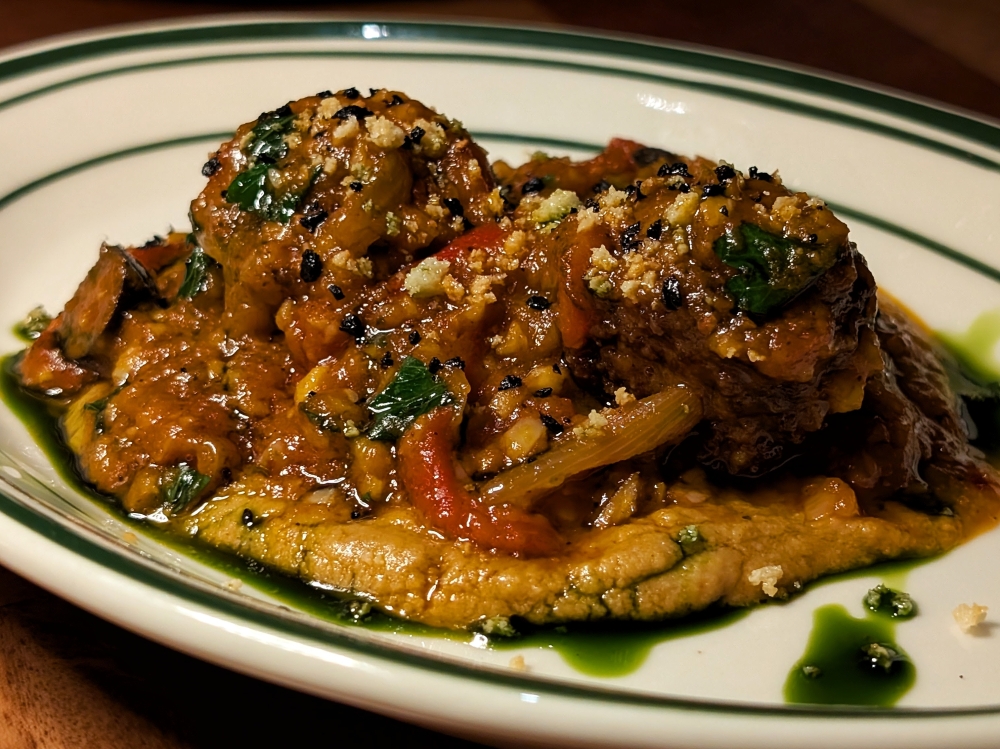
Lamb meatballs with smoked ricotta and hummus. — Picture by Ethan Lau
Both were delicious, with the meatballs in particular offering a clever contrast between gamey lamb and the sweet-smoky peppers, creamy ricotta, and smooth hummus.
That said, for more than two diners, additional portions are definitely required.
Then came a pair of pasta: Spaghetti Cacio e Pepe (RM36), made simply with spaghetti, pecorino, and black pepper, and Pappardelle al Ragù di Manzo (RM38), wide, flat pappardelle coated in a slightly sweet ragù made with Wagyu and topped with grana padano.
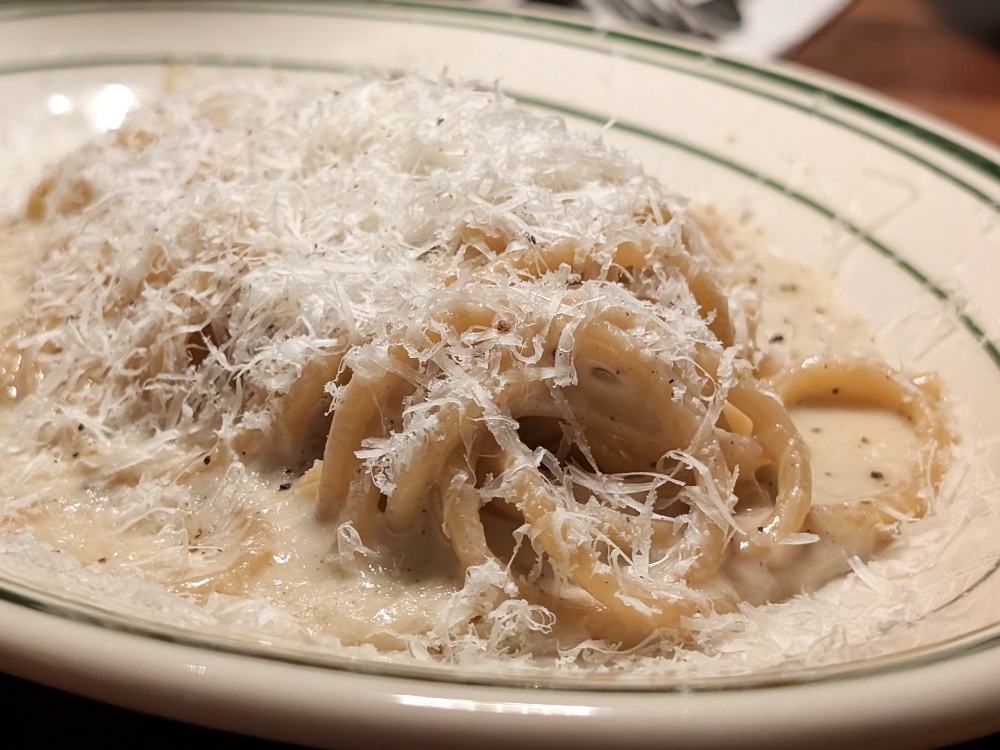
The ‘cacio e pepe’ is almost very good, with great texture but slightly lacking in pepperiness. — Picture by Ethan Lau
I have long craved a proper cacio e pepe — spicy, peppery, and creamy, with no cream — and hoped I might finally find it here. This was almost there.
The sauce’s texture was spot on, a beautiful balance of starchy pasta water, sharp pecorino, and technique, though I wished for a touch more black pepper.
Adding it tableside doesn’t quite release its toasted complexity, but I still enjoyed all three bites thoroughly.
The pappardelle, however, left more to be desired: the ragù was too sweet for my taste, and the Wagyu added little to the dish.
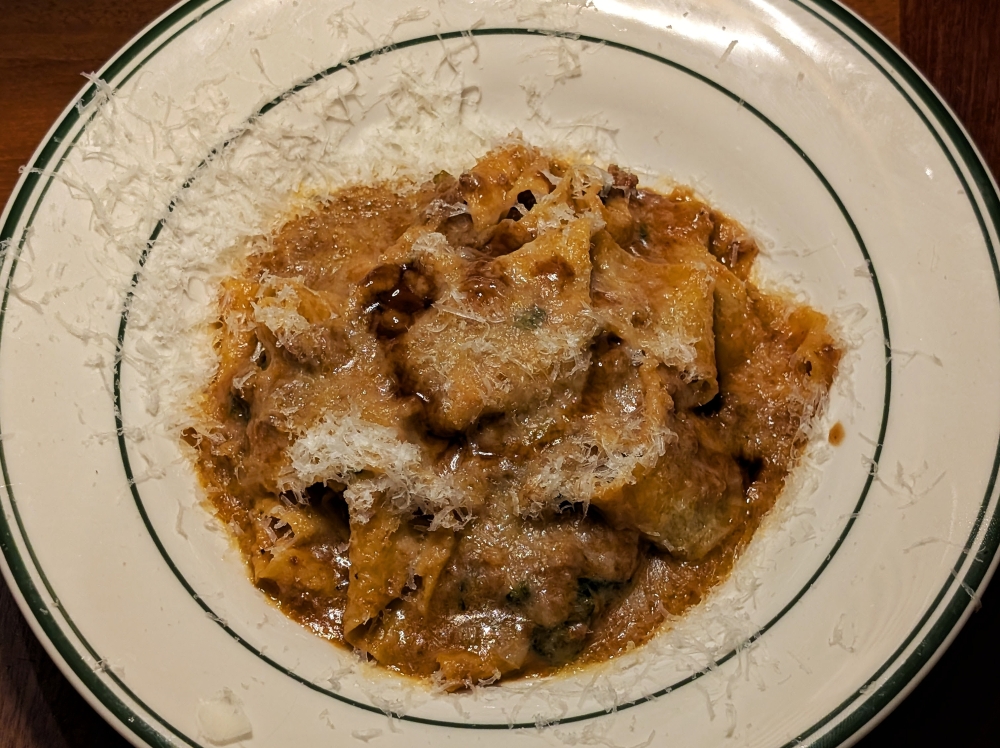
Pappardelle al Ragù di Manzo is topped with generous shavings of ‘grana padano’. — Picture by Ethan Lau
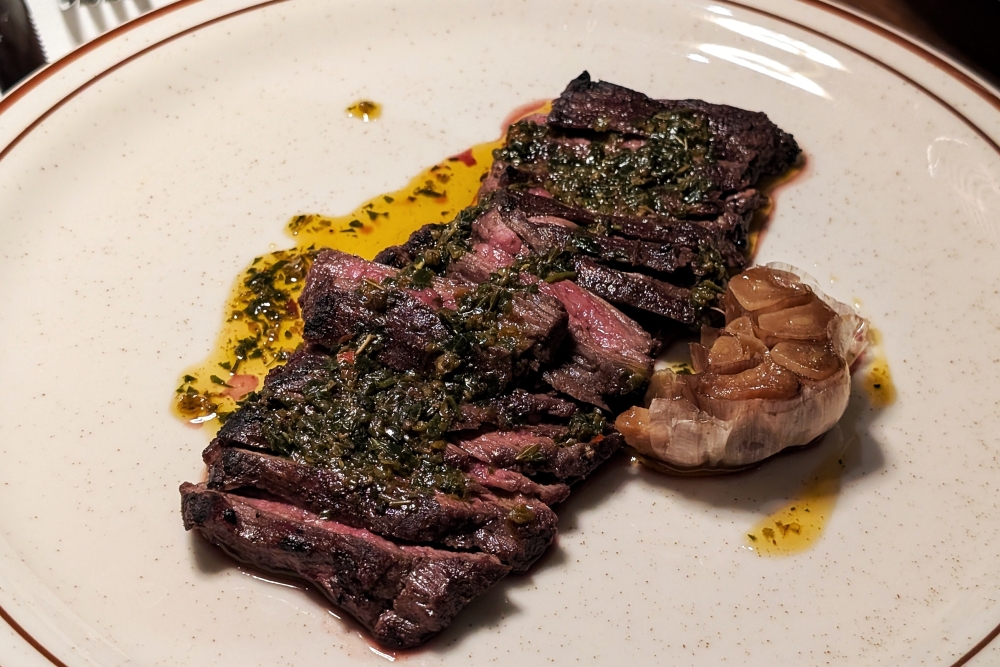
Much is made of the steaks at their sister restaurant, and while the osteria does offer a selection of Australian Wagyu ribeyes, striploins, and tomahawks, I was more interested in the Bistecchina di Manzo (RM52), a skirt steak with chimichurri.
Skirt is one of my favourite cuts when prepared well, and this 150 grams portion was cooked to a perfect medium rare, sliced on the bias, and generously topped with chimichurri.
Unfortunately, the oregano in the chimichurri was overpowering, masking the natural flavour of the steak itself, which was really quite good.
The choice of dessert here is a no-brainer, especially when a Classic Tiramisù (RM38) is on the menu.
It ticked all the boxes: cocoa powder — check, mascarpone — check, espresso-soaked savoiardi — triple check.
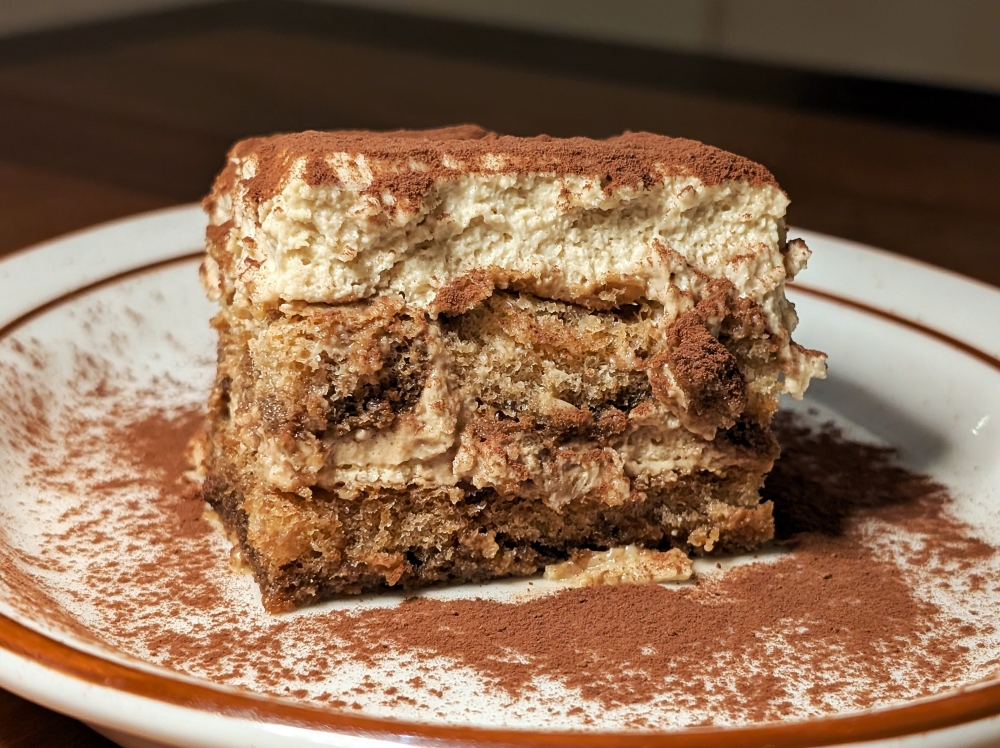
The classic tiramisù is excellent. — Picture by Ethan Lau
A fine rendition of a classic Italian dessert, and perhaps the cosiest part of the entire meal.
On one hand, Stefania Osteria delivers smaller plates at more approachable prices.
On the other hand, it stops short of capturing the familial, homely charm of a neighbourhood osteria.
Service is efficient and capable, but not particularly warm or genial.
The food offers plenty to discover and enjoy, yet it isn’t what I would call hearty or rustic.
The whole thing runs like a well-oiled machine, which has its place in a neighbourhood where the dinner crowd is mostly corporate suits; perhaps that’s exactly what the doctor ordered.
Stefania Osteria
G.03A Republik,
Jalan Medan Setia 1,
Bukit Damansara, Kuala Lumpur.
Open daily, 12-10.30pm
Tel: 017-751 3238
Instagram: @stefaniaosteriarepublik
* This is an independent review where the writer paid for the meal.
* Follow us on Instagram @eatdrinkmm for more food gems.
* Follow Ethan Lau on Instagram @eatenlau for more musings on food and occasionally self-deprecating humour.
