

BERLIN, April 13 — Actress and television personality Collien Fernandes has sparked weeks of debate in Germany over sexualised online abuse after accusing her ex-husband of spreading fake pornographic images of her online.
But Fernandes told AFP in an interview that she was initially “hesitant” to file a criminal complaint.
Her lawyer encouraged her to proceed, saying it was the “digital Pelicot case”.
French rape survivor Gisèle Pelicot became a symbol of the global fight against sexual violence after waiving her right to anonymity in a case that shocked France and the world.
Pelicot’s now ex-husband Dominique was convicted in 2024 of drugging her and allowing dozens of men to rape her while she was unconscious.
Her lawyer’s comparison to the Pelicot case “really stuck in my head,” Fernandes told AFP in a remote interview during a break from filming in Singapore.
“I just thought the whole time: ‘I can’t let him get away with it’,” said Fernandes, 44.
Fernandes, also known for her work as a television host and model, said that for years she has been plagued by fake social media profiles in her name and falsified explicit images purportedly of her being spread online — made increasingly convincing through artificial intelligence and other tools.
She has now accused her husband, actor and television host Christian Ulmen, 50, of sending fake nude images of her to various men, as well as using a manipulated version of her voice to have explicit phone conversations.
Fernandes said Ulmen led 30 men to believe they were having a secret online relationship with her, including some from her professional circle.
World collapsed
According to Fernandes, her husband confessed to her in late 2024 in a hotel room in Hamburg.
She said he refused to reveal the names of the men he had communicated with, telling her he was “too ashamed”.
Her world collapsed and she took refuge with her daughter at her sister’s home.
Fernandes recalled having dinner with a producer where she learned he believed he had engaged in a sexual conversation with her online.
She said she then came across a story written by her husband in which she is raped by 21 men while crying.
“To think that someone who claimed to love me took pleasure in a story in which I was crying totally destroyed me,” said Fernandes.
She divorced her husband a few months after the discovery, which also led her to revisit the Pelicot case.
An emotional Fernandes said the “incredibly hard” case resonated so deeply with her that she could not read a full article about it without “bursting into tears”.
She said it was the “strength” shown by Gisèle Pelicot that gave her the courage to turn to the courts, end the rumours surrounding her and fight on behalf of victims of digital abuse who do not have her platform.
“I would really like to meet” Pelicot, said Fernandes.
Death threats
After Fernandes told her story to Spiegel news magazine in late March, German prosecutors said they had reopened an investigation against Ulmen.
He denies having created or disseminated doctored “deepfake” pornographic videos.
Fernandes and Ulmen are also waiting to see whether the case will be taken up by authorities in Spain, where they also have a residence and where laws on online harassment are stricter.
After going public, Fernandes received an outpouring of solidarity — but also death threats.
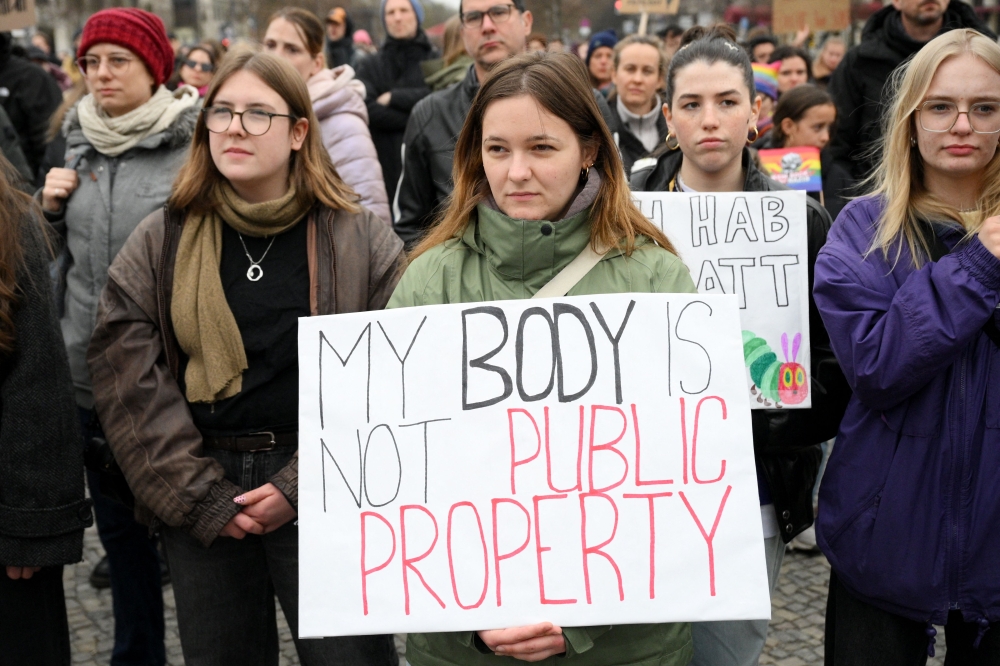
Fernandes said she is “deeply moved” by the support shown by tens of thousands of demonstrators who have taken to the streets across Germany.
The case has put pressure on the government of conservative Chancellor Friedrich Merz to swiftly draw up proposals to address online violence, particularly that involving deepfakes.
“I expect harsher penalties in Germany to make it clear to perpetrators that this is unacceptable!” Fernandes said.
As for her personal recovery, she said she is rebuilding after the betrayal through “intensive therapy”.
She said that among other victims of such crimes whom she has met, many have developed post-traumatic stress disorders. — AFP


