

APRIL 24 — There is something deeply surreal about a stock market that rallies while one of the world’s most strategic waterways remains under stress.
On April 23, 2026, the S&P 500 and Nasdaq hovered near record highs even as oil prices stayed elevated and the war linked to Iran and the Strait of Hormuz remained unresolved. CNN reported that both indices have surged sharply since late March, with gains continuing even after the war began.
This is not just resilience. It is a market pricing in peace before peace exists.
That is precisely why the rally is dangerous.
When markets recover too quickly during a war, they create the illusion that the underlying strategic problem is already under control.
In reality, the Strait of Hormuz remains a critical artery for global oil and LNG flows; that is now blocked.
Tanker traffic is still vulnerable. In many cases stuck in the Strait of Hormuz with the seafarers suffering severe mental anxiety over the last eight weeks.
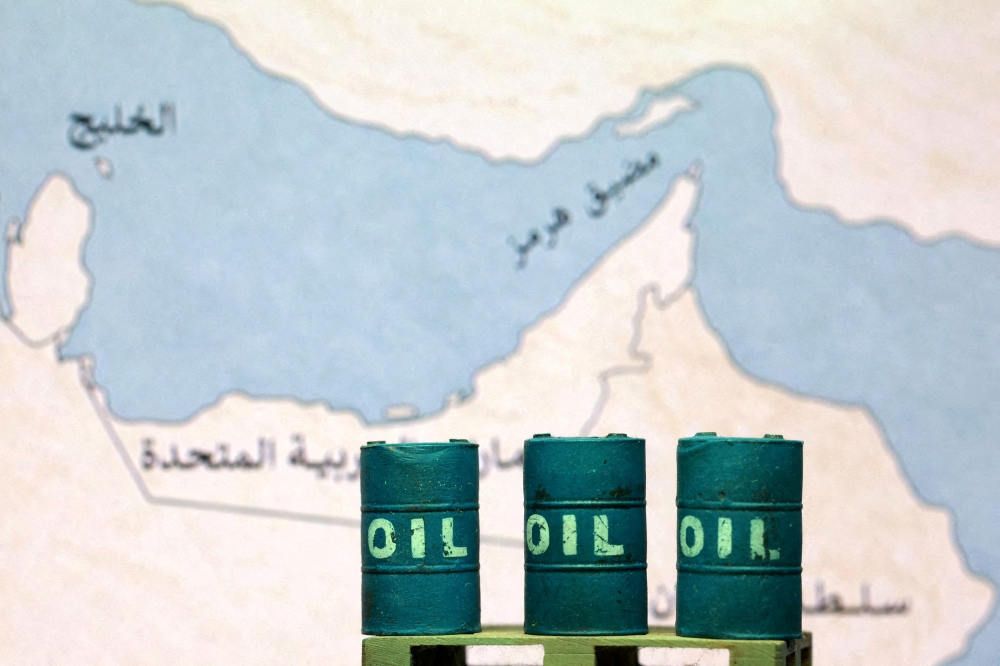
An illustration shows a map of the Strait of Hormuz and 3D printed oil barrels on March 26, 2026. — Reuters pic
Oil prices remain volatile. The military situation is far from settled. Even with the likes of the White House declaring that the ceasefire has no final deadline and is open ended.
Yet markets are behaving as if the shock will pass.
A genuine strategic grand bargain cannot emerge in such an atmosphere. Diplomacy requires urgency.
It requires all sides to recognise that the costs of continued conflict are real and rising.
But when equities surge, that sense of urgency fades.
Investors begin to assume that corporate earnings will absorb the shock, that growth will continue, and that diplomacy can remain vague because markets have already stabilised.
This is a dangerous misreading of reality.
Markets are not peace negotiations. They do not clear mines, secure shipping lanes, or resolve sanctions. They simply reflect expectations. And expectations can be wrong.
Recent volatility — even after record highs — shows how fragile this optimism is. Political signals from Washington, including uncertainty about timelines for ending the war, have already shaken confidence.
In short, finance has moved ahead of geopolitics. This disconnect matters. As long as Wall Street is doing well, the US is more likely than not to be ultra punitive and war-like against Iran.
A durable settlement in the Strait of Hormuz requires complex concessions: de-escalation, maritime guarantees, sanctions adjustments, and cooperation among major energy consumers. None of this is easy. None of it is imminent.
A double blockade of Iran and the US concurrently in the Strait of Hormuz is now producing a logjam.
Strong corporate earnings, especially in the United States, may cushion markets in the short term. But they do not resolve geopolitical tensions.
A rising stock market cannot reopen secure shipping lanes. It cannot reduce the risk of escalation. It cannot substitute for diplomacy.
The deeper danger is political.
If markets signal that the conflict is manageable, policymakers may delay difficult compromises. Washington may feel less pressure to negotiate. Tehran may feel compelled to escalate to regain leverage.
Other major powers may also hesitate, assuming the system can absorb the shock. That would be a serious miscalculation.
The world does not need a market rally. It needs a strategic settlement.
A grand bargain in the Strait of Hormuz requires recognition that the old order in the Gulf has broken down.
A new framework must reflect the interests of all key stakeholders, not just the short-term optimism of investors.
Until then, record highs should not be mistaken for stability. They are a warning.
Finance has once again moved faster than diplomacy.
And when markets outrun statecraft, the eventual correction is not just financial.
It is, ironically, a form of inner strategic deterrence when Trump does watch the stock market closely. His foreign policy behavior is likely to be shaped by the performance in Wall Street since his Cabinet is decked with many who have worked there.
* Phar Kim Beng, PhD is the Professor of Asean Studies at International Islamic University of Malaysia and Director of Institute of International and Asean Studies (IINTAS).
** This is the personal opinion of the writer or publication and does not necessarily represent the views of Malay Mail.


