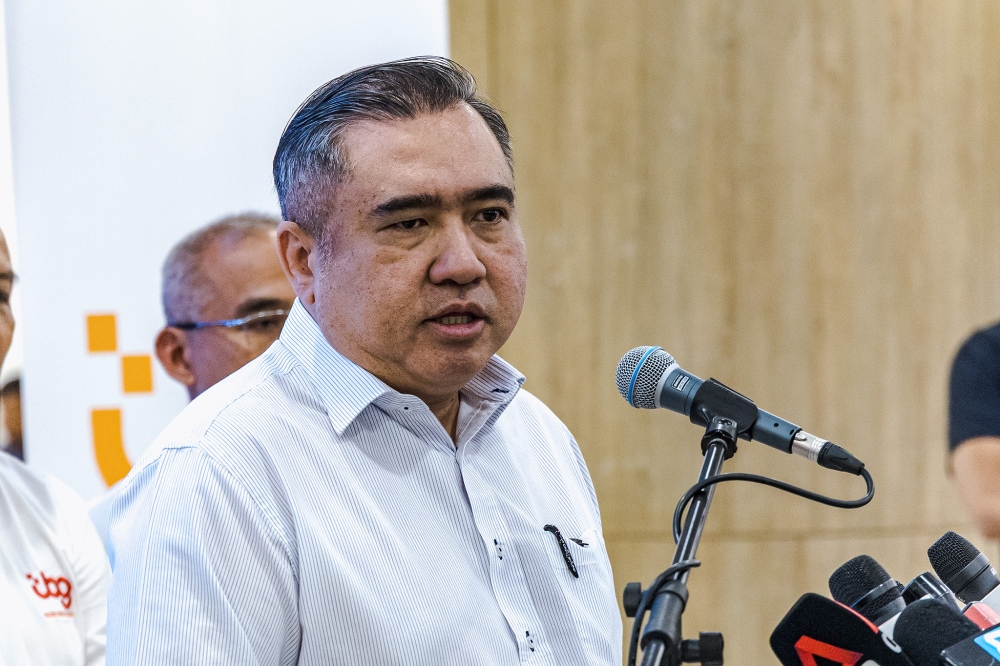
GEORGE TOWN, June 10 — Following yesterday’s bus accident that killed 15 students, the Transport Ministry is considering stricter enforcement measures for heavy vehicles to improve road safety compliance.
Minister Anthony Loke Siew Fook said there are challenges in ensuring compliance by companies operating heavy vehicles including lorries and buses.
He said the ministry is now looking at using technology such as speed limiters and on-board video cameras to be installed on heavy vehicles as safety measures along with making seat belts mandatory for express buses.
Loke noted that while speed limiters are currently installed in heavy vehicles, they are frequently tampered with, rendering them ineffective for speed control.
“The device is installed in heavy vehicles to prevent them from speeding above the speed limit but what we are seeing is that, the devices are often tampered with,” he told reporters during a press conference after officiating CruiseWorld Malaysia 2025 here today.
He revealed that these heavy vehicles install speed limiters to pass Puspakom checks, only to tamper with them immediately afterward so they can exceed speed limits.
The minister emphasised the need to prevent tampering with these devices through stricter regulations and enforcement measures.
Loke explained that while the ministry already mandates speed limiters in heavy vehicles through existing frameworks, additional safeguards are necessary to ensure compliance post-installation.
Stronger enforcement mechanisms, he added, would be crucial to maintaining the integrity of these safety devices.
As for the possibility of installing on-board video cameras on heavy vehicles, he said it is another matter that the ministry is looking into.
“Video cameras are not compulsory now but we need to look into it to improve safety,” he said.
He added that it is now mandatory for new buses built from 2020 onwards to have seatbelts for all passengers.
“However, in the East-West Highway incident, the bus was built in 2013, it is 12 years old, so it does not have seatbelts,” he said.
Although seatbelts are mandatory in new buses, Loke noted that ensuring passenger compliance remains a challenge.
“We have laws that make it mandatory to install and wear seatbelts but the challenge is to ensure compliance,” he said.
Loke said they will also look into ensuring compliance with wearing seatbelts by installing sensors, similar to those in cars.
“In cars, if we don’t wear the seatbelts, it will beep so we can look into making it mandatory that the driver ensures all passengers put their seatbelts on or the bus will not move,” he said.
The minister stressed that the main problems regarding speed limiters and seatbelts were driver and passenger compliance.
“Our challenge is to ensure compliance, it is not that we do not have laws, we have laws but the challenge is to ensure the laws are complied with,” he said.
He said when a new regulation is implemented, making some measures mandatory, some parties will complain.
“If we are not strict, we are criticised,” he said.
He said everyone, including the industry players and the public, must cooperate when it comes to compliance to road safety measures.
“We don’t want that when we make something mandatory, the operators complain that they are affected, that the new measures are a burden and incurred additional costs,” he said.
He reminded the operators that any safety measures implemented are for the sake of human life.
“So, for example, the wearing of seatbelts in new buses is already mandatory but there was lack of compliance by the operators and passengers,” he said.
He said they will need to look at how to ensure this is implemented more effectively.