MARCH 19 — The countdown to the 16th general election (GE16) may have unofficially begun and while the Constitutional deadline is in early 2028, the “economic election cycle” has already started.
For Prime Minister Datuk Seri Anwar Ibrahim, the next 18 months are about translating real macroeconomic success into a tangible “feel-good factor” that wins votes.
The paradox of stability
On paper, Anwar has steered the economy well. Despite geopolitical headwinds, Malaysia’s macroeconomic foundations are very steady.
Headline inflation averaged a modest 1.4 per cent last year and GDP growth was 5.2 per cent, outperforming most regional peers.
The fiscal deficit is on target to hit 3.5 per cent and successful subsidy rationalisation has signalled to international investors that Malaysia is serious about fiscal discipline. Yet, there remains a gap between these “headline victories” and the lived experience of average Malaysians. The cost of living remains a weakness that many families struggle with.
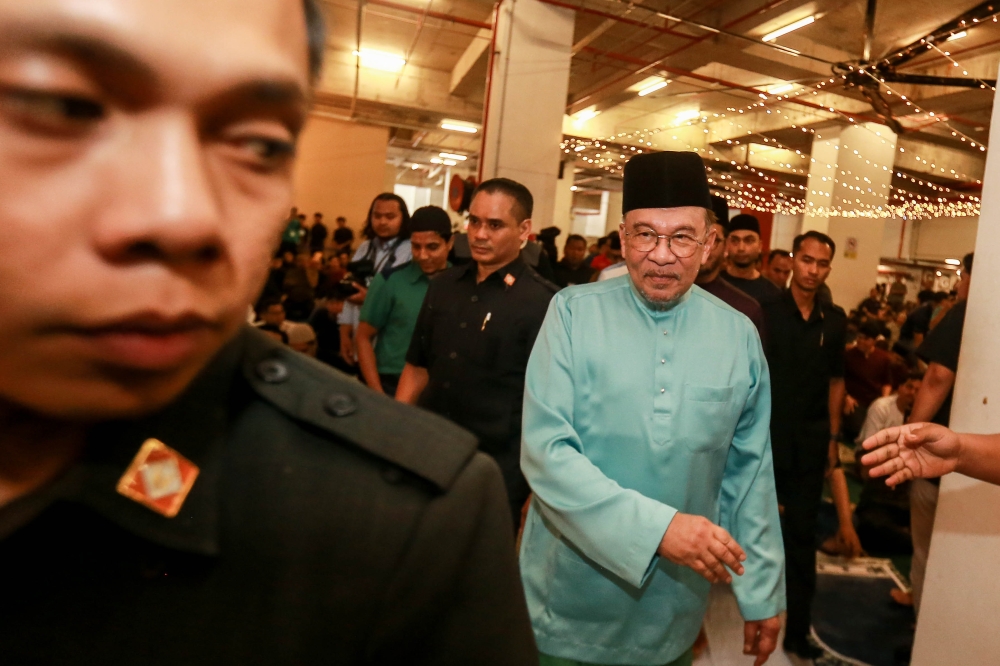
For Prime Minister Datuk Seri Anwar Ibrahim, the next 18 months are about translating real macroeconomic success into a tangible ‘feel-good factor’ that wins votes. — Picture by Sayuti Zainudin
The “income, income, income” strategy
If the first half of Anwar’s term was about stabilisation, the second half must be about distribution. The mantra for the lead-up to the 2027 Budget must be “income, income, income.”
For the youth vote, which remains the most volatile and influential demographic, the government must move beyond job creation and toward “career dignity.”
It is not enough to have low unemployment if the starting salaries for graduates remain stagnant at RM2,000 per month. A radical overhaul of the wage structure is needed.
A key recommendation here is the aggressive expansion of the Progressive Wage Model (PWM) turning it into a low regulation, income top-up through a monthly STR-SARA payment, a form of reverse income tax paid directly by LHDN.
Education and the debt trap
To truly capture the hearts of the nearly five million young voters and their families, the government must address the “albatross” around their necks: PTPTN loans.
One of the most potent policy moves available to Anwar is moving toward a model of “free degrees” for B40 and M40 students. This is not just a progressive dream, it is an economic necessity to reduce student debt and boost discretionary income.
When a 24-year-old enters the workforce without a RM40,000 debt hanging over his or her head, that money goes directly back into the local economy, buying houses, cars and consumer goods. This is a significant stimulus package.
Unleashing the MSME Engine
While large-scale Foreign Direct Investment (FDI) from tech giants makes for great headlines, the backbone of the Malaysian economy remains the Micro, Small and Medium-sized Enterprises (MSMEs).
The recommendation for the next 24 months is a sweeping programme of liberalisation and privatisation. Anwar must slash the red tape that prevents MSMEs from becoming domestic growth engines and regional exporters.
Responsible privatisation
The era of government intervention must be replaced by Responsible Privatisation. This involves the strategic exit of the state from non-core sectors like retail, F&B and logistics, handing the reins to the private sector but with strict social KPIs regarding local wage floors and Malaysian ownership.
By reducing the government’s footprint in non-strategic sectors, Anwar can open up space for local entrepreneurs to thrive without competing against government-linked giants.
Privatising non-core GLC functions to local consortia would also create a surge in domestic investment that is “bottom-up” rather than “top-down.”
The Silver Tsunami: Retirement security through a Malaysian superfund
We cannot ignore the over-60 demographic. With EPF accounts depleted by pandemic-era withdrawals, Malaysia is facing a looming retirement crisis. The foundation for GE16 must include a “Silver Safety Net.”
A non-contributory universal basic pension will help the elderly feel that the Unity Government has protected their dignity and they will vote for that.
The centre-piece of a non-contributory scheme must be the Malaysian Superfund, consolidating the fragmented landscape of Government-Linked Investment Companies (GLICs).
The e-payment tax
Malaysia needs a modern revenue tool that captures the scale of the digital economy without repeating the “groundhog day” GST vs SST debate.
An e-payment tax provides an answer in an increasingly cashless economy and provides a steady, high-volume revenue stream. A tiny EPT of 1 per cent on all e-payments can raise RM28.8 billion which could be ear-marked for two specific purposes: PTPTN debt relief and universal pensions allowing Anwar to offer free degrees and retirement security without bloating the national deficit.
The political horizon
There is quiet speculation of a snap election in late 2026 to capitalise on the current fragmentation of the Opposition. However, a more calculated path involves turning the October 2026 Budget into a “pre-election masterpiece” that delivers the fruits of macroeconomic stability and subsidy savings directly back to the people.
Critics are justifiably pointing to the slow pace of institutional reforms and restrictions on freedom of expression. While these are vital for the health of Malaysian democracy, they are secondary to voter concerns in suburban Klang or rural Kedah.
For them, the government’s performance is measured in the gap between their wages and their grocery bill.
The Middle East conflict and global energy volatility mean that the road to GE16 will be bumpy. Anwar Ibrahim has already proven he can be a steady hand in a crisis. Now, he must prove he can be the architect of prosperity.
* Dr Geoffrey Williams is an independent economist and policy specialist and Mohamad Shafiq Sahruddin is an Asean Youth Fellowship alumnus. The views expressed are those of the authors.
** This is the personal opinion of the writer or publication and does not necessarily represent the views of Malay Mail.