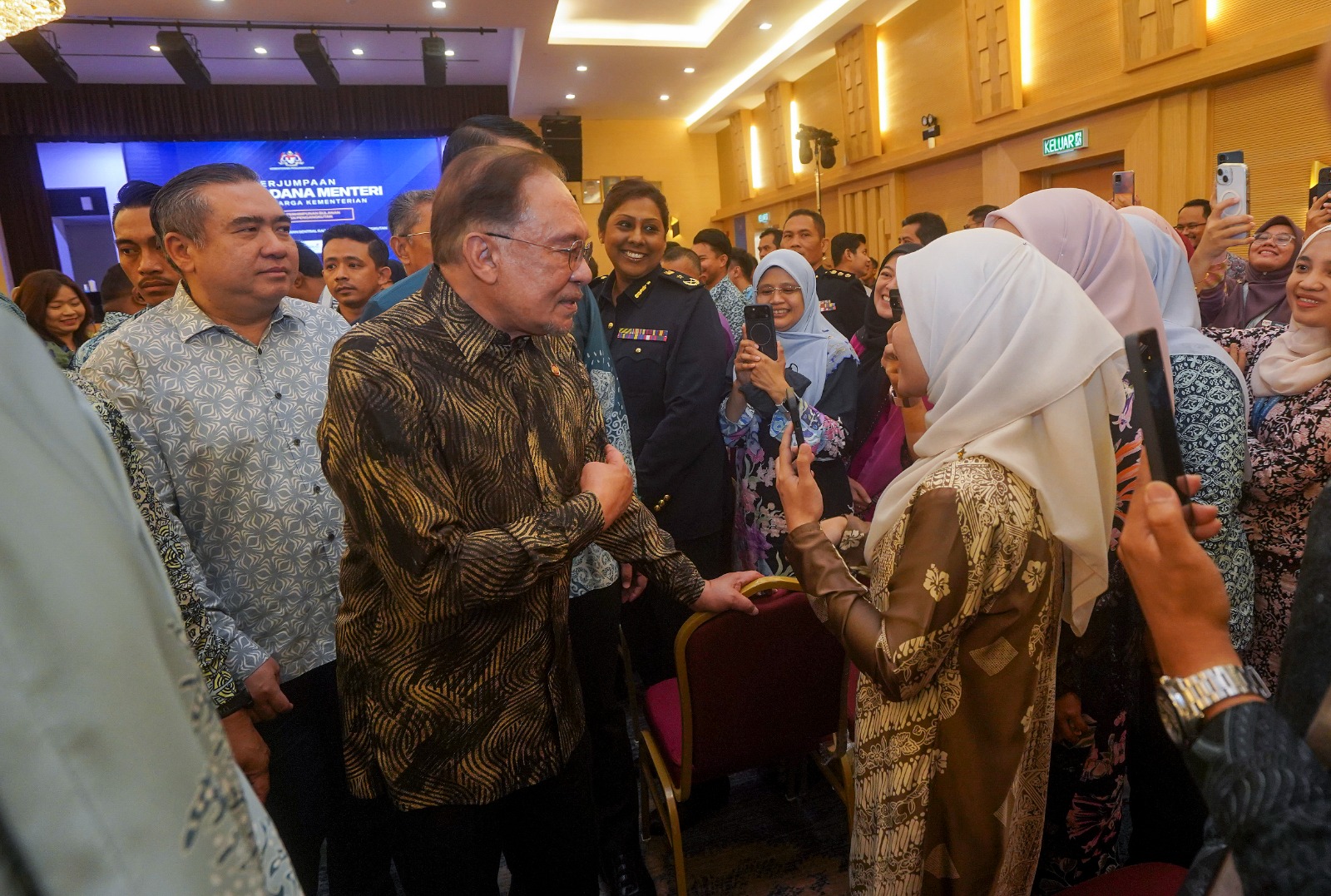
APRIL 9 — The unfolding crisis in West Asia has placed two maritime arteries—the Strait of Hormuz and the Strait of Malacca—at the very centre of global strategic anxiety.
These waterways are not merely geographic features; they are lifelines of the global economy.
When disrupted, they transmit shockwaves across energy markets, supply chains, and political systems with alarming speed.
Singapore’s Foreign Minister, Dr Vivian Balakrishnan, has articulated a principled stance rooted in international law. He is right.
By insisting that freedom of navigation through the Strait of Hormuz must not be subject to negotiation, he reaffirms the sanctity of the United Nations Convention on the Law of the Sea (UNCLOS).
His comparison is both striking and sobering: while the Strait of Hormuz narrows to about 21 miles, the Strait of Malacca and Singapore compresses to barely two miles at certain points—yet handles significantly more tanker traffic.
The implication is clear: if legal norms collapse in Hormuz, the precedent may reverberate dangerously across Southeast Asia.
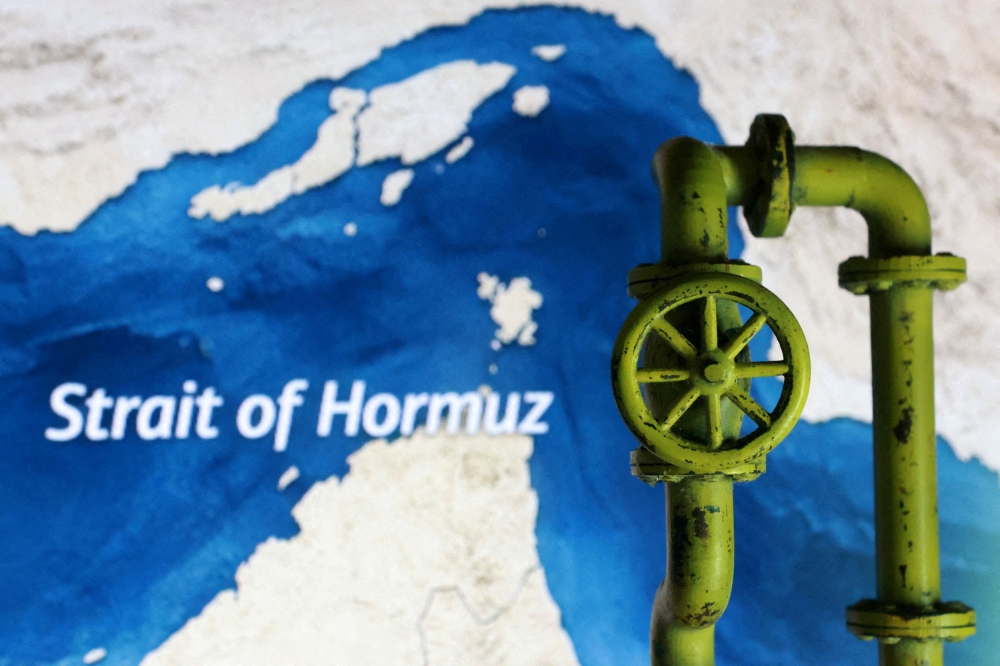
An illustration shows a map of the Strait of Hormuz and a 3D printed oil pipeline on March 23, 2026. — Reuters pic
Yet, in moments of acute crisis, principles alone—however noble—are rarely sufficient.
The world is now confronting not just a legal dilemma, but a triad of systemic diplomatic problems that require nuance, restraint, and above all, a calibrated sense of graciousness that does not descend into gratuitous concessions.
That being said, there is a fine hairline fracture in what Dr Vivian Balakhrisan has said too. How ?
The first problem lies in the divergence between legal principle and geopolitical reality.
While UNCLOS guarantees freedom of navigation, enforcement ultimately depends on power, persuasion, and pragmatic diplomacy.
China’s recent expression of gratitude to Iran for allowing three of its oil tankers to pass through unmolested illustrates this gap. While powerful, China cannot operate with the pretence that Beijing can always get its oil tankers safely out of the Strait of Hormuz. Hence it was better to be grateful to win over Iran. It’s not wrong to be in the good grades of an aggrieved power in the Strait of Hormuz.
That involves keeping a warm channel of communication with Iran open and always accessible. China did not cave in to Iran.
If anything, Beijing’s approach is not an endorsement of Iranian control over Hormuz, but rather a recognition that, in times of crisis, quiet diplomacy may achieve what legal posturing cannot.
In the same vein, Prime Minister Anwar Ibrahim of Malaysia is acutely aware of this tension in the Strait of Hormuz.
While not deferential to China’s methods, he too understood that the geopolitical temperature in the member states of the Gulf Cooperation Council (GCC) versus Iran is already well above dangerous levels.
In such a politically charged environment, rigid adherence to a principle—no matter how noble and upstanding—without parallel diplomatic engagement with Iran risks exacerbating more tensions rather than alleviating them.
Even President Donald Trump—whose administration’s actions on February 28, 2026, including coordinated strikes with Israel that eliminated dozens of Iranian leaders, helped precipitate the current crisis—has had to acknowledge China’s role in persuading Tehran to accept a temporary pause in hostilities on April 6. That’s how important grace and courtesy is at the highest level. Acknowledgement is granted to China. Not Iran.
The second problem in insisting in the importance of UNCLOS, while not wrong, is the inherent limitation of legal absolutism.
That is in producing timely outcomes. International law provides a framework. Yet more than ever, it does not always deliver immediate solutions. Malaysia was trying to trigger a break through.
The urgent priority of Prime Minister Anwar Ibrahim was not merely to uphold UNCLOS in the abstract.
Rather to calm down all the jarring nerves of multiple powers that have a stake in keeping the Strait of Hormuz openly accessible. China, Pakistan, Malaysia, Turkey and even Japan have open access in and out of the Strait of Hormuz. The key was to encourage Iran to back away from the brink.
Invariably, the diplomatic efforts of countries such as Pakistan and Turkey, even Egypt, were recognised by Prime Minister Anwar Ibrahim too.
To dismiss such initiatives simply because they fall outside a strict legal framework would be to misunderstand the nature of crisis diplomacy. Why ?
When oil and liquefied natural gas prices surge, and when supply chains begin to fracture, the world cannot afford the luxury of procedural purity.
The third problem of legal prurience is perhaps the most dangerous yet: the absence of credible off-ramps for the principal actors to engage each other.
Without avenues for de-escalation, both Iran and the United States risk becoming trapped in a cycle of escalation driven by domestic pressures, strategic miscalculations, and the logic of deterrence.
Here, the distinction between being gracious and being gratuitous becomes critical.
Gracious diplomacy is not capitulation; it is the art of allowing adversaries to step back without humiliation. Prime Minister Anwar Ibrahim was trying to prise open a very difficult problem in the Strait of Hormuz. Iran, after all, was being egregiously attacked.
This is exactly the point that Nurul Izzah, the Deputy President of PKR was trying to make, too, in correcting Dr Vivian Balakhrisan. Singapore and Malaysia’s approach to Iran may be different but Malaysia cannot help but show some empathy to the pounding that Iran was receiving.
True diplomacy involves measured language, quiet concessions, and the creation of diplomatic space for recalibration. All of which were achieved by Prime Minister Anwar Ibrahim in his dealings with Iran. When Iran does not feel isolated, Teheran is more likely than not to consider diplomatic mediation is worthy of its time.
Gratuitous diplomacy, by contrast, risks conceding too much, too quickly, which Prime Minister Anwar Ibrahim did not do, without securing reciprocal restraint. All mine Malaysian oil tankers were liberated to pass through the Strait of Hormuz safely.
Since progress with Teheran is possible, it must be given a pathway to redeem its much wounded national pride and honour.
Likewise, the United States must recognise that overwhelming force, absent a viable political endgame, risks deepening the very instability it seeks to contain.
The alternative—a prolonged confrontation spiralling into a wider regional war—would be catastrophic not only for West Asia but for the global economy at large.
For Asean, the lessons are immediate and profound. The region cannot afford to view the Strait of Hormuz crisis as distant.
The Strait of Malacca, through which a significant portion of global trade passes, could become the next arena of contestation if international norms erode. Diplomacy must always be premium to keep the Straits of Malacca safe and navigable. UNCLOS does apply. But diplomacy and communication are no less important.
By this token, Asean must therefore champion both principle and pragmatism—upholding UNCLOS while actively supporting diplomatic initiatives that reduce tensions.
Ultimately, high-wire diplomacy in West Asia demands a delicate balance. To be gracious is to be strategic; to be gratuitous is to be reckless.
In a world where the margin for error is vanishingly small, it is this distinction that may well determine whether the current crisis is contained—or allowed to escalate into a far greater conflagration.
Phar Kim Beng is a professor of Asean Studies and director at the Institute of International and Asean Studies, International Islamic University of Malaysia.
** This is the personal opinion of the writer or publication and does not necessarily represent the views of Malay Mail.