KUALA LUMPUR, April 3 — Among the 21 Orang Asli arrested in February for trespassing on a palm oil plantation near Kampung Jemeri in Kuala Rompin, Pahang, 17 were women.
The company that was given permission to develop the land said the Orang Asli presence there was illegal. The Orang Asli countered that they were on land they had cultivated long before the company arrived, citing the Sagong Tasi case, where the High Court, in 2002, recognised the Orang Asli’s right to customary land and affirmed the government’s fiduciary duty to protect the rights of Orang Asli communities.
Their ages ranging from 26 to 60, the number of Orang Asli women involved in the Kampung Jemeri trespassing case raised some eyebrows, based on comments online, but for the women concerned, it was nothing new. While almost all Orang Asli consider ancestral or customary lands as very important, to the women, the lands are special in a different way.
“When logging takes place and the forests are destroyed, who is most affected? Women. Logging has devastated their farms and polluted the rivers, and so on. So how are these women supposed to find clean water for their families and their children?” said Tijah Yok Chopil, from the Semai tribe, who is also the former chairman and deputy president of Jaringan Kampung Orang Asli Semenanjung Malaysia (JKOASM), a group comprising Orang Asli across six states in the peninsula.
“That is the traditional argument, that the land is so important because it’s like the ‘supermarket’ where they get their food from. It’s like the ‘pharmacy’ where they get medicines or the ‘hardware store’ where they get their building materials. (But) that is only a very small part of what land means to the Orang Asli,” added Dr Colin Nicholas, coordinator for the Centre for Orang Asli Concerns (COAC).
Calling customary lands the “museum of the identity” of the Orang Asli, he said they are a physical representation of the people’s history, culture and identity. As such, he and other experts say it is crucial to have policies requiring women’s participation in tribal leadership and community discussions on what happens to the customary lands.
Colonial legacy
Until recently, Orang Asli women have largely been absent or silent on issues relating to customary lands and their heritage. However, patriarchy was relatively absent in their cultures centuries ago.
Many Orang Asli communities, particularly hunter-gatherer groups, were largely egalitarian lines before the British came. Kirk and Karen Endicott’s report “The Headman Was a Woman: The Gender Egalitarian Batek of Malaysia”, which was published by COAC, documents the gender concepts, roles and relations of the highly egalitarian Batek (a tribe from the Negrito Orang Asli group) of Peninsular Malaysia.
“There was no such thing as a headman or headwoman or village head (among some tribes like the Semai), they were all led by kinship roles, kinship people. That means family, clans and so on. So, if it so happens that a woman is a matriarch, she controls (the tribe),” said Nicholas.
He added that when colonialism came to Malaya, the British did not know how to deal with the Orang Asli.
“It was like aliens coming to earth,” he said. “They (British) couldn’t deal with everybody individually. So they said, ‘Take me to your leader.’ But there was no leader. So they introduced the (Tok) Batin system, the penghulu (headman) system (like they did to the Malays), and so on among the Orang Asli.”
The creation of the village headman system entrenched the masculinisation of leadership among the Orang Asli, reflecting the British system of inheritance of that time. The position of headman then became hereditary, passing to the eldest son and so on.
“Another lingering colonial effect has been that Orang Asli women are not recognised by the Malaysian government as leaders: headmen are appointed, not headwomen,” according to a 2012 research paper by A. Baer of Oregon State University, examining the effects of colonialism on Orang Asli culture.
Once Malaysia became independent, the government continued with the headman system, but allowed the community to hold an election to approve the appointment of the new Tok Batin.
The Department of Orang Asli Development’s (JAKOA) manual, ‘Guidelines on the Procedures of Appointment and Termination of Tok Batin/Penghulu Orang Asli 2011’, specifies male descendants and candidates. Women were shut out.
“The focus was on men. This ‘killed’ the role and involvement of women among the Orang Asli communities,” said Tijah.
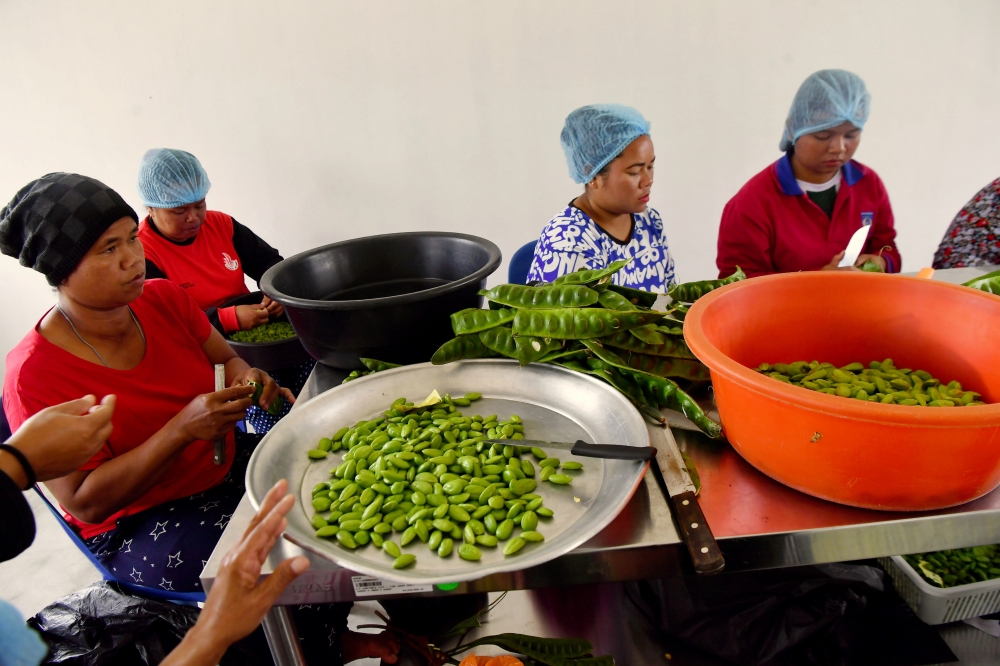
The Orang Asli community peel ‘petai’ pods at the Pos Musoh Orang Asli settlement. — Bernama pic
Why women
Despite the male lens of colonialism, attitudes on gender retain much of the egalitarian roots in many tribes.
Language studies expert Dr Rafidah Abd Karim, who has carried out research on feminism and women empowerment among four Orang Asli tribes, told Bernama that her studies found the tribes had gender roles, although the rigidity of their adherence to the roles varied.
She said men were providers while women took care of the home and children. However, that did not mean the women’s roles were viewed as lesser.
“Even though men hold leadership roles, women have strong involvement in their communities,” she said.
She said her research found women had egalitarian and feminist attitudes, such as agreeing that women should receive the same pay as men for the same work, and that women should have the same access to education as men.
So, it has now become more of an issue of access, whether Orang Asli women are given space to speak out on the issues important to them. Tijah and other Orang Asli women back up Rafidah’s findings.
“When we go to the community level, we see opinions and ideas coming from women. But they are not given the opportunity to present their ideas,” said Diana a/p Tan Beng Hui, one of the coordinators of the Apa Kata Wanita Orang Asli collective.
Nicholas said, in his experience, Orang Asli women tend to see the big picture, such as how their actions would benefit the next generation. The men, on the other hand, tend to think of utilising resources for the community’s immediate benefit.
Inclusive conservation efforts
Experts agree that having women in environmental conservation efforts would benefit all, especially as the world focuses more on using indigenous knowledge to stem climate change and reduce deforestation. They said having women, who tend to be keepers of their culture and heritage, involved would help these efforts.
While it is important for state authorities to require female representation on Orang Asli issues, sociologist Dr Kamal Solhaimi stressed that civil society organisations should also implement similar policies when dealing with the Orang Asli.
“We are introducing patriarchy not just through opportunities, and ironically, things like conservation can create this division, can entrench the division,” he told Bernama via Google Meet.
He said NGOs and universities, which usually pay the Orang Asli for their services as guides and interpreters, should put in policies to ensure both genders have equal access to the income these groups offer. The fear is that with income, jobs that bring in money will be more valued than unpaid labour, like child-rearing, which women tend to do.
He added that the policies should not necessarily require women to adopt masculine roles, such as hunting, unless they want to, but provide nurturing roles for women and any interested men, including teaching and passing on ancestral knowledge to the next generation.
Nicholas agreed, saying that civil societies have to play a role in ensuring female representation, citing his experience with the Temiar, where men were more dominant.
“Many times we have meetings, always the men attend. So we had to impose that, you know, it has to be a 50-50 representation. Only then, slowly, the women started coming. But if you go for internal, local meetings at the village level, it’s always the men who are in charge and talking. They are making the decisions,” he said.
As far as Tijah is concerned, the representation of Orang Asli women in discussions that impact the community could not come soon enough. Fighting for female representation since she was 17, this is an issue that is near and dear to her heart.
“The long-term impact is on women, but when society makes decisions, they don’t think about the impact that women also face,” she said. — Bernama