Kuala Lumpur: Malaysia is facing a growing STEM challenge, especially in Physics. This is reflected upon observing recent results in which only 22.7% of students enrolled in physics in SPM 2024, down from 25.1% in 2017. This drop may be attributed to the fact that studying physics is not as appealing as it used to be. Hence, a revamped method of teaching physics by ensuring it is more relatable to students should be the focus in order to once again boost interests in physics.
So, how do we spark interest in every student? The answer lies in the teacher’s creativity. Even with limited resources, learning can still be meaningful and engaging through the SPEED approach which teaches physics concepts through sports and real-life scenarios, making learning interesting and meaningful even with limited resources. Physics becomes more relatable, useful, and exciting when it is linked to activities that students enjoy and find familiar. This makes classrooms lively places for learning and exploration. So, with the right method, Physics can be made fun, practical, and accessible for all.
Lessons that are rooted in real-world situations and culturally relevant experiences help students not only understand but also retain the material.
So, what is SPEED and how could the teachers implement it?
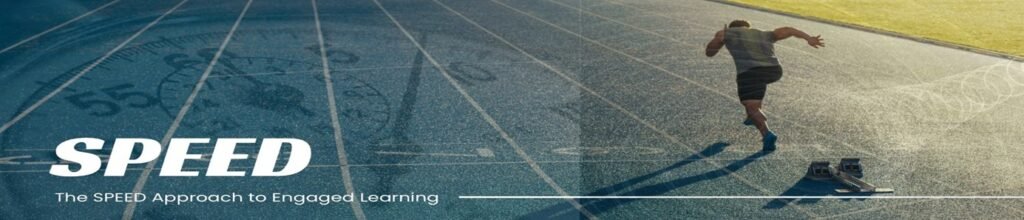
Sports Physics Education for Effective Engagement and Development or SPEED is a new interactive teaching approach that attempts to make physics not just intelligible but enjoyable as well.
“Physics doesn’t have to be dull. We make every game into a lesson with SPEED,”
This is how SPEED operates:
- S – Start with a real-world sports scenario.
- P – Present the Physics principle within that context.
- E – Engage students with hands-on activities or simulations.
- E – Encourage evidence-based analysis.
- D – Develop deeper theoretical understanding linked to broader scientific concepts.
The idea of exploring physics through sports is as straightforward of a concept as it sounds. One would think that it would be complicated trying to mix in something that students like, in this case sports, with physics would be impossible, but new studies and updated teaching methods might say otherwise.
Let’s take the most fundamental concept in physics, forces and motions. It is a fact that all kinds of sports revolve around the principles of force and motion, what teachers need to do is understand how to extract these ideas and present them to eager students. For instance, basketball shots illustrate parabolic motion, while rugby tackles and sprint starts aid students in comprehending Newton’s Laws. Wave behaviour can be explained by crowd noise and whistle sounds, and light principles can be demonstrated by reflections on courts or helmets. Games like hockey or futsal emphasise friction and energy transfer, while gymnastics and other sports reveal balance and centre of mass. When done properly, sports can make physics more interesting, relatable, and understandable.
The SPEED model works best for Form 4 topics like Measurement, Force and Motion, Heat, Waves, Light, and Electricity, as these are conceptual and closely linked to sports. It helps students learn through real-life, engaging scenarios.
However, it is less effective for Form 5 topics such as Electromagnetism, Electronics, Nuclear, and Quantum Physics, which are more abstract and not easily connected to sports. So, how can we tackle this? One solution is to combine SPEED with other teaching methods, like simulations, problem-based learning, to support deeper understanding of advanced topics.
From the roar of the crowd during a football game to the accuracy of a badminton rally, Malaysia has always had a strong bond with sports. Using that enthusiasm in the classroom has benefits beyond raising test scores. It develops problem-solving skills, stimulates creativity, and piques curiosity. Initiatives like SPEED are not only beneficial, but crucial as we advance with Education 5.0. They make science relevant, promote teamwork, and cultivate critical thinking. Because students aren’t just studying when they can see physics in every kick, sprint, and spin. They are going through it.
Authors:
Farah Najwa binti Mat Raai
Nur Husnina Farisha Binti Khairul Sham Sol
Master of Education Physics Student, Universiti Pendidikan Sultan Idris.
Dr. Mohd Mokhzani Binti Ibrahim
Lecturer, Faculty of Science and Mathematics, Universiti Pendidikan Sultan Idris.