FEBRUARY 12 — The success of the healthcare system is often measured by its hardware, where we count the resolution of MRI machines or the precision of the robotic surgical arms. As a biomedical engineering student, I have spent the last four years studying the physics and mathematics that make these miracles possible. Yet, as I approach graduation and prepare to enter the industry, I have realised a fundamental truth that is not always in the textbooks: The most advanced machine in the world is useless if it terrifies the patient it is meant to save. Only when healthcare design begins with empathy, technology becomes a powerful tool for healing rather than a source of fear and uncertainty.
For many patients, a hospital visit is an emotional encounter that is fraught with anxiety, despair and helplessness. To truly serve the patients, medical equipment must evolve beyond being mere displays of numerical data. They must function not only as clinical tools, but also as empathetic technologies that raise patients’ spirits while treating their conditions.
Over the past decades, there has been an exponential growth in technologies, especially the technologies in the medical field. By just simply clicking a button, medical devices are able to measure biosignals and generate accurate results in minutes. At the same time, current imaging technology has achieved unprecedented levels of detail, given the fact that the highest resolution for MRI and Photon-Counting CT can reach 0.2 mm (200 microns), allowing the visualisation of deep soft tissues like the brain and the detection of coronary stent’s blockage. Nevertheless, the complex procedures and unfamiliar devices will trigger the overwhelming feelings among patients in such impersonal environments. This highlights the vital importance of empathetic equipment design that not only delivers excellent medical care but also provides comfort, ensuring a far better experience for the patient.
Empathy in healthcare design means to prioritise the patient experience while providing clinical accuracy. Before designing any healthcare devices, an essential question should be asked: Does this equipment intimidate patients and create psychological barriers that might hinder the treatment process? Are there any approaches which can decrease the psychological burden of patients during these procedures? Only when engineers manage to integrate the human considerations into their design, an empathetic equipment can be produced to maximally treat the patients with minimised fear.
In the real world, there are a few examples demonstrating how empathetic equipment design can reduce patients’ anxiety and lead to better healthcare. One remarkable example of empathetic equipment is the MRI machine particularly in the paediatrics department which is designed for kids. The Adventure Series of MRI machines by GE Healthcare were designed by Doug Dietz and were marketed around 2010-2011. The story behind the design was that Doug Dietz witnessed a terrible experience of a girl when he was overseeing the installation of the new MRI machine at the hospital in 2009. At that time, the girl broke down in tears and refused to take the scan as the noisy MRI machine was scary. Lastly, an anaesthesiologist was called for the sedation so that the girl can lie down still in the MRI machine. From the visit, he also got to know that nearly 80 per cent of paediatric patients were sedated before the MRI scans. Thus, he decided to implement some interesting adventurous elements on the MRI machine by transforming it to a colourful “pirate ship” or “spaceship”, or even a “canoe” floating on the river. Instead of feeling frightened, the kids perceived the scan as an exciting voyage. This shows how empathy in healthcare design can comfort the patients and reduce avoidable interventions and resource use.
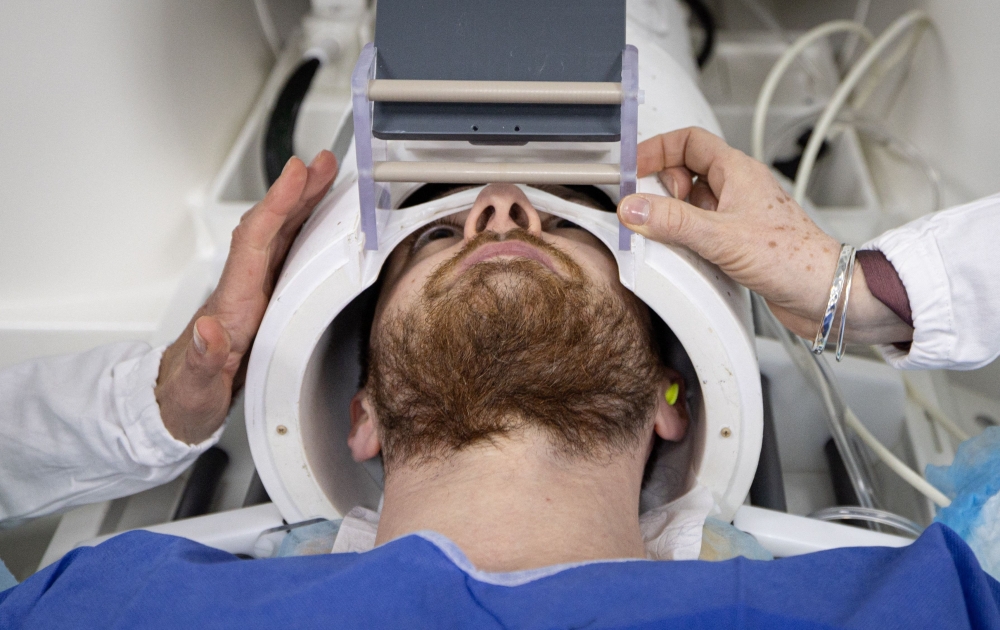
A volunteer takes part in a magnetic resonance imaging (MRI) exam simulation on the Iseult Magneton 11.7 T MRI at the Neurospin facilities in the Paris-Saclay Alternative Energies and Atomic Energy Commission. — AFP pic
Empathy is also reflected in the non-invasive and wearable healthcare devices as ini devices will ease the life of patients who need to regularly visit the hospital or frequently receive needle-based procedures, especially those with chronic conditions or immobile patients. Medical wearables are able to continuously monitor the vital signs of patients such as heart rate, oxygen saturation (SpO2) and blood pressure in the background without disrupting the patients’ daily routine. Instead of visible medical interventions, patients can manage their health at their comfort zone privately and maintain their dignity. Furthermore, non-invasive devices can minimise the need for frequent needle insertions or invasive procedures. By reducing pain and bruising, patients will be more optimistic as they do not need to undergo repeated physical stress. Hence, non-invasive and wearable healthcare devices reflect empathy by recognising that effective treatment should fit into patients’ lives, not force patients to adapt to technology.
Importantly, empathetic healthcare design recognises the innate human need for connection and emotional warmth. A significant evidence is the neonatal incubators designed with parent access. By allowing parents to see, touch and bond with their newborns, ini incubators acknowledge that healing is not purely clinical. Emotional connection between parents and infant becomes an essential part of care, benefiting both physical recovery and psychological well-being. Another profound innovation in the healthcare system is ‘Family-Integrated’ ICUs, which incorporate sleeping zones directly within the patient’s room. By facilitating continuous connection rather than isolation, ini design has the capacity to stabilise emotional well-being. It validates that the presence of a loved one is a clinical catalyst, not an operational hindrance.
Ultimately, good healthcare design begins with empathy, not equipment. The future of medicine is defined not merely by smarter machines, but by how thoughtfully they integrate into human lives. By prioritising emotional well-being alongside clinical performance, engineers can transform technology from cold hardware into a trusted partner in healing. This ensures that as healthcare evolves, it remains deeply human, proving that the most advanced innovation truly understands the person it serves.
* Toh Ka Peng is a final year student at the Department of Biomedical Engineering, Faculty of Engineering, Universiti Malaya, enrolled in an elective course entitled “Healthcare Technology and Clinical Management”, and may be reached at [email protected]
** This is the personal opinion of the writer or publication and does not necessarily represent the views of Malay Mail.