MARCH 23 — Beijing, as a civilization-state, is fully entitled to its concerns over Japan, especially when Prime Minister Sanae Takaichi’s remarks on Taiwan appeared to shift Tokyo away from its long-held strategic ambiguity.
When she suggested that a Chinese attack on Taiwan or even a blockade could constitute a “survival-threatening situation” for Japan, the implications were unmistakable: Tokyo may be preparing its legal and strategic framework for collective self-defence in a contingency involving the Taiwan Strait. China reacted swiftly and critically.
Yet what is striking is not Beijing’s response, but the relative restraint across the rest of Asia since November 2025. Singapore just concluded a “strategic partnership” with Japan. Prime Minister Lawrence Wong remarked that Singapore will “not forget history” but has decided to go beyond it. This attitude seems emblematic of many countries in Asia especially those in Asean too. Why?
One of the reasons many Asian countries did not rally behind China in the way one might have expected was sheer pragmatism. In a geopolitically challenging world there is no need to be entrapped in the debate of great powers.
Nor did they echo Japan’s position in full. No one sided with Japan. Instead, they chose caution.
This hesitation is not indecision. It reflects something deeper about Japan’s place in Asia today too.
Japan is no longer viewed solely through the lens of its imperial past, although history remains a powerful undercurrent.
Rather, it is increasingly understood as a post-modern state – one that has traversed war and peace, economic miracle and stagnation, technological dominance and demographic decline.
For many Asian countries, Japan is neither simply a partner nor a rival. It is a living archive of experience.
That is precisely why Asia cannot afford to turn away from Japan. Japan’s economic and developmental footprint across the region remains profound.
Through decades of Official Development Assistance, infrastructure financing, industrial relocation and technology transfer, Japan has been one of the principal architects of Asia’s modernisation.
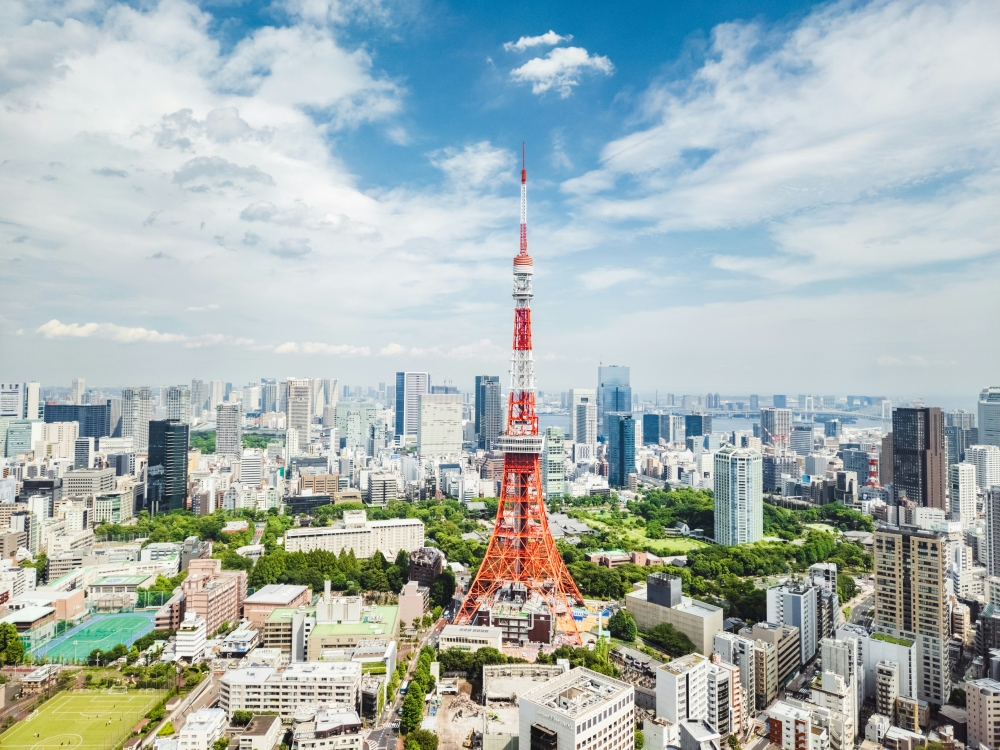
The author argues that Japan, as a post-modern state shaped by both economic success and social challenges, offers Asia – especially South-east Asia – valuable lessons in resilience, development, and strategic engagement that the region cannot afford to ignore. — Unsplash pic
From South-east Asia’s manufacturing corridors to its transport networks, Japanese involvement is both deep and enduring.
Even today, Japan continues to provide fiscal and strategic support, including its newer initiatives in Official Security Assistance.
While Japan itself is burdened by one of the highest public debt levels in the world, its capacity to assist others has not diminished.
For many developing countries, Japanese support remains a stabilising force, particularly in times of uncertainty.
But Japan’s importance is not limited to what it gives materially. It also lies in what it reveals.
Japan is perhaps the first Asian country to fully experience the contradictions of advanced capitalism. Its long stagnation after the bursting of the asset bubble in the early 1990s, its rapidly ageing population, and its evolving labour market have all produced social phenomena that are now increasingly visible elsewhere in Asia.
Terms such as hikikomori, referring to extreme social withdrawal, and freeter, describing irregular or precarious employment among youth, are no longer uniquely Japanese.
They are early indicators of stresses that many Asian societies may soon confront more broadly. In this sense, Japan generates both positive and negative externalities.
Its economic success lifted much of Asia, but its social challenges now serve as warnings.
For countries still in the midst of development, Japan offers not just a model to emulate, but also a future to interrogate. This duality is what makes Japan a post-modern state in the Asian context.
It is a country that has internalised the limits of growth, the burden of prosperity, and the complexity of maintaining social cohesion in an advanced economy. It has renounced the use of force as a primary instrument of statecraft, yet remains deeply embedded in regional security networks.
It has faced stagnation without collapse, and uncertainty without systemic breakdown.
In a world increasingly defined by what Prime Minister Anwar Ibrahim has termed “post-normality” – where crises overlap and certainty dissolves – such a trajectory is not a weakness. It is a form of strategic knowledge.
This helps explain why many Asian countries have not aligned themselves reflexively with China over the Taiwan issue.
While there is widespread concern about escalation and instability in the Taiwan Strait, there is also recognition that Japan cannot be reduced to a single statement or policy shift.
Japan is too integrated into Asia’s economic, institutional and strategic landscape to be treated as an adversary.
At the same time, China’s position is neither irrational nor unexpected. Beijing views Taiwan as a core national interest, and any perceived shift in Japan’s stance will naturally be met with suspicion.
China is also navigating its own complex relationships, including its ties with North Korea, which similarly reflect its strategic priorities.
Yet Asia is not compelled to choose sides in absolute terms.
The region’s countries have learned, often through painful experience, that strategic autonomy requires nuance. Aligning too closely with any one power risks undermining domestic stability and regional cohesion.
This is especially true for South-east Asia, where diversity of political systems, economic structures and security concerns necessitates a careful balancing act.
In this balancing act, Japan plays a unique role.
Unlike larger powers that often project influence with intensity or urgency, Japan’s engagement has been characterised by consistency and patience.
Its development assistance has rarely been accompanied by overt political conditionality. Its investments have been long-term. Its diplomacy has been measured.
This has earned Japan a degree of trust that is not easily replicated.
More importantly, Japan’s internal challenges resonate with those emerging across Asia.
Urbanisation, youth unemployment, declining birth rates, social fragmentation and the psychological pressures of modern life are no longer distant concerns.
They are becoming central policy issues. Japan has already confronted many of these realities.
It has not solved them entirely, but it has endured them.
That endurance matters.
It provides Asian countries with a reference point – not for perfection, but for resilience. Japan demonstrates that even a highly advanced society can struggle, adapt and persist without losing institutional coherence.
This is why Asia cannot detach itself from Japan, even amid geopolitical tensions.
To do so would be to ignore a critical source of insight into the region’s own future. Japan’s trajectory offers lessons that are both cautionary and constructive.
It shows that growth must be balanced with social well-being, that technological advancement must be accompanied by human connection, and that stability requires constant recalibration.
In the end, the question is not whether Asia should side with Japan or China in moments of tension.
The more important question is whether Asia can learn from both without being consumed by either.
Japan’s value lies precisely in this space of learning.
It is not merely a partner in trade or security.
It is a mirror of what Asia is becoming – and a reminder of what it must manage carefully as it advances.
In a century marked by overlapping crises, that may be Japan’s most enduring contribution to the region.
* Phar Kim Beng is a professor of Asean Studies and director at the Institute of International and Asean Studies, International Islamic University Malaysia.
** This is the personal opinion of the writer or publication and does not necessarily represent the views of Malay Mail.