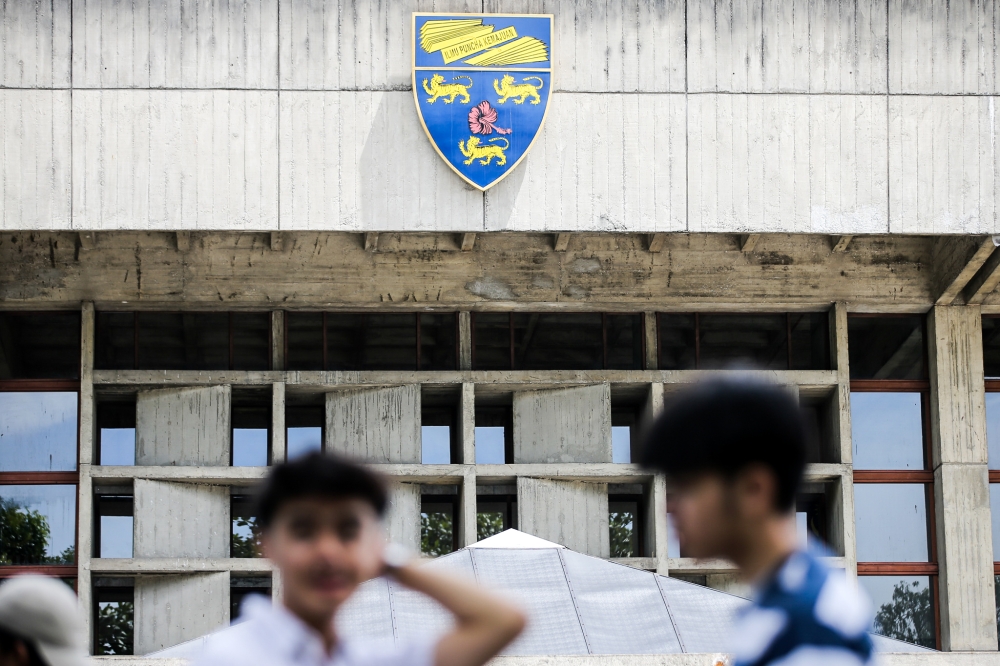
KUALA LUMPUR, March 25 — Malaysia’s universities recorded an overall 18 per cent net improvement in the QS World University Rankings by Subject 2026, but beneath that headline figure lies a story that is far more complicated.
While specialist institutions like Universiti Teknologi Petronas and UCSI University surged forward, the country’s most comprehensive research university, Universiti Malaya, posted a net improvement rate of negative 25 per cent — the starkest divergence in the national results.
UM entered more subjects than any other Malaysian university, fielding 40 narrow subject entries and five broad faculty areas, giving it the widest footprint in the rankings by some distance.
Yet of those 40 entries, 19 dropped, 11 remained stable, and only nine climbed, a scorecard that raises questions for an institution that has long been regarded as Malaysia’s flagship university.
The most pointed decline came in Computer Science and Information Systems, where UM fell from 64th to 86th, in a subject where digital capability is increasingly treated as a national economic priority.
UM also slipped in several engineering disciplines and failed to recover its highest-ever position of 72nd in Business and Management Studies, a rank it last held in 2018 and has not approached since.
Taylor’s University told a similar story in its own signature subject, dropping from 20th to 26th in Hospitality and Leisure Management, having once ranked as high as 14th in 2019 when it set what was then Malaysia’s highest-ever subject ranking.
Meanwhile, UTP climbed in nine of its eleven entries and dropped in only two, producing a net improvement rate of 82 per cent that made it the most improved university in Asia Pacific and second most improved in the world.
UCSI University was equally purposeful, debuting at 24th in Music, breaking into the top 50 in both Art and Design and Hospitality and Leisure Management, and recording six new entries in a single edition.
The contrast invites a pointed question: as Malaysia’s specialist universities sharpen their focus and reap the rewards, are the country’s broad-based research universities spreading themselves too thin to compete?
QS senior vice president Ben Sowter acknowledged the structural dimension behind the divergence, saying that “targeted investment in specialist disciplines and industry-linked research can translate into global impact.”
His framing implicitly identifies what the data makes explicit: that breadth without focus carries a cost, and that the institutions gaining ground fastest are those that have chosen depth over coverage.
Sowter also pointed to the policy environment as a shaping force, noting that Malaysia’s overall improvement “reflects the long-term impact of reforms set out in the Malaysia Education Blueprint 2015-2025 and its continuation in the new Malaysia Higher Education Blueprint 2026-2035.”
Yet if that blueprint is lifting the national average, it is not lifting all universities equally, and the gap between the risers and the sliders is wide enough to demand attention from policymakers, university leaders, and prospective students alike.