- Nearly 100,000 Malaysian children live with uncorrected vision problems, which halves their learning capacity compared to their peers.
- World-first research shows children with corrected vision could earn up to RM363,753 more over their lifetime by boosting their academic performance.
- In total, Malaysian children could lose over 37,000 years of schooling every year due to poor vision.
- Providing glasses could boost Malaysia’s economy by RM3.15 billion annually — almost half the allocation for 2024’s TVET budget.
- Simple eye health interventions, like tests and glasses, could help address the global ‘learning crisis’.
KUALA LUMPUR, Oct 10 — Nearly 100,000 children in Malaysia start their school day without clear vision — and it’s affecting their futures.
A new report released on World Sight Day 2024 reveals that children with uncorrected vision problems — such as short-sightedness or astigmatism — learn half as much as their peers with clear vision.
Seva Foundation Chief Economist Brad Wong said, “This is the first global estimate of learning losses linked to poor vision.
“Most of these refractive errors are simple to treat, yet they’re often overlooked, costing both individuals and society.”
The study, conducted by the International Agency for the Prevention of Blindness (IAPB) and the Seva Foundation, estimates that providing glasses to all affected children could add over 37,000 years of schooling, contributing an economic boost of RM3.15 billion annually — nearly half of Malaysia’s 2024 national budget for technical and vocational education.
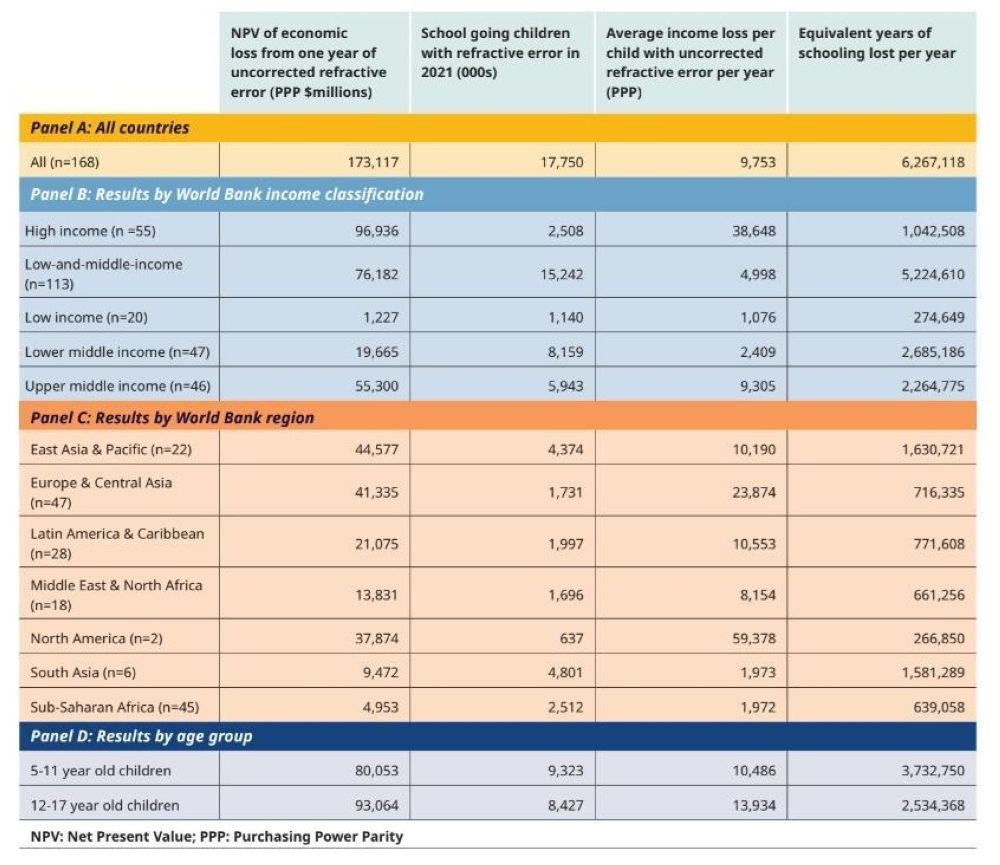
The impact of uncorrected vision problems on education and the money lost because of it. — Picture courtesy of International Agency for the Prevention of Blindness
This learning gap has serious long-term effects, both educationally and economically.
Children who receive glasses by age five, on average, earn 96.3 per cent more over their lifetime compared to those without glasses.
The challenge lies in both awareness and access, as many children miss vital eye tests due to lack of awareness or availability of screenings.
Experts believe that regular eye exams could prevent up to half of the learning loss.
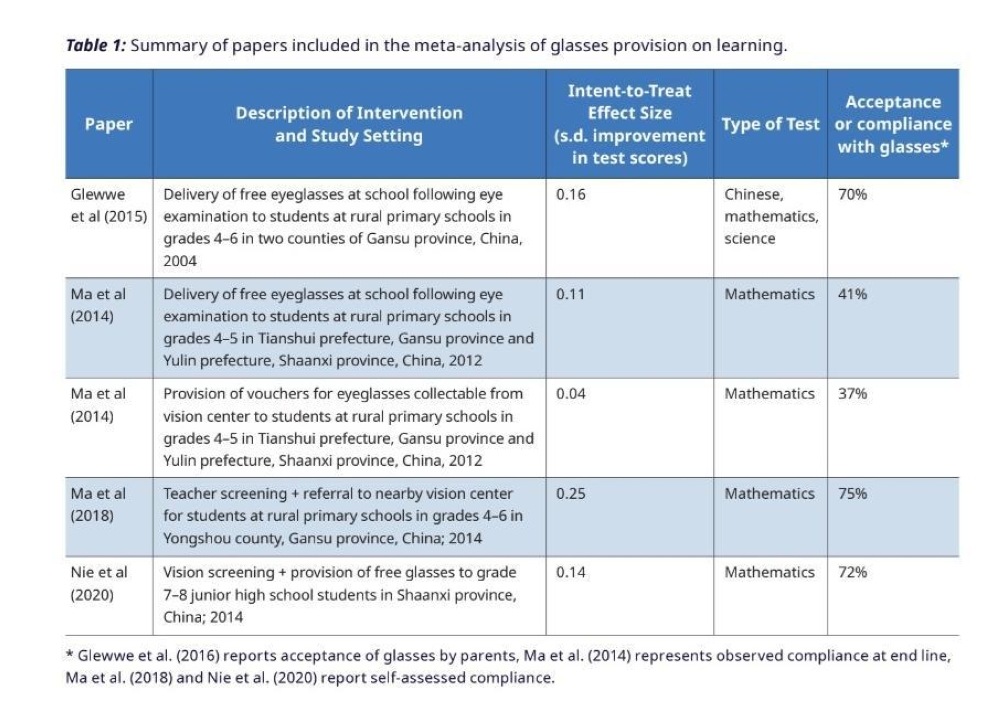
An overview of studies on how giving glasses affects learning. — Picture courtesy of International Agency for the Prevention of Blindness
However, even when children do receive glasses, they need support to wear them consistently to maximise the benefits.
Economically, the case for vision correction is clear.
As IAPB CEO Peter Holland puts it, “Early intervention, regular eye checks, and access to quality eye care are critical to unlocking educational opportunities and boosting children’s future economic potential.”
In Malaysia and worldwide, vision correction isn’t just about clearer sight — it’s a gateway to brighter futures for individuals and economies alike.