IPOH, Feb 22 — I visited Buntong for the first time last year, despite having been to Ipoh multiple times each year for as long as I can remember.
Truth be told, I didn’t know much about Buntong beyond its reputation for kacang putih, and I was only there to track down a story about a family-run, old-school wantan mee spot run out of a house.
This year, as part of my family’s annual Chinese New Year pilgrimage back to Ipoh, we were faced with the same inevitable conundrum we encounter every year: reunion dinner is settled, as are lunch and dinner on the first day, but what do we eat besides that?
Ours is a small family — I don’t have any cousins on this side — so there isn’t much in the way of visiting or even playing cards, and most of our favourite Chinese spots are either closed for the holidays or swarming with hordes of people.
That’s when my uncle suggested Esther’s Appam Stall in Buntong. The stall is a makeshift structure without a sign, located right next to the Kampung Baru Buntong police station.
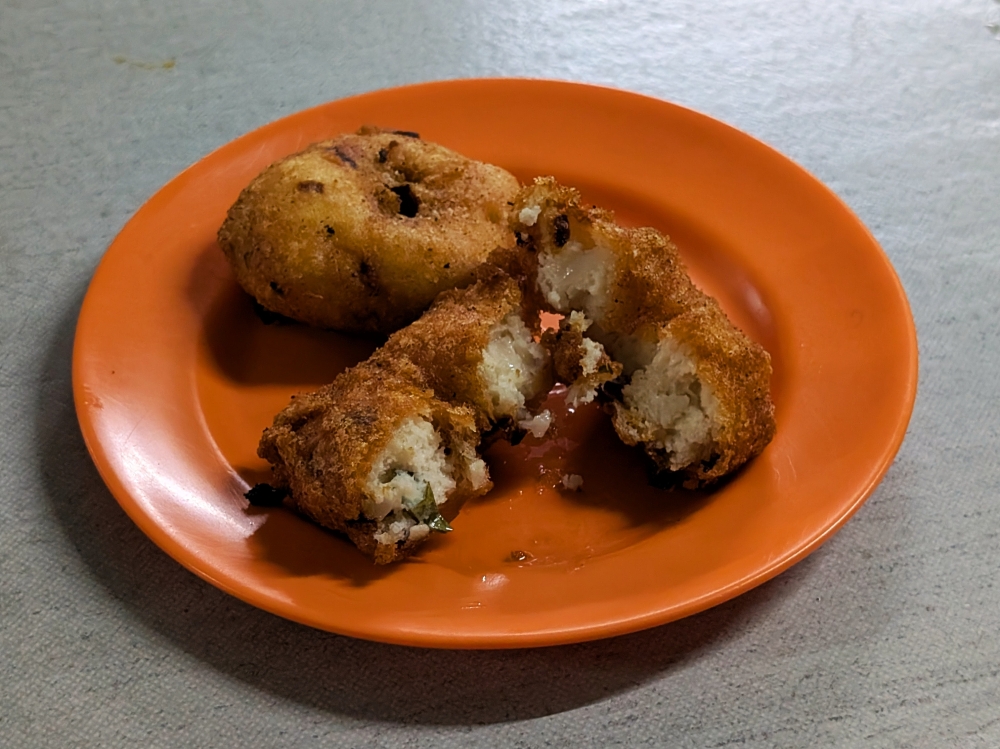
Super crispy and fluffy ‘vadai’ are part of the draw at Esther’s. — Picture by Ethan Lau
At first glance, a line snaking out of the left entrance momentarily dashed my hopes of getting a quick bite, but as we walked closer, I realised it was the takeaway line.
Most of it comprised folks looking for Esther’s more substantial offerings — nasi lemak, mee goreng, mihun goreng, kuey teow goreng and nasi goreng.
Next to this is the kitchen, where I watched appam and thosai get made fresh to order.
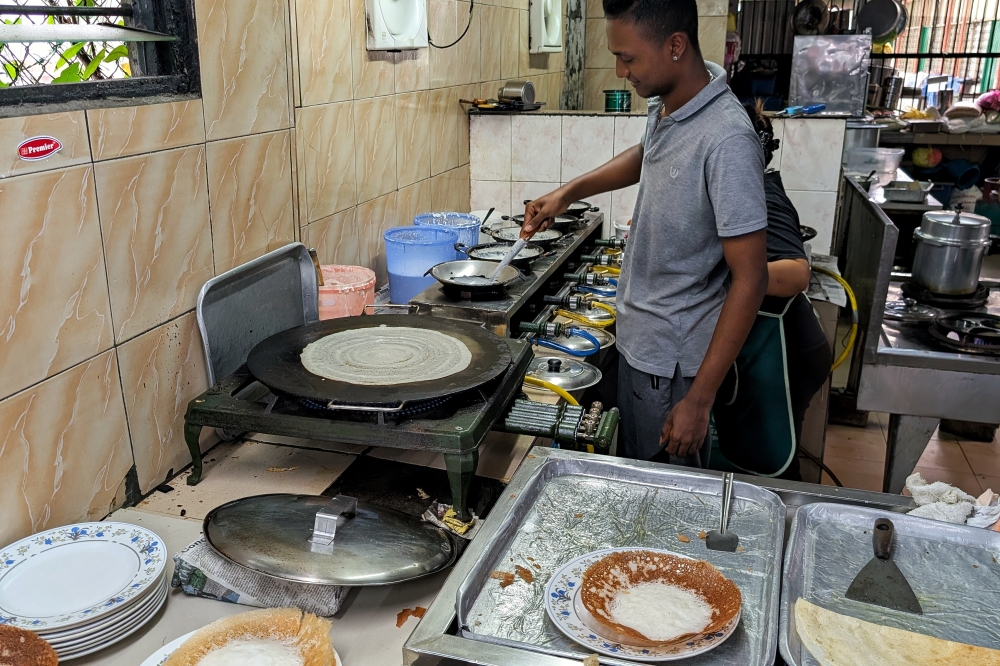
‘Thosai’ and ‘appam’ being made fresh to order. — Picture by Ethan Lau
A kindly gentleman ushered us in through the entrance on the right, where we took our seats and placed our orders: vadai (RM1.50 for two pieces), special appam (RM3), and paniyaram (RM2.50 for four pieces).
Vadai is common enough throughout most of Malaysia, with many places serving the most common version made from urad dal, or black gram and flour, though they vary widely in texture and taste.
These savoury, deep-fried fritters are shaped like doughnuts, and at their best, they are shatteringly crisp on the outside with a light, fluffy interior.
Esther’s ranks among the very best, the insides studded with bits of curry leaf and onion, and they are complemented wonderfully by the four condiments you can choose from: dal, chicken curry, coconut chutney and sambal.
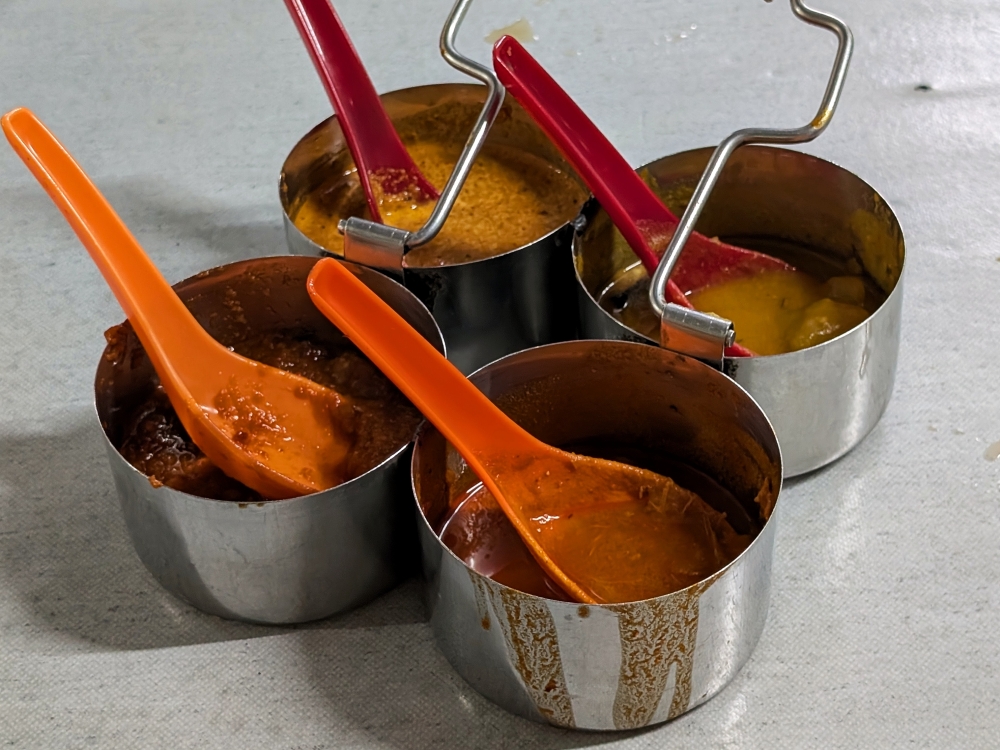
Don’t miss out on the condiments: ‘dal’, chicken curry, coconut chutney and ‘sambal’. — Picture by Ethan Lau
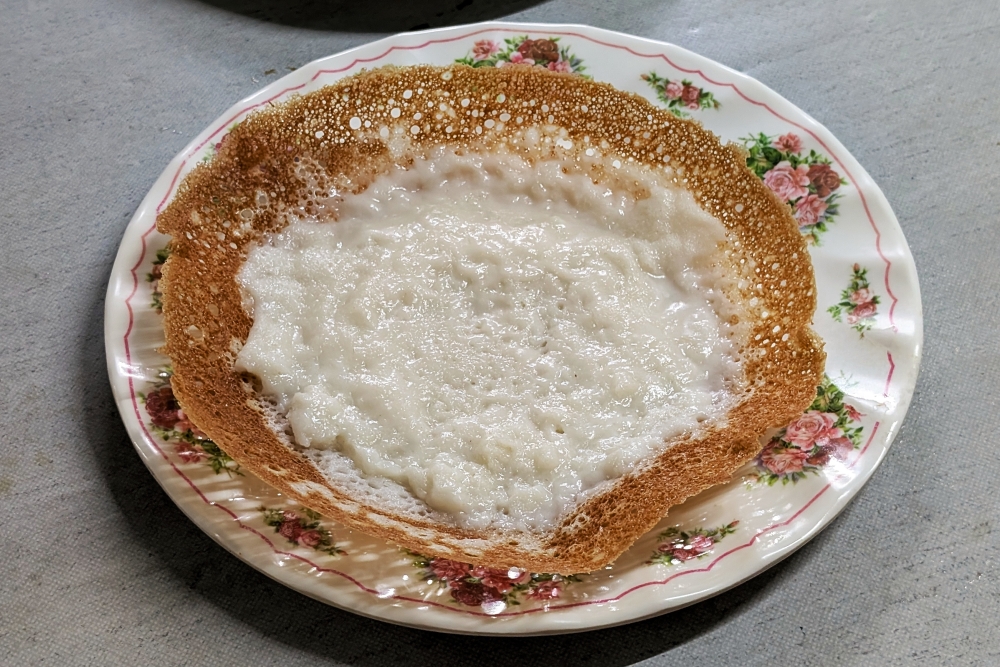
Now for the titular item. Esther’s offers a variety of paal appam — what most Malaysians picture when they think of appam, with lacy, thin edges and a thicker centre — including a plain version, one with egg, and a sweet one topped with brown sugar.
We opted for the special appam which comes with a thick layer of coconut milk pooled in the centre.
The result is a soft, creamy middle that’s gently sweet, framed by thin, caramelised edges; tremendous on any day, but especially welcome after a night of steamed fish and waxed meats.
Our curiosity was piqued by the next table, who were making short work of a small plate of what looked like lightly browned idli.
Noticing our curiosity, our neighbours explained they were actually paniyaram, also known as paddu, made from a batter of lentils and rice, much like idli, but cooked in a special moulded pan resembling a takoyaki pan, which gives them their rounded shape and crisp exterior.
The interior is soft, fluffy and slightly sour, making them ideal with any of the four condiments — the coconut chutney, with its cool yet slightly spicy kick, is the ideal pairing.
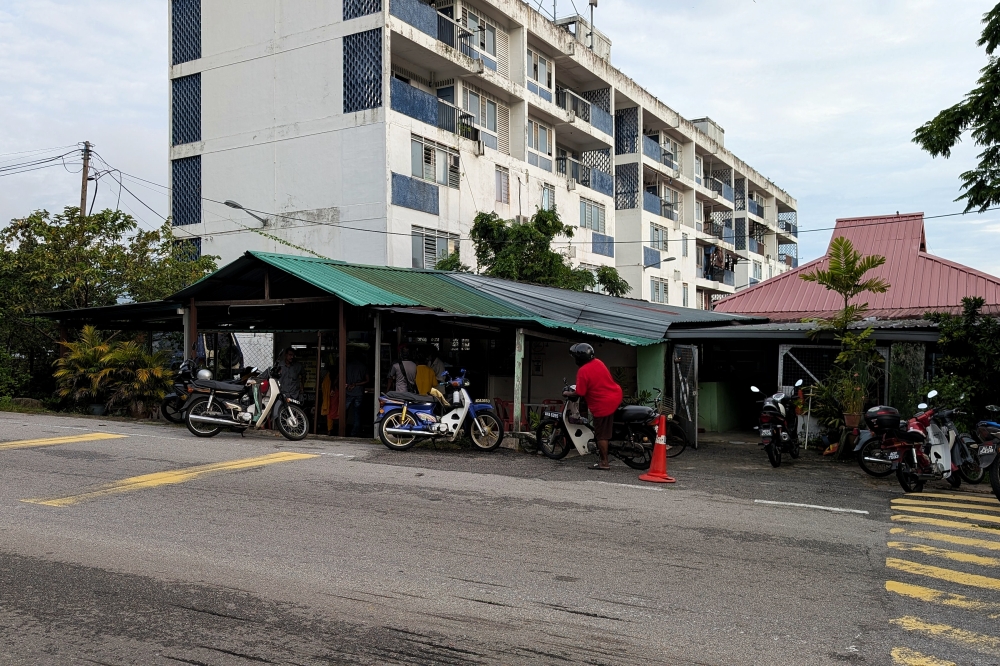
Esther’s Appam Stall is located next to the Buntong police station. — Picture by Ethan Lau
Esther’s Appam Stall
55, Jalan Sungai Pari,
Buntong, Ipoh.
Open Monday to Saturday, 6.30am-4pm
Tel: 012-263 6689
* This is an independent review where the writer paid for the meal.
* Follow us on Instagram @eatdrinkmm for more food gems.
* Follow Ethan Lau on Instagram @eatenlau for more musings on food and occasionally self-deprecating humour.