MARCH 18 – If you work in sustainability, you’ve felt the buzz.
It’s the defining challenge of our age, and a new breed of science has risen to meet it: Sustainability Science.
It promises to be holistic, solutions-oriented, and bridge the gap between knowledge and action.
But a decade into its adolescence, a piercing question emerges: Is it delivering on its revolutionary promise?
An earlier review by Joachim Spangenberg, still shockingly relevant today, offered a clear-eyed diagnosis: not yet.
His analysis suggests the field, for all its noble aims, risks becoming a well-meaning academic bubble – rich in theory but poor in real-world impact.
The diagnosis: A science at odds with itself.
Spangenberg’s core critique is that Sustainability Science is often paralyzed by its own complexity.
Its foundational strength – understanding the interconnected “triple bottom line” of environment, society, and economy – becomes a weakness in practice.
The systems are so vast, the feedback loops so intricate, that researchers can spend careers mapping problems without ever pointing decisively to solutions.
This leads to what he identifies as key failures.
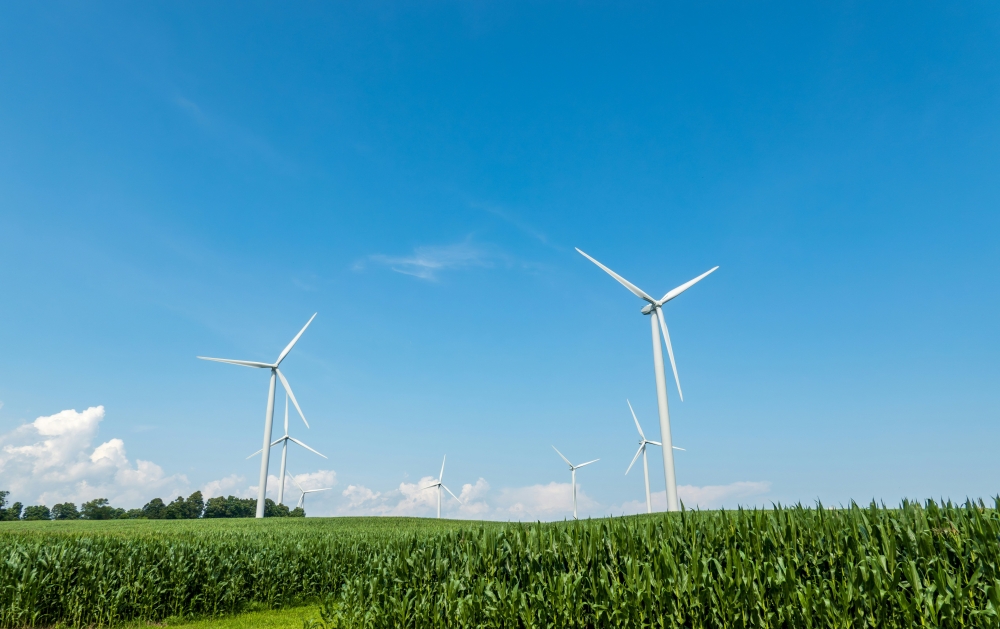
Experts say sustainability research must move beyond theory and engage more directly with real-world transitions in energy, agriculture and development. — Unsplash pic
Fragmentation over integration: The field splinters into environmental, social, and economic silos, mirroring the very disciplinary divides it sought to transcend.
We get deep dives on carbon cycles or social equity, but fewer genuine syntheses showing how changing one would affect the others.
Descriptive, not transformative: Much work excels at describing our unsustainable trajectory (think ever-more-precise climate models) but hesitates at the politically and ethically fraught task of prescribing concrete, normative pathways out of it.
It’s easier to model a 2°C warmer world than to design the politically viable tax policy to avoid it.
Next is political timidity: True sustainability challenges power structures, economic models, and consumption patterns.
Yet, Spangenberg argues, the science often pulls its punches, seeking consensus and “win-wins” in spaces where fundamental trade-offs and conflicts of interest are the reality.
It tries to be a neutral arbiter in a fundamentally non-neutral arena.
The prescription: From analysis to agency.
So, is the diagnosis terminal?
Far from it.
Spangenberg’s review is a rallying cry, not a eulogy.
He outlines the tough medicine the field must swallow.
Embrace transdisciplinarity, not just interdisciplinarity: It’s not enough for ecologists to talk to economists.
True transdisciplinarity involves co-creating knowledge with stakeholders – farmers, city planners, community activists – from the outset.
The research question itself must be shaped by the needs of those facing the sustainability challenge.
Become solution-oriented and design-focused: Move beyond “what is wrong” to “how to fix it.”
This means prototyping, experimenting with alternative systems (like circular economies or agroecology), and studying transitions.
It’s a shift from being a critic to being an architect.
Confront normativity and power head-on: Sustainability is a value-based goal.
The science must openly grapple with questions of justice, equity, and desirable futures.
This means analyzing who wins and loses from current systems and proposed solutions, and engaging with political and economic realities, not shying away from them.
The unlearned lesson over a decade on.
The sobering truth in 2026 is that Spangenberg’s critique remains urgent.
While pockets of brilliant, transformative work exist, the mainstream of sustainability research, funding, and publishing still often rewards complexity analysis over actionable intervention.
The empirical lesson for scientists, policymakers, and funders is this: We must stop rewarding sustainability science merely for being about sustainability.
We must reward it for advancing sustainability.
That means funding messy, real-world experiments.
It means promoting researchers who collaborate with communities and policymakers.
It means accepting that rigorous science can look like a pilot project for a just energy transition as much as a high-impact factor paper on atmospheric chemistry.
Sustainability science set out to be different.
It’s time it fully lives up to that ambition, steps out of its comfortable bubble, and embraces its essential, tumultuous role as a catalyst for real-world change.
Our trajectory remains unsustainable.
The science meant to guide us out of it cannot afford to be a passive observer.
At UCSI University, the recently formed International Institute for Science Diplomacy and Sustainability, IISDS, is well suited to spearhead the change.
* The author is affiliated with the Tan Sri Omar Centre for STI Policy Studies at UCSI University and is an adjunct professor at the Ungku Aziz Centre for Development Studies, Universiti Malaya. He can be reached at [email protected].
** This is the personal opinion of the writer or publication and does not necessarily represent the views of Malay Mail.