MARCH 8 — All roads to hell are paved with good intentions, goes one well-known adage.
In urging Malaysia to adopt a more open and activist approach in mediating the conflict involving Iran, some NGOs in Malaysia may have missed the forest for the trees.
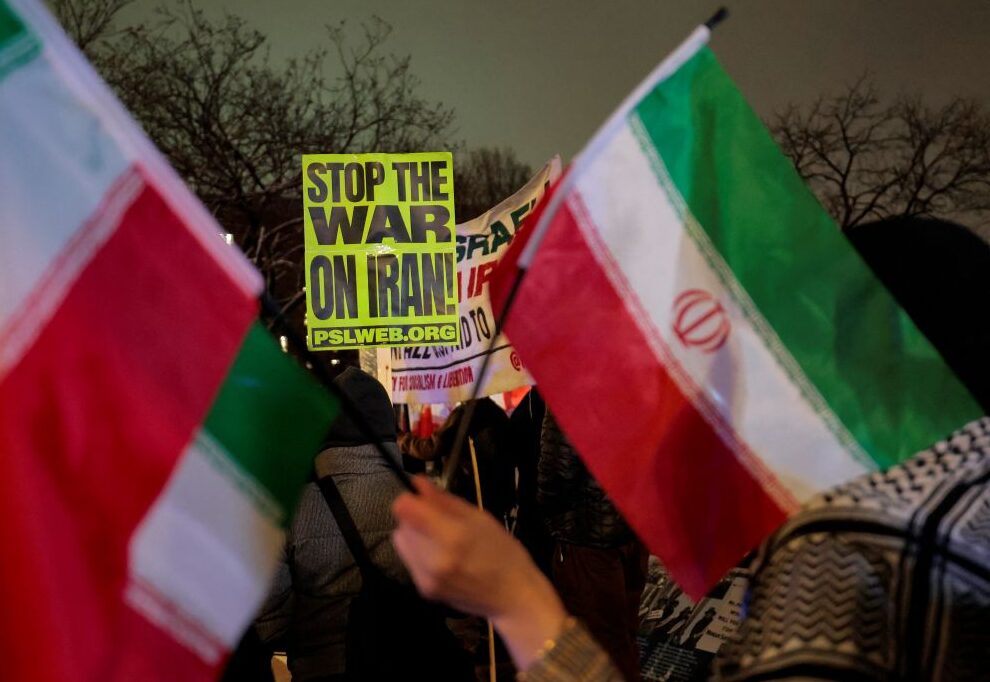
On March 7th, several Muslim NGOs gathered at the Institute of Advanced Islamic Studies (IAIS) have advocated a far more confrontational approach.
They urged Prime Minister Anwar Ibrahim to mobilise Asean and the Organisation of Islamic Cooperation (OIC) in a more aggressive manner to stop the war involving Iran.
While such sentiments may be emotionally understandable, they reflect a misunderstanding of how diplomacy actually works.
Their proposal risks pushing Malaysia into a frontal confrontation with the United States while simultaneously antagonising the Gulf Cooperation Council (GCC), which is currently striving to prevent the conflict from escalating further.
The GCC — comprising Saudi Arabia, the United Arab Emirates, Bahrain, Kuwait, Oman and Qatar — does not want Iran to be further aggrandised or publicly applauded at this delicate moment.
Instead, the GCC prefers that all sides return to the status quo ante, where composure, restraint and calm diplomacy can prevail over military escalation.
Malaysia therefore has strong reasons to maintain its tradition of quiescent diplomacy, a method of quiet engagement that avoids theatrical confrontation while still advocating peace.
Indeed, on March 7 the Provisional Leadership Council of Iran affirmed that Tehran would not attack its neighbours in the GCC unless those countries were used as staging grounds for further attacks against Iran.
The President of Iran even issued an apology to countries that had been struck by Iranian missiles and drones during the past eight days, stating clearly: “When our neighbours do not attack us, we will not attack them.”
This statement marked an important moment of de-escalation. Significantly, it came after Prime Minister Anwar Ibrahim personally called the Iranian President urging restraint and diplomacy — the same position he had articulated earlier in the Malaysian Parliament.
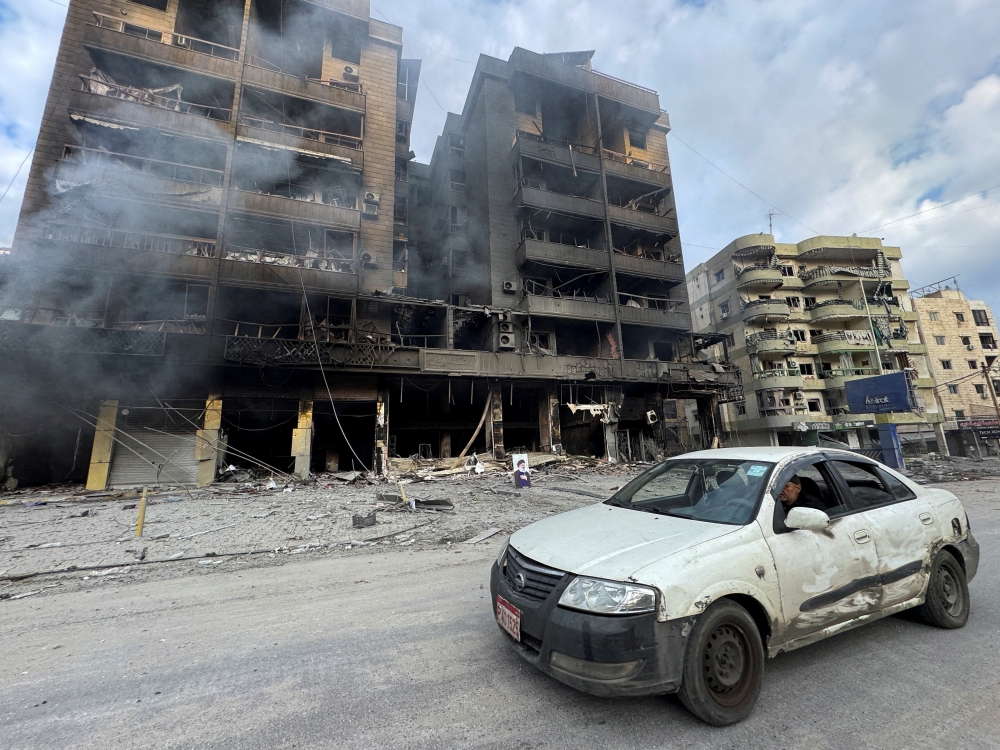
A car drives past burned buildings after an Israeli strike on Beirut’s southern suburbs, following an escalation between Hezbollah and Israel amid the US-Israeli conflict with Iran, Lebanon, March 7, 2026. — Reuters pic
Such developments demonstrate that Malaysia’s quiet diplomacy is not passive. Rather, it is calibrated and strategic.
There are ten compelling reasons why Malaysia’s quiescent diplomacy is stronger and wiser than loud activism.
The first reason is credibility through restraint. Malaysia has long cultivated a reputation as a country that prioritises dialogue over confrontation.
This credibility allows Malaysia to communicate with all sides without being perceived as partisan or ideological.
The second reason is respect for institutional procedures. Asean and the OIC cannot be mobilised by any single member state acting alone.
Both organisations operate through consensus. For Malaysia to appear as if it is unilaterally pushing these institutions into the conflict would undermine their credibility.
The third reason is recognition of geopolitical realities. The countries that have the greatest influence over American military deployments in the Gulf are the GCC states themselves. They host key American bases and possess enormous strategic leverage through energy markets. Malaysia does not occupy that position.
The fourth reason is strategic neutrality. Malaysia has long maintained balanced relations with major powers including the United States, China, Europe and the Middle East. Publicly aligning itself with one side in a volatile conflict would jeopardise that balance.
The fifth reason is quiet persuasion works better than megaphone diplomacy.
Diplomatic breakthroughs often occur through private conversations rather than public condemnation.
Prime Minister Anwar Ibrahim’s call to the Iranian President illustrates how quiet dialogue can encourage de-escalation.
The sixth reason is the importance of regional sensitivity in West Asia.
The GCC countries are currently trying to prevent Iran from expanding its influence through military confrontation. Loud support for Tehran in South-east Asia could inadvertently undermine the delicate balancing efforts of these Gulf states.
The seventh reason is the evolving positions of other medium sized powers.
Countries such as Australia and Canada have already thrown their ring behind the United States in support of Washington’s position toward Iran. Both Australia and Canada are close friends of Malaysia and Asean.
However, Kuala Lumpur cannot jump into any diplomatic process in a manner that appears to align Malaysia with these medium sized powers in chastising Iran or openly supporting their efforts against Tehran. Such a move would create the perception that Malaysia has chosen sides.
The eighth reason is protecting Malaysia’s relationship with the GCC. The Gulf states represent crucial economic and strategic partners for Malaysia in energy cooperation, investment and trade. Any perception that Malaysia is taking sides could complicate these important relationships.
The ninth reason is Malaysia’s broader diplomatic architecture linking Asean, GCC and China.
Malaysia hosted the Asean–GCC–China Economic Summit on May 23, 2025, when it served as Chairman of Asean and its related summits.
Through that initiative, Malaysia helped Asean become more closely connected to both the GCC and China in economic and civilisational terms.
Abruptly supporting Iran at a time when the embers of war between Tehran and the GCC are still aflame risks undoing the convivial and diplomatic efforts to connect West Asia with East Asia.
China, after all, imports nearly fifty-five percent of its oil from Iran alone. Malaysia therefore cannot be seen as racing ahead of China, the GCC or even Turkey to step into the sensitive diplomatic turf of the Gulf.
In much the same way, the GCC did not attempt to dictate Malaysia’s approach when Prime Minister Anwar Ibrahim enlisted the assistance of the United States moderate the Thai–Cambodian ceasefire in October 2025, a ceasefire that continues to hold today. The latter with the quiet help of China, Japan and other Dialogue Partners of Asean.
The tenth and final reason concerns regional stability within Asean itself.
If Malaysia were suddenly to side loudly with Iran or publicly confront the United States, it could complicate the delicate diplomacy that has helped sustain peace in mainland South-east Asia.
The ceasefire between Bangkok and Phnom Penh depends heavily on trust among Asean members and the ability of Asean to maintain its centrality.
Any perception that Malaysia is suddenly taking strong ideological positions in external conflicts could weaken Asean’s unity and even risk an internal collapse of its centrality in preventing member states from falling over each other to resort to conflict when their colonial borders are deemed to be maladjusted.
Those who advocate louder confrontation underestimate the complexity of Middle Eastern geopolitics.
Public grandstanding may generate applause at home, but it rarely changes the calculations of states engaged in war.
The GCC countries themselves are signalling the path forward: de-escalation, restraint and a gradual return to diplomatic engagement.
Malaysia’s role is therefore not to shout from afar but to quietly reinforce those same principles.
In diplomacy, volume does not equal influence.
Often the most effective strategy is the one conducted quietly, where persuasion replaces provocation.
Malaysia’s quiescent diplomacy reflects not weakness but maturity — the wisdom of a country that understands when to speak softly and when to allow diplomacy to work patiently behind the scenes.
* Phar Kim Beng is professor of Asean Studies and director of the Institute of International and Asean Studies, International Islamic University of Malaysia.
** This is the personal opinion of the writer or publication and does not necessarily represent the views of Malay Mail.