DECEMBER 12 — There are diplomatic gatherings that feel like theatre — choreographed smiles, polite applause, and conversations polished to within an inch of sincerity.
And then, every once in a while, there’s an evening that feels real.
I was invited to one such gathering recently at the residence of Ambassador Edgard D. Kagan, the United States Ambassador to Malaysia, and his wife Cindy. It was small, warm, and effortlessly genuine — the kind of night where laughter rolls easier than protocol and where friendship, not formality, fills the room.
No cameras. No podiums. No press kits. Just people — and one remarkable man whose idea of diplomacy is less about declarations and more about dialogue.
The historian who studies people, not just politics
Ambassador Kagan is not the sort of diplomat who hides behind a title.
A career foreign service officer, Minister-Counsellor in the Us Senior Foreign Service, and now the 22nd American Ambassador to Malaysia, he has the résumé of a statesman — postings from Mumbai to Beijing, Canberra to Washington — yet carries it with the humility of a teacher, not a conqueror.
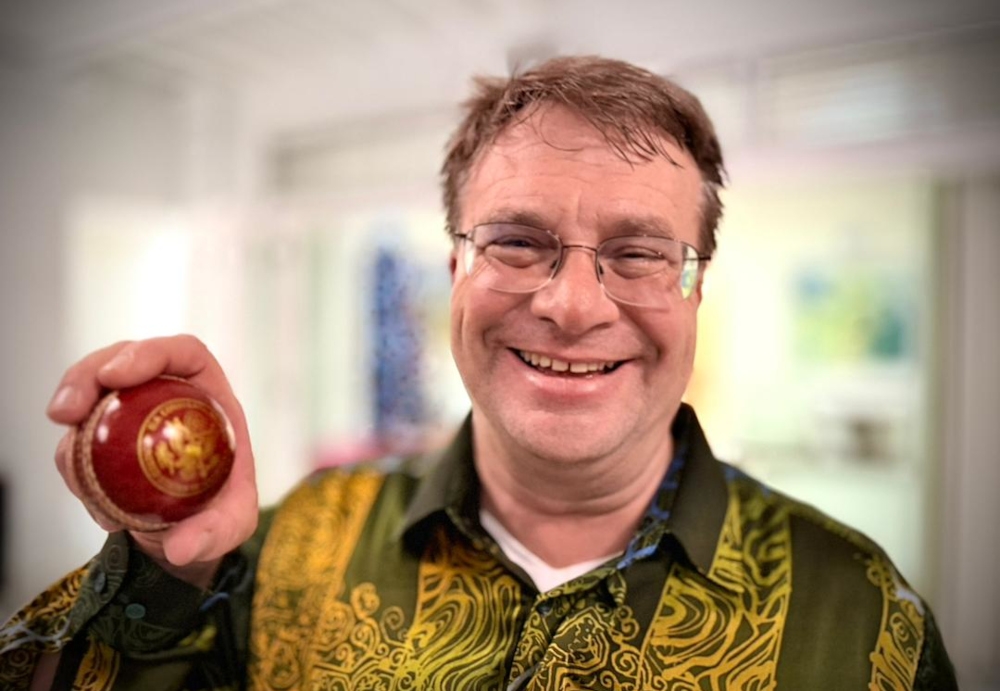
Representing the United States in a Muslim-majority country demands both intelligence and empathy, a balance US Ambassador to Malaysia Edward D. Kagan navigates with effortless grace, according to the author. — Picture by Abbi Kanthasamy
Educated in history at Yale University, he approaches the world the way a good historian should: by observing before judging, by listening before speaking. His curiosity doesn’t just fill books — it fills rooms.
What struck me most was how easily he moves from geopolitics to gastronomy, from the South China Sea to Penang laksa, without ever sounding rehearsed. The man doesn’t just understand context — he lives it.
The cricket balls of Mumbai
At some point that evening, the conversation took a delightfully odd turn — from Asean cooperation to cricket.
Ambassador Kagan recalled his time as Consul General in Mumbai, surrounded by a nation where cricket is less a sport and more a secular faith. Instead of standing apart from it, he leaned in — deciding, on a whim and a workshop table, to make cricket balls. Not one. A whole batch of them.
He had them crafted by hand — layers of cork and leather stitched into spheres that would have made any local proud. Years later, he told me, only one ball remains. The last survivor of an experiment in cross-cultural curiosity.
When he brought it out — scuffed, beautiful, the patina of time gleaming under the light — it was hard not to feel something poetic about it. That ball wasn’t just an artefact; it was a metaphor.
It represented the idea that diplomacy, at its purest, is not about speaking the loudest language in the room.
It’s about learning someone else’s — even if that language is cricket.
We laughed about swing versus spin, seam angles and humidity, the way a ball behaves in the monsoon. For a brief moment, two people from wildly different worlds were united by leather, cork, and a shared fascination with how things move.
The quiet power of presence
Representing the United States in a Muslim-majority country requires a rare blend of intelligence and empathy. Ambassador Kagan navigates that tightrope with unforced grace.
He’s articulate but never aloof, informed but never performative. He engages rather than instructs, listens more than he talks, and treats every encounter as an exchange rather than a transaction.
In a time when diplomacy too often sounds like a sales pitch, his version feels almost radical — rooted in respect, humour, and genuine curiosity. He’s the kind of envoy who reminds you that the best bridge between two nations might simply be a well-timed conversation.
Leaving the room
As I left the ambassador’s residence that night, the air outside hung heavy with Kuala Lumpur’s familiar warmth. In my mind, I kept replaying that image — one last cricket ball, hand-stitched in Mumbai, resting in the palm of a man whose job is to represent an empire but who chooses, instead, to understand a culture.
That ball has outlasted its batch. Maybe that’s fitting.
Because the best things — like good stories, good friendships, and good diplomacy — aren’t meant to be mass-produced.
And that’s why this particular diplomat bowled me over.
* Abbi Kanthasamy is a writer, photographer, and entrepreneur based in Kuala Lumpur. His columns explore the intersections of culture, diplomacy, and humanity.
** This is the personal opinion of the writer or publication and does not necessarily represent the views of Malay Mail.