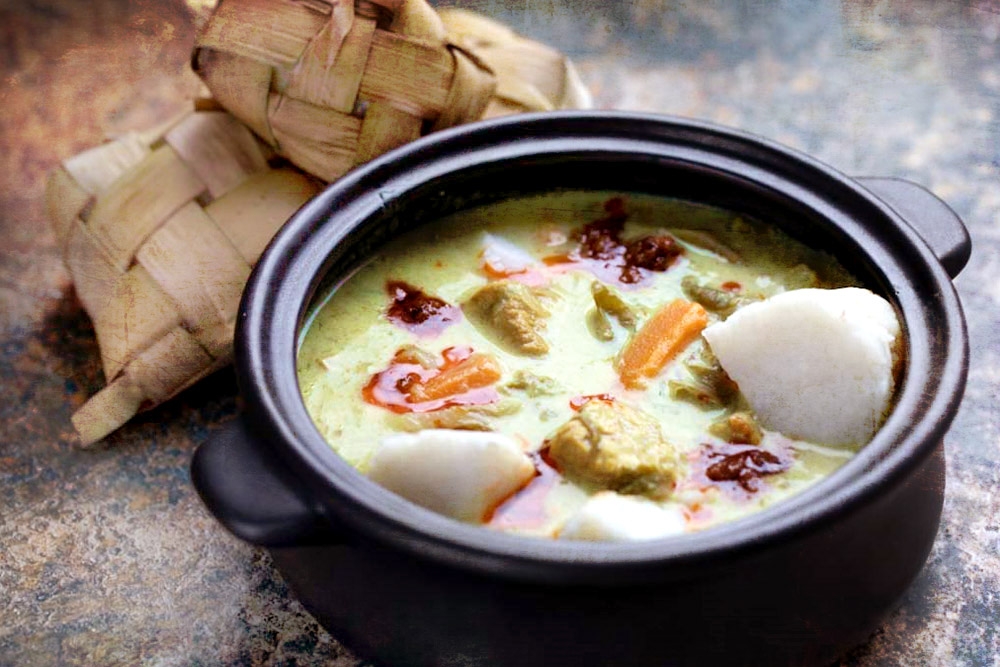

KUALA LUMPUR, Mar 28 — There is something blessed about meals that are gentle on our bellies and our budgets, while nourishing us both body and soul. Surely that is worth giving thanks for?
In this cherished category I have found myself including the modest yet marvellous sayur lodeh.
It is the sort of dish that appears on the table without pomp or feeling overly precious: nothing more than a bowl of softened vegetables and spicy santan gravy ladled over cubes of compressed rice.
And yet, it can be and is so much more.
In times of uncertainty, I am grateful for ingredients that are neither rare nor extravagant.
My chaotic mind with its million thoughts is grateful for the meditative ritual of slowly cooking the rempah, developing flavour from the spice paste.
A single mouthful — the tentative first sip but not the last — and I am, above all, grateful for how good this tastes. How healing, and how full of hope I feel.
SAYUR LODEH
A well-stocked pantry will make this sayur lodeh come together with very little fuss.
The key lies in having the core aromatics on hand: shallots, garlic, turmeric, ginger, galangal and chillies form the backbone of the dish.
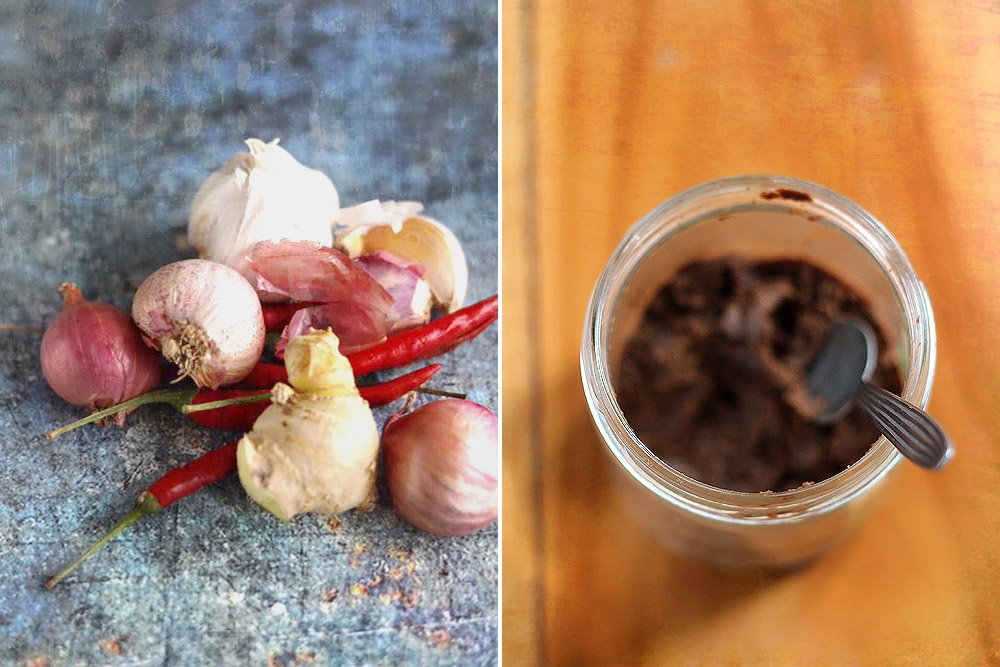
Various aromatics (left) and ‘belacan’ (right) for the spice paste or ‘rempah’. — Pictures by CK Lim
The indispensable belacan only requires a quick toast to deepen its flavour and remove any harshness, leaving behind a rounded, savoury note that anchors the broth.
Remember to take the time to cook the spice paste or rempah properly; this builds depth of flavour.
The paste should smell fragrant before any liquid is added. Rushing this step results in a flat-tasting stew, no matter how rich the santan is.
Pre-frying the tofu and tempeh is a small step that makes a noticeable difference; they hold their shape better and absorb the broth without falling apart.
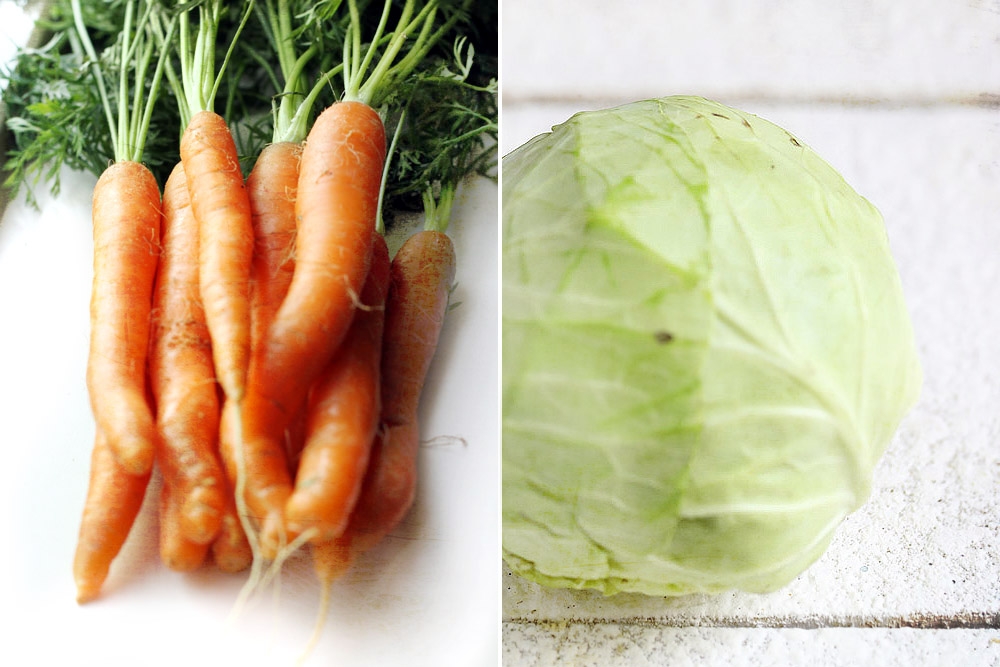
Vegetables for ‘sayur lodeh’ include carrots (left) and cabbage (right). — Pictures by CK Lim
Sayur lodeh is typically served with the log-shaped lontong, sliced into sections. Given that we are celebrating Hari Raya, this could be a good time to use festive ketupat instead, particularly if you have some left over from the last open house.
Any type of nasi impit (compressed rice) would work swimmingly though — just don’t forget to finish with a generous drizzle of fiery-sweet sambal!
Ingredients
6 shallots, peeled
4 cloves garlic
1 teaspoon ground turmeric
1 cm fresh ginger
1 cm galangal
2-3 dried red chillies, soaked until soft
2 fresh red chillies
1 teaspoon belacan, lightly toasted
A little water, to blend
2 tablespoons neutral cooking oil
1 stalk lemongrass, bruised
3–4 kaffir lime leaves, torn
250 ml water
450 ml santan (coconut milk)
1–2 carrots, sliced into thin rounds
8-10 long beans, cut into sticks
¼ cabbage, roughly chopped
150 g firm tofu, fried and cut into pieces
150 g tempeh, cubed and lightly fried
1 teaspoon salt, adjusted to taste
1 teaspoon sugar
Ready-made ketupat, sliced
Sambal, to serve
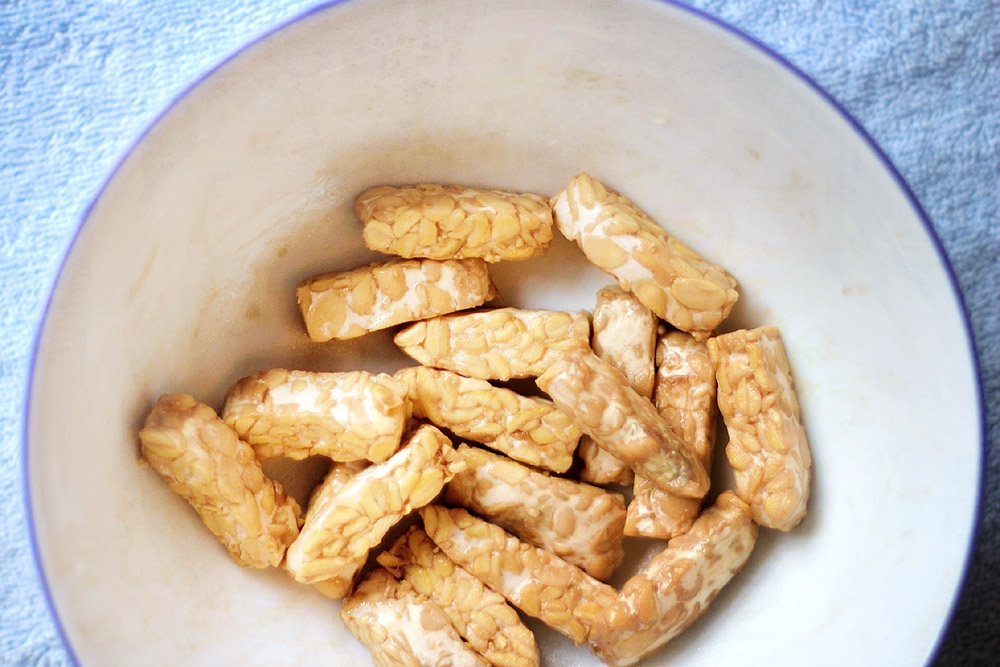
Lightly fry the ‘tempeh’. — Pictures by CK Lim
Method
Begin with the spice paste. Combine the shallots, garlic, turmeric, ginger, galangal, chillies and belacan in a blender. Add just enough water to keep things moving, and blend until smooth, stopping to scrape down the sides if needed.
Heat the oil in a saucepan over a moderate flame. Add the paste and cook it slowly, stirring often. In time, the aroma will deepen and soften; the mixture should look slightly darker and smell fragrant.
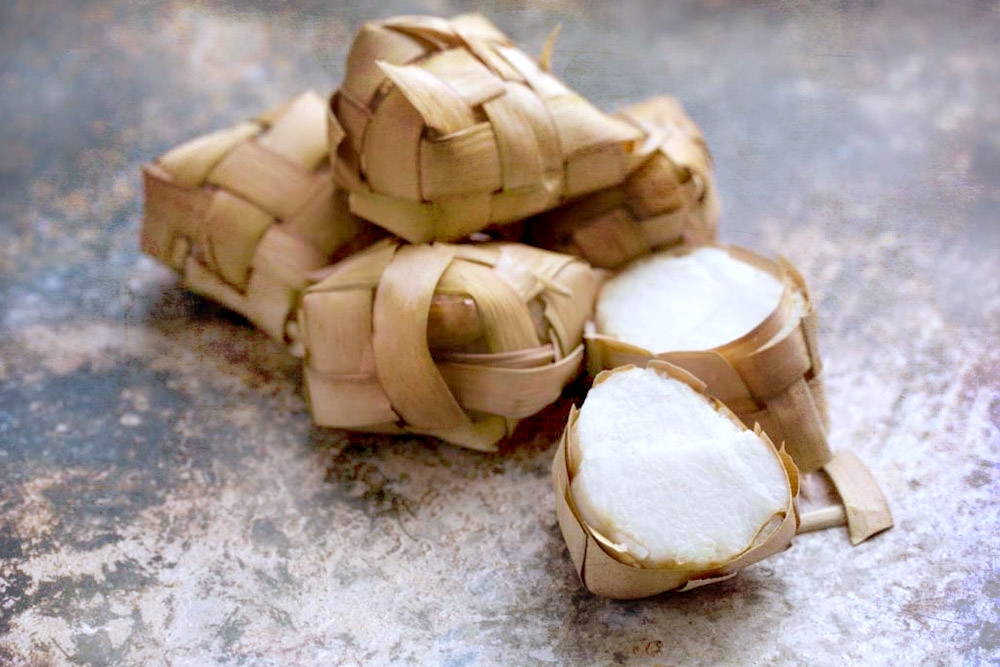
Use ‘ketupat’, ‘lontong’ or any type of ‘nasi impit’ (compressed rice) — Picture by CK Lim
Add the bruised lemongrass and torn kaffir lime leaves, followed by the water. Bring the mixture to a gentle simmer before introducing the coconut milk. Keep the heat low and steady; the broth should warm through without ever coming to a boil.
Add the carrots and long beans first, allowing them to soften gradually. When they begin to yield, stir in the cabbage, then the fried tofu and tempeh. Continue cooking until the vegetables are tender but not mushy.
Season with salt and sugar, adjusting until the broth tastes balanced — savoury with a mild sweetness.
To serve, arrange slices of ketupat in serving bowls. Ladle the hot sayur lodeh over the rice cakes and serve with sambal on the side.
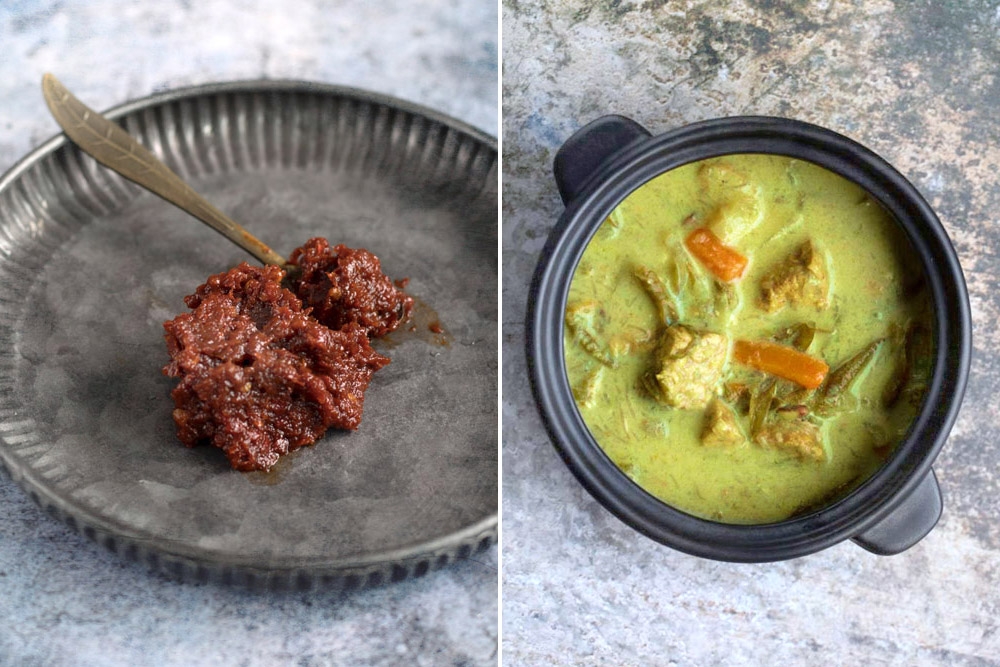
Don’t forget to finish with a drizzle of ‘sambal’ — Pictures by CK Lim