

MARCH 31 — For nearly eighty years, the world has lived under the shadow of a single terrifying idea: the nuclear bomb.
It was the weapon that ended the Second World War. The technology that froze the Cold War into a tense, decades-long standoff. The ultimate symbol of national power.
Possess the bomb, the theory went, and the world would tremble.
But in 2026, that idea is beginning to look strangely outdated.
The global conversation surrounding Iran’s alleged pursuit of nuclear weapons reveals the contradiction perfectly. For years, policymakers warned that Tehran obtaining the bomb would fundamentally reshape the balance of power in the Middle East.
Yet whenever tensions escalate, the focus quietly shifts away from nuclear facilities.
Instead, the discussion turns to Iran’s missiles, its drones, its naval forces, its regional influence.
In other words, the real concern is not the bomb.
It is everything else.
And that raises a rather uncomfortable question: if nuclear weapons are truly the ultimate currency of power, why do they seem so irrelevant to the conflicts actually shaping the modern world?
Consider North Korea.
Pyongyang possesses nuclear weapons — and yet it remains one of the poorest and most isolated states on Earth. The bomb did not transform it into an economic powerhouse. It did not create prosperity. It did not elevate the country into the ranks of global leadership.
At best, it bought the regime survival.
Pakistan offers a similar lesson. When Islamabad tested nuclear weapons in 1998, it became the seventh nuclear power in history. The announcement reverberated across the world.
But nuclear capability did not suddenly propel Pakistan into the top tier of global influence.
It remains a complex state grappling with economic volatility, political turbulence and regional insecurity.
The bomb, it turns out, is very good at deterring invasion.
It is far less effective at generating prosperity.
Meanwhile, the countries truly shaping the 21st century are doing so without firing a single nuclear missile.
Taiwan controls the world’s most advanced semiconductor manufacturing.
The United States dominates global finance through the power of the dollar and the reach of its financial system.
China commands enormous influence through manufacturing scale, trade networks and infrastructure investment stretching across continents.
None of these forms of power come from nuclear weapons.
They come from technology, economics and systems.
Modern warfare itself has quietly evolved in ways that make nuclear arsenals feel increasingly theatrical.
On battlefields from Ukraine to the Middle East, it is not atomic bombs that are shaping the fight. It is drones that cost a few thousand dollars. Satellite imagery. Electronic warfare. Artificial intelligence analysing targets in real time.
Even Iran — a country under some of the most severe sanctions regimes in modern history — has demonstrated how technological adaptation can rewrite the rules of conflict.
Its drones are inexpensive, mass-produced and surprisingly effective. So effective, in fact, that Western militaries now study the model: build simple systems cheaply, deploy them in overwhelming numbers, and suddenly the battlefield tilts.
None of that requires nuclear weapons.
The physics of nuclear fission has been understood since the 1940s. The technology itself is no longer mysterious. If anything, it has become something closer to geopolitical theatre — an expensive relic of an earlier era.
That does not mean nuclear weapons are harmless. Far from it.
They remain the most destructive devices humanity has ever built.
But their very destructiveness is precisely what makes them unusable.
The moment a nuclear weapon is launched, retaliation becomes inevitable. Within minutes, cities vanish and entire regions collapse into chaos.
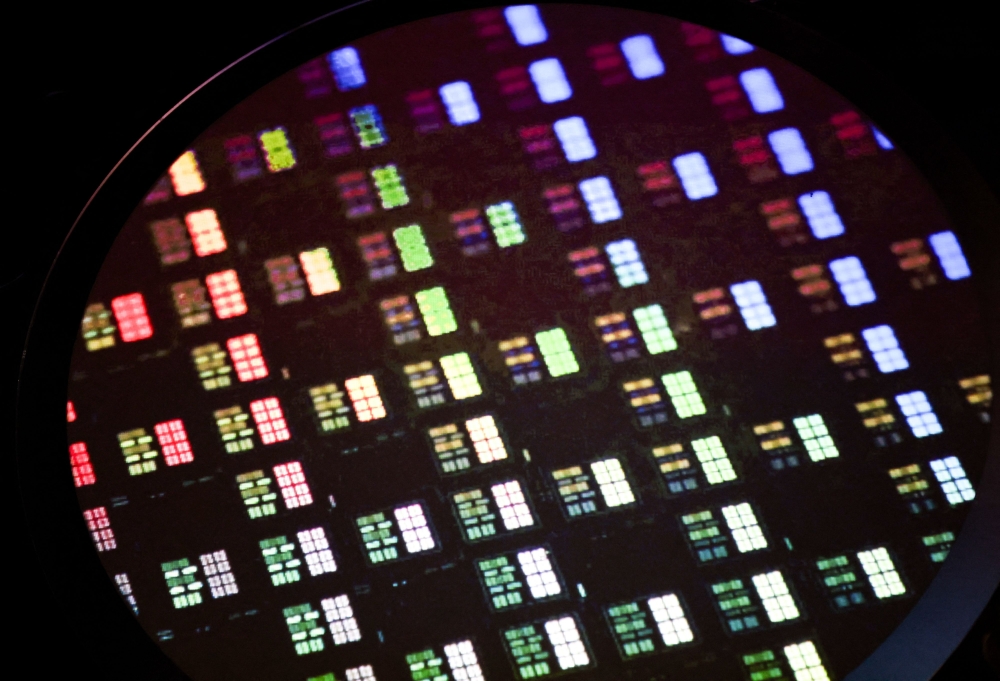
The author argues that nuclear weapons are no longer the true source of global power, having become largely symbolic deterrents, while real influence in the modern world is now shaped by economic strength, technology, and systems such as semiconductors, finance, and advanced warfare capabilities. — AFP pic
Which is why, since 1945, nuclear weapons have largely remained what strategists politely call “deterrents”.
Or, less politely, extraordinarily expensive ornaments buried in reinforced bunkers.
The uncomfortable reality is that nuclear weapons froze power in place during the 20th century.
They do far less to shape it in the 21st.
Today’s real strategic assets look very different. They are semiconductor supply chains. Artificial intelligence systems. Data networks. Control of shipping lanes and rare earth minerals.
These are the levers that move economies and influence nations.
The bomb still terrifies us because it belongs to a generation that lived through Hiroshima, Nagasaki and the Cold War.
But the world that bomb created has already moved on.
The great contest of our time will not be decided by mushroom clouds rising over cities.
It will be decided quietly — inside chip fabrication plants, data centres and financial systems.
The nuclear age promised ultimate power.
Instead, it delivered a stalemate.
The real struggle for global influence is happening somewhere far less dramatic.
Inside a semiconductor factory.
* This is the personal opinion of the writer or publication and does not necessarily represent the views of Malay Mail.


