

MARCH 25 —The Philippines’s declaration of a national energy emergency is not an overreaction.
It is a strategic necessity born of hard geography, harsh economics, and an increasingly unforgiving international system.
Manila is heavily dependent on imported energy, especially from a region now engulfed by war.
When conflict in the Middle East disrupts supply chains, lifts insurance costs, rattles shipping routes, and drives up oil prices, the Philippines is among the first Asian states to feel the pressure.
President Ferdinand Marcos Jr.’s decision to declare an emergency for one year reflects not panic, but prudence.
The emergency powers matter because they allow the Philippine state to move faster than the market.
Reuters reported that the declaration lets the government expedite fuel procurement, including advance payments, while AP noted that it also creates a contingency structure to oversee the distribution of essential goods such as fuel, food, medicines, and agricultural products.
That is exactly what a vulnerable importing country should do when it faces a supply shock that is external, sudden, and potentially prolonged. In such moments, delay is not neutrality. Delay is policy failure. The numbers alone justify the emergency.
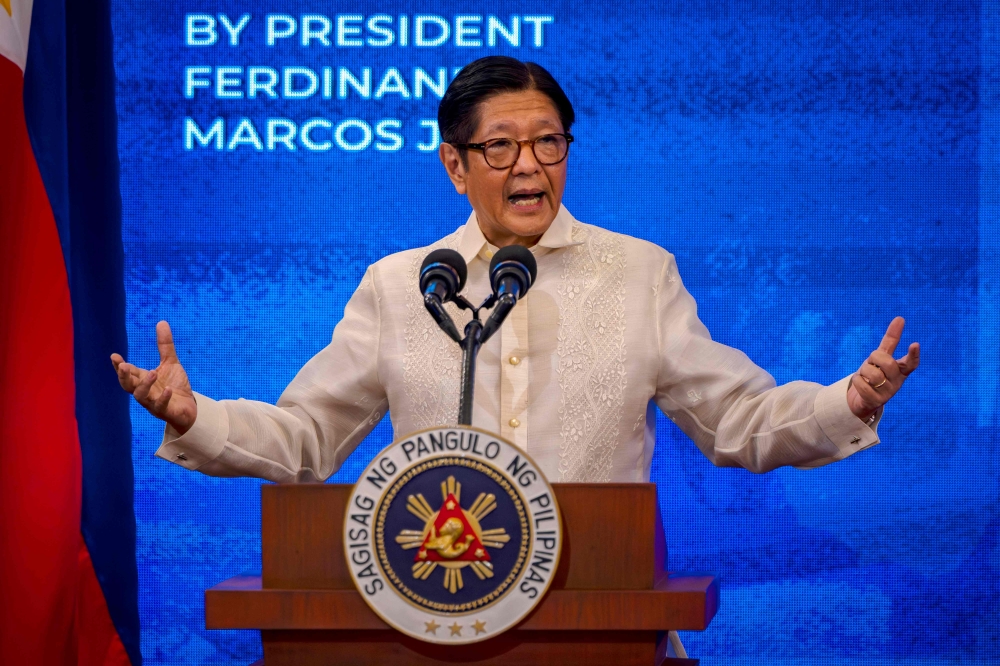
President Ferdinand Marcos Jr.’s decision to declare an emergency for one year reflects not panic, but prudence. — AFP pic
The Philippines reportedly has about 45 days of fuel reserves based on current consumption and is trying to procure an additional one million barrels of oil to build a larger buffer. That is not the posture of a country trying to dramatise events.
It is the posture of a government that knows reserve levels matter when tanker routes are uncertain and global bidding for cargoes becomes more intense.
In a war economy, countries without buffers pay more, wait longer, and suffer deeper domestic inflation.
The logic becomes even clearer when one places the Philippine move beside Moldova’s own recent emergency declaration.
Moldova’s parliament approved a 60-day energy state of emergency after Russian strikes in Ukraine disrupted a critical power link used to bring electricity from Romania.
Different region, different trigger, same principle: when energy systems are exposed to geopolitical violence, the state must be empowered to act before disruption turns into paralysis.
Both Manila and Chisinau have understood the same truth. Energy security can no longer be treated as a technical issue. It is now central to national security.
The Philippines is also correct to think beyond fuel alone.
Once energy prices rise, the effects move rapidly into transport, electricity generation, food logistics, fertilisers, and household inflation.
AP reported that the Philippine government’s emergency framework explicitly covers fuel, food, medicine, and agricultural products. That breadth is not accidental.
It reflects a recognition that energy shocks are never confined to petrol pumps.
They seep into the entire social fabric. Jeepney drivers, delivery workers, farmers, factory operators, and urban poor households all feel the consequences in different but cumulative ways.
There is also a geopolitical realism in Manila’s next step.
Reuters reported on March 25 that the Philippines is working with Washington to obtain waivers or exemptions that could allow it to import oil from US-sanctioned countries such as Venezuela and Iran.
That is a remarkable sign of the times. It suggests that even close American allies are now quietly acknowledging that ideology cannot power a nation’s grid.
When strategic scarcity bites, governments become more flexible. Principles do not disappear, but survival moves to the front seat.
Critics may say that an emergency declaration risks public alarm. In reality, the greater danger lies in pretending that normal instruments are enough in abnormal times.
Transport groups are already protesting rising prices, and concerns over inflation and the peso are plainly part of the Philippine government’s calculations. A state that waits for public anger to crest before acting will always be too late.
The Marcos administration has chosen to move before the crisis fully metastasizes. That is what strategic governance looks like.
There is a wider Asean lesson here too. The Philippines is showing that regional states cannot assume that global markets will automatically stabilize themselves.
Nor can they depend endlessly on distant producers, vulnerable shipping lanes, and fragmented supply chains.
Emergency declarations are not substitutes for long-term reform, but they can buy time for stockpiling, diversification, regional interconnection, and the redesign of national contingency planning.
In fact, the Philippines has also been active in Asean conversations on energy interconnectivity, which suggests Manila understands that resilience must eventually become regional, not merely national.
In that sense, the Philippine declaration should not be read as a sign of weakness.
It is a sign that the state still has strategic reflexes. It understands that wars in West Asia do not stay in West Asia.
They travel through shipping premiums, commodity futures, import bills, food prices, and political unrest.
A country that depends on imported oil cannot afford complacency when the global energy map is under stress.
The emergency declaration is therefore not just necessary. It is responsible.
Manila has acted with realism. Others in Asean should take note.
* Phar Kim Beng is a professor of Asean Studies and a director at the Institute of International and Asean Studies, International Islamic University of Malaysia.
** This is the personal opinion of the writer or publication and does not necessarily represent the views of Malay Mail.


