MARCH 12 — The possibility of oil reaching US$200 per barrel has been openly raised in the context of the escalating confrontation between Iran, the United States, and Israel. Iranian officials have warned that sustained attacks and disruptions to shipping could drive prices to that level while threatening tankers and energy infrastructure linked to their adversaries.
Such rhetoric may appear to be a show of strength.
In reality, it risks becoming the very pretext for a devastating escalation against Iran itself.
Oil at US$200 per barrel is not merely an economic event. It would represent a global shock of historic proportions, triggering inflation, slowing economic growth and potentially pushing several economies into recession.
In that sense, threatening to push oil prices to such extreme levels is not a sustainable geopolitical strategy. It is a dangerous gamble that could invite overwhelming retaliation.
The world cannot absorb a US$200 oil shock
Oil remains deeply embedded in the functioning of the global economy. Transport, manufacturing, agriculture, and electricity generation all depend on stable energy prices.
A sudden surge toward US$200 per barrel would reverberate across every continent.
Inflation would surge globally while economic growth would slow dramatically.
Trade costs would rise, shipping would become more expensive, and supply chains would fracture under pressure.
Malaysia would be comfortable at US$80 to US$100 not something more. Malaysia does not want the global energy crisis to destroy the international economy.
Asia in particular — including China, Japan, South Korea and the Asean economies — would face severe energy shocks because of their heavy dependence on imported oil.
Even the United States, despite its large domestic production, would not be immune.
Oil is a globally traded commodity, and price spikes inevitably ripple through international markets.
The global economy has already experienced the early stages of this volatility.
Following disruptions to Gulf shipping routes, oil prices briefly surged while governments scrambled to release emergency reserves to stabilise markets.
This alone illustrates how fragile global energy stability can be.
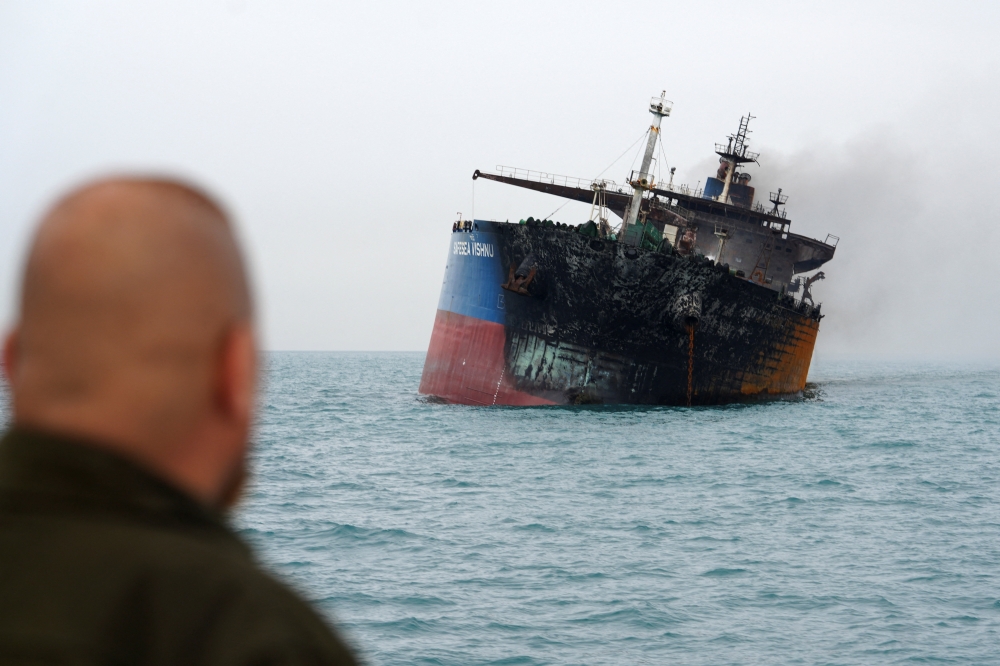
A foreign tanker carrying Iraqi fuel oil damaged after catching fire in Iraq’s territorial waters, following unidentified attacks that targeted two foreign tankers, according to Iraqi port officials, near Basra, Iraq, March 12, 2026. — Reuters pic
Even GCC producers do not want oil at US$200
Ironically, even the Gulf Cooperation Council (GCC) — some of the world’s largest oil exporters — have little interest in oil prices spiralling to such extreme levels.
While higher prices can increase short-term revenue, prices that are too high ultimately destroy demand.
When oil prices surge dramatically, importing countries accelerate energy diversification, invest in renewables, electrify transport systems, and reduce fossil fuel consumption.
The result is a long-term decline in demand for oil.
For producers in Saudi Arabia, the United Arab Emirates, Qatar and Kuwait, stability matters more than sudden spikes.
These economies are deeply integrated into global financial markets and trade networks.
A global recession triggered by energy shock would ultimately reduce oil consumption and weaken the very revenue streams on which these countries depend.
Thus the notion that US$200 oil benefits oil exporters is deeply misleading.
Even the GCC would see such a scenario as destabilising and counterproductive.
Iran must avoid strategic overreaction
Iran today faces a profound strategic dilemma.
The collective assassination of several senior military and security leaders has undoubtedly shaken Tehran’s command structure. Not excluding 11 days of repeated bombings.
Such losses would provoke anger and a strong desire for retaliation in any state.
Yet history repeatedly shows that strategic overreaction can become self-destructive.
If Iran attempts to disrupt global oil supplies or drive prices toward US$200 through attacks on shipping lanes, energy infrastructure, or regional facilities, it risks triggering exactly the outcome it wishes to avoid.
Such actions would likely unify the United States, Israel and potentially several allied countries behind a far more aggressive military response.
Rather than deterring intervention, they could legitimise a wider campaign against Iran’s military and economic infrastructure.
In other words, oil weaponisation could become the justification for an even larger war.
The Strait of Hormuz is too important to weaponise
Nearly one-fifth of global oil shipments transit through the Strait of Hormuz, making it one of the most strategically vital waterways in the world.
Any attempt to obstruct this route would not only alarm Western powers but also deeply concern Asian economies. China, India, Japan and South Korea all depend heavily on Gulf energy supplies.
If Hormuz were disrupted long enough to drive oil toward US$200, the resulting shock would ripple across Asia’s industrial systems and financial markets.
In such a scenario, Iran could find itself increasingly isolated diplomatically.
Even states that seek neutrality in the conflict might feel compelled to support efforts to secure energy flows.
Strategic restraint is the only rational path
For Iran, the challenge is not merely military survival but strategic wisdom.
The loss of senior commanders is tragic from Tehran’s perspective, but allowing anger to dictate policy would only deepen the crisis.
Restraint does not imply surrender.
Rather, it reflects a recognition that the long-term survival of the Iranian state depends on avoiding actions that unite the entire international system against it. Threatening US$200 oil prices risks doing exactly that.
The wiser course would be to de-escalate attacks on energy infrastructure and shipping routes while maintaining defensive deterrence.
Such an approach preserves Iran’s strategic autonomy without inviting catastrophic retaliation.
The real battle is political legitimacy
Ultimately, wars are not won solely through missiles or drones.
They are won through legitimacy in the eyes of the international community.
If Iran is perceived as deliberately destabilising the global energy system, sympathy for its grievances will quickly evaporate.
Conversely, if Tehran demonstrates restraint while defending its sovereignty, it strengthens its diplomatic position.
The difference between these two outcomes could determine whether the conflict expands or gradually stabilises.
A choice between escalation and survival?
The temptation to retaliate in the face of loss is deeply human.
Yet statesmanship requires discipline. Oil at US$200 per barrel is not leverage. It is a signal of systemic collapse.
By threatening such an outcome, Iran risks inviting the very military escalation that could devastate its own infrastructure and economy.
For Tehran, the path forward is therefore starkly clear.
Either weaponise the oil market and risk devastating retaliation — or pursue strategic restraint that preserves national survival.
History will judge which path Iran ultimately chooses.
* Phar Kim Beng is professor of Asean Studies and director of the Institute of International and Asean Studies, International Islamic University of Malaysia.
** This is the personal opinion of the writer or publication and does not necessarily represent the views of Malay Mail.