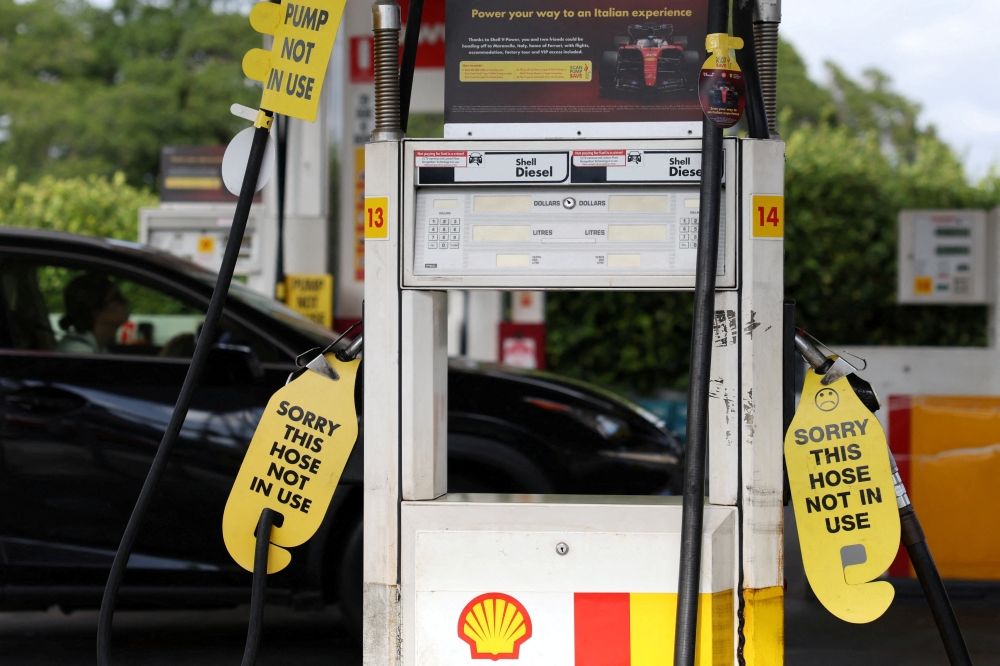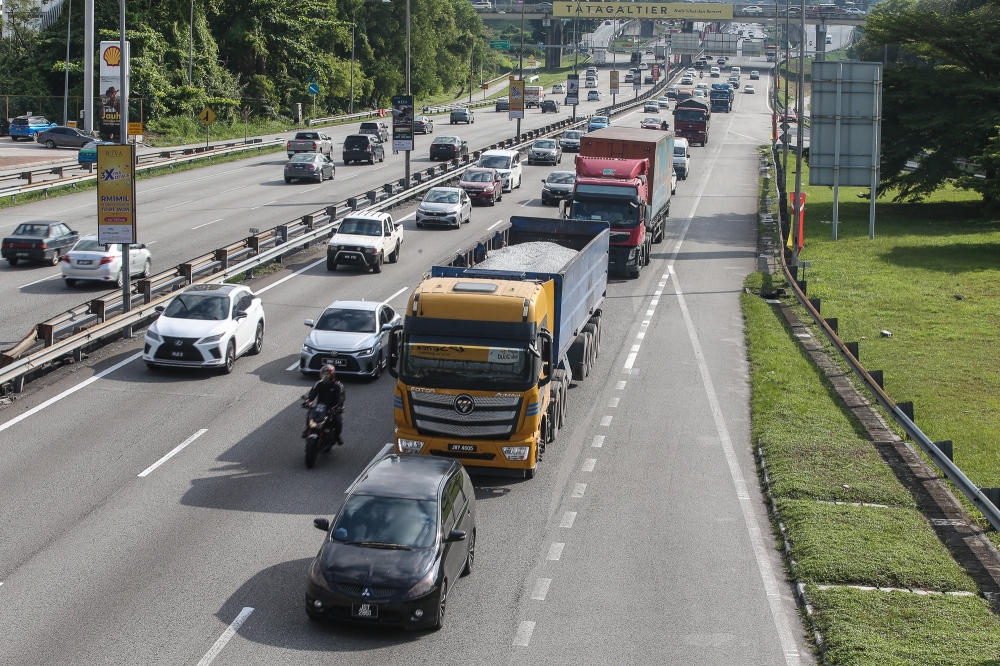
KUALA LUMPUR, April 2 — Malaysia’s lorry industry is taking a direct hit from surging diesel prices, with operators warning of halted construction, shrinking fleets and mounting pressure that could soon spill into higher costs across the economy.
From tipper lorries tied to construction to cargo hauliers keeping supply chains moving, the strain is already showing — and for many, unsustainable.
Malaysian Association of Land Lorry Drivers adviser Hairi Ali said the impact is being felt immediately on the ground, particularly among smaller operators.
“When oil goes up, transportation goes up. When transportation goes up, the whole economic line gets stuck. Maybe others don’t feel it yet, but we feel it,” he told Malay Mail.
“Prices are slowly going up — vegetables, daily goods — everything. The government cannot control the whole country. It will still go up,” he said, adding that operators are left with little choice.
He said rising fuel costs are already pushing up the price of everyday goods, despite efforts to contain them.
“We don’t want to raise prices because we are also consumers. But if there is no profit at all, what can we do?”
Hairi said smaller players — particularly those operating just a handful of lorries — are the most exposed.
“Big companies may have the network to survive, but small businesses with two or three lorries — they are the ones most affected,” he said.
A veteran of over 30 years in the industry, Hairi said he had already scaled down his own operations in anticipation of worsening conditions.
“I used to have 10 lorries. Now I only have two. I saw it coming,” he said.
But the pressure on fleets has not come from fuel costs alone.
Secretary-general of the Selangor and Kuala Lumpur Trucking Association (SEKLTA) Jeff Teh said some operators began selling off lorries earlier following the government’s crackdown on overloading — a move he said ultimately improved the industry.
“Those who didn’t follow the rules had to sell off their lorries. After that, the market adjusted and stabilised,” he said, adding that the clampdown significantly reduced overloading and accidents.
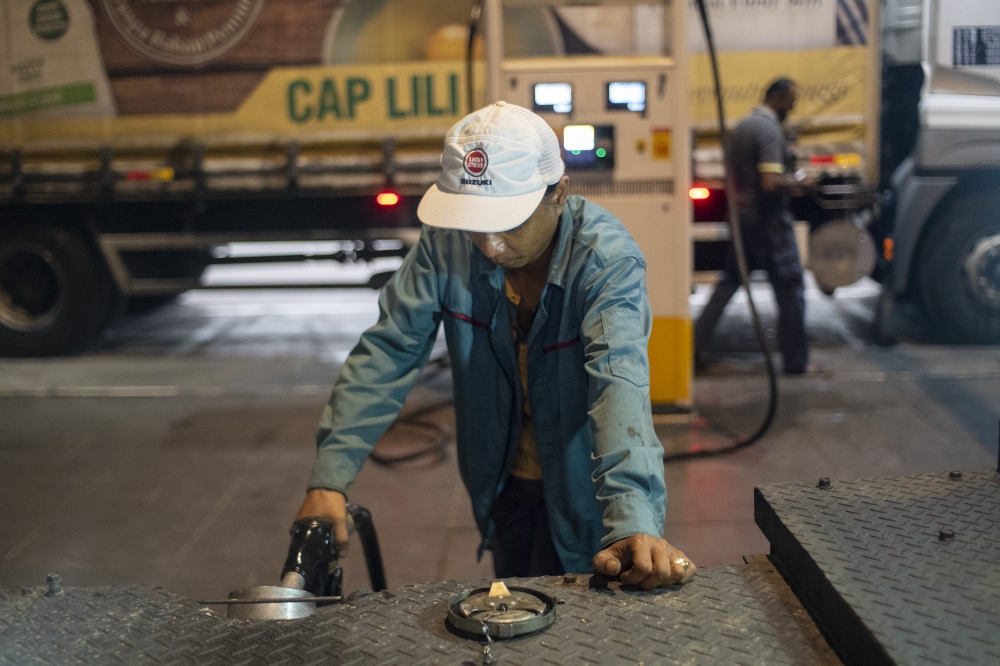
File picture of workers refuelling diesel at a gas station in Telok Panglima Garang, June 9, 2024. — Picture by Shafwan Zaidon
That stability, however, has been short-lived.
“Now diesel has more than doubled for those without subsidy. Fuel alone is about 30 to 40 per cent of operating cost — that itself is already killing,” Teh said.
He added that even for those with subsidies, other costs are rising — with engine oil up about 20 per cent, and tyres and spare parts expected to follow.
“For those with subsidy, the main cost — fuel — is still partly covered, so the increase is not so big. But indirect costs like engine oil have already gone up about 20 per cent, and tyres and spare parts will follow,” he said.
For now, many operators are holding the line.
“At the moment we are still absorbing. We wait one or two months. If it goes up more, then no choice — we have to increase prices,” he added.
The situation is far more severe in the construction segment, where tipper lorry operators say they are being squeezed out entirely.
Malaysian Tipper Lorry Association secretary-general Tan Boon Hing said different types of lorries are facing very different cost pressures — but for many, the math no longer works.
“You must understand — mixer trucks, tipper trailers, some of them have subsidy. But the rigid tipper lorries, the 10- or 12-wheelers, these ones don’t have subsidy,” he said.
“That’s why for them the price is very bad. Diesel went from RM2.15 to RM3, then RM4, now RM5.50. It’s more than double already.”
He said the volatility itself is becoming a problem, especially for contractors tied to fixed agreements.
“Every week the price is different. Construction contracts are already signed, so you cannot simply adjust. If you continue, you lose money. If you stop, also problem,” he said.
Without subsidies, operators are forced to follow market rates — while also absorbing rising costs across the board.
“This is only diesel. We haven’t even counted tyres, spare parts, maintenance,” he said.
Caught in between, many are unable to pass costs to customers for fear of losing business.
“If we increase prices, customers will go elsewhere. If we don’t increase, we lose money. So both sides just look at each other,” he said.
He warned that the fallout is already playing out on the ground.
“Many construction projects are stopping because costs are too high. Places like Klang, Meru, Tapah — a lot of work already stopped,” he said, adding that industrial diesel used by heavy machinery has surged to between RM6.90 and RM7.20 per litre from around RM3 previously.
Subsidies cushion — but gaps remain
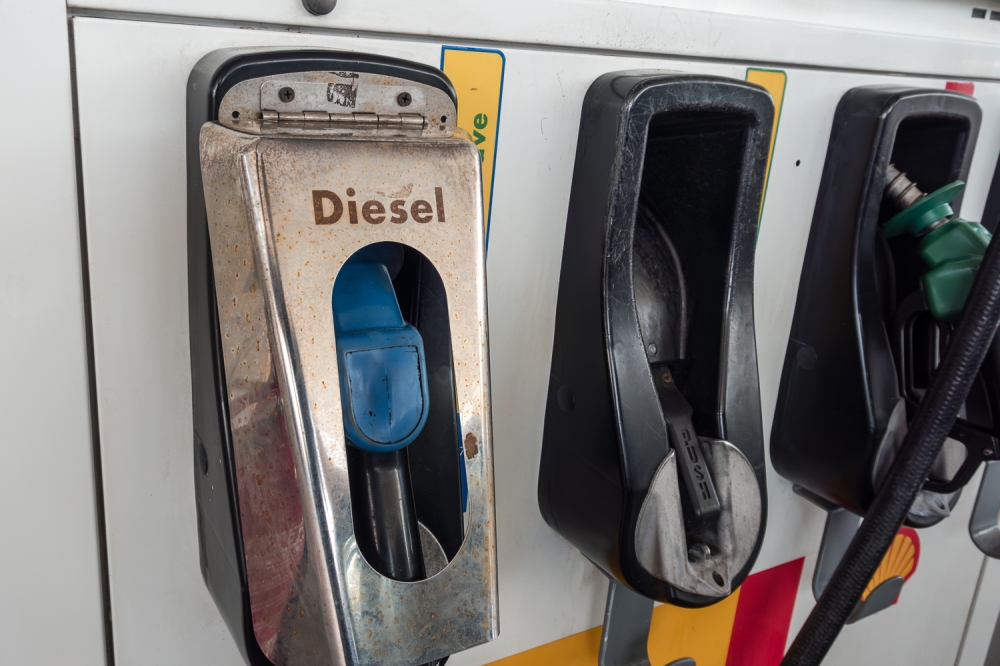
According to data.gov.my, diesel prices in Peninsular Malaysia stood at RM5.52 per litre as of March 26, 2026, up from RM4.72 on March 19 and RM3.92 on March 12 — a RM1.60 increase in just two weeks. — Bernama pic
Malaysia’s diesel subsidy framework has helped shield parts of the logistics sector, particularly cargo and trailer operators, from the full impact of global price swings.
But gaps remain.
While some lorries continue to receive subsidised fuel, others are left exposed to market prices, creating sharp cost disparities within the same industry.
Tan said a temporary solution is needed to prevent further disruption.
“Give us a temporary subsidy during the war. Even a quota per lorry per month also can. Otherwise everything will stop,” he said.
“Also, why are Sabah and Sarawak still at RM2.15 per litre, but here we are paying more than double?”
“It’s the same country, same industry — but the cost is completely different, how are we supposed to compete or survive like that?” he asked
Hairi echoed the call, urging policymakers to prioritise those on the ground.
“Find a way to help the people first. We are suffering. Take some time and find the best solutions and not knee-jerk reactionary decisions, as those don’t work long term,” he said.
For now, operators say they are holding on — cutting costs, delaying decisions, and hoping for stability.
But with margins shrinking and uncertainty growing, many warn it is only a matter of time before the pressure spills over — not just within the trucking industry, but across the wider economy.
According to data.gov.my, diesel prices in Peninsular Malaysia jumped from RM3.92 on March 12 to RM5.52 on March 26 — a RM1.60 spike in just two weeks.
On April 1, the government set fuel prices for April 2–8: RON97 falls 20 sen to RM4.95 per litre, diesel in Peninsular Malaysia rises 50 sen to RM6.02, RON95 holds at RM3.87, and diesel in Sabah, Sarawak and Labuan remains at RM2.15.
By comparison, prices in March 2025 ranged between RM3.03 and RM3.18 per litre.