

MARCH 12 — There is a particular sound in the office pantry during Ramadan.
The low hum of the water dispenser. The soft click of a cupboard door. The faint echo of footsteps in an otherwise empty corridor.
It is mid-afternoon. Energy is dipping. The morning productivity has thinned, and the stretch before Maghrib still feels long.
You stand there for a moment longer than necessary. The cold water is right in front of you. The cup is within reach. No one would know.
And that is what exactly makes fasting different.
Much of our discipline in life is externally reinforced. We follow traffic rules because someone might be watching. We meet deadlines because someone will check.
We moderate our tone because reputation matters. Visibility shapes behaviour more than we like to admit. Even our kindness sometimes grows stronger when it is noticed.
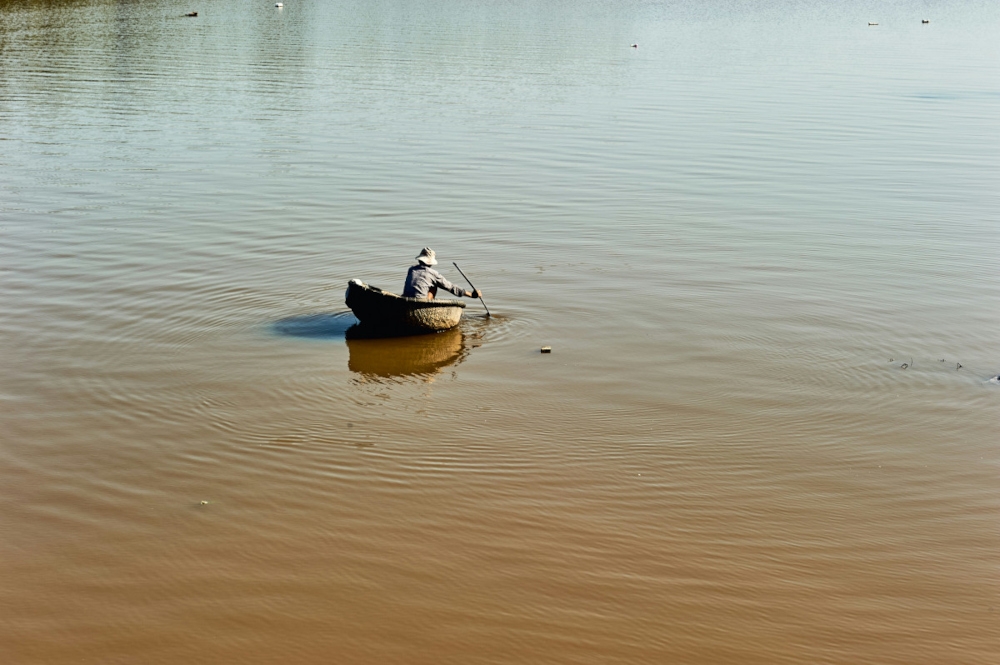
Faith and integrity is most tested when you are alone. — Unsplash pic
Fasting removes that structure. You could drink water quietly. You could eat something discreetly. You could decide that no one needs to know. And in most cases, that would be true. No one would know. But you would.
Ramadan, at its core, is not merely about endurance. It is about alignment.
It is about whether your public commitments match your private choices. Whether the person who speaks about discipline is the same person who practises it when convenience whispers otherwise.
Marcus Aurelius, in his “Meditations”, reflected that a person’s character is revealed not in performance, but in self-governance.
What makes that reflection powerful is not only what he wrote, but how he wrote it.
Those entries were never meant for publication. They were not speeches. They were reminders to himself.
A ruler of unquestionably the most influential empire of all of human civilisations, yet writing privately about controlling his own impulses before trying to control anything else.
Because we live at a time where visibility is currency. Achievements are posted. Opinions are amplified. Even spirituality can become performative if we are not careful.
We curate ourselves for audiences large and small. The temptation is not only to be good, but to be seen being good. And Ramadan disrupts that instinct.
Hunger is not glamorous. Thirst is not aesthetic. There is no applause for declining a sip of water in an empty pantry.
There is no notification congratulating you for choosing restraint over impulse. The decision is so small that it almost feels insignificant. And yet, repeated daily, it becomes formative.
Integrity, I have come to realise, is built in such unremarkable spaces of our lives. It is built when convenience tempts and you pause.
When irritation rises and you lower your voice anyway. When no audience exists, yet you choose coherence between what you believe and what you do.
These decisions do not trend. They do not accumulate likes. They accumulate character. And character is quieter than reputation.
In many areas of life, we cannot control outcomes. We cannot control how others behave, what they assume, or how they judge us.
But we can control alignment. We can decide whether our standards fluctuate depending on who is present. Whether our discipline depends on surveillance. Whether our kindness depends on recognition.
Ramadan offers 30 days of rehearsal in this art of self-governance. Thirty days of small, unseen calibrations. Thirty days of choosing principle over convenience in ordinary moments. Thirty days of discovering that self-control is less about denial and more about direction. The hunger is not there to weaken you. It is there to clarify what governs you.
When no one is watching, what governs you becomes unmistakably clear. Is it impulse? Is it habit? Is it fear of being found out? Or is it conviction?
By the time the month begins to draw to a close, something subtle should have shifted. You may not be able to articulate it easily. There is no certificate for it. But you sense it. A steadiness. A slight increase in trust towards yourself.
Not because you were perfect. Not because you never felt tempted. But because you proved, repeatedly, that your behaviour does not depend entirely on visibility.
And most importantly, it should carry over beyond Ramadan. Into conversations. Into work. Into decisions where no one is monitoring but you. The rehearsal in the pantry echoes indefinitely elsewhere.
So when I stand there in that quiet room, the water dispenser humming gently in the background, I remind myself that the real test is not the thirst. It is the alignment.
Because when no one is watching, you are.
* Prof Ir Dr Nahrizul Adib Kadri is a professor of biomedical engineering at the Faculty of Engineering, the Director of UM Press, and the Principal of Tuanku Bahiyah Residential College, Universiti Malaya. He may be reached at [email protected]
** This is the personal opinion of the writer or publication and does not necessarily represent the views of Malay Mail.


