JANUARY 1 — Kuala Lumpur cannot claim to be a liveable, inclusive city while its budgetary process remains shrouded in secrecy.
Following concerns raised by StarMetro on December 22, 2025 and the Kuala Lumpur Residents Action for Sustainable Development Association’s (KLRA+SD) press statement, it is clear that DBKL’s current approach to public spending lacks the accountability required of a modern capital.
By excluding ground-level community insights, the city is failing to meet the United Nations Sustainable Development Goals it purports to champion.
Public engagement appeared to end after the town hall session in June 2025, with no subsequent public disclosure of draft budgets, timelines, or explanations of how residents’ feedback is assessed or incorporated.
In fact, city residents have yet to be informed about the contents of the 2026 budget, even though it is already January.
For residents’ associations and community leaders, this reduces participation to a symbolic exercise.
This is not merely a procedural lapse; it is a governance failure that directly affects Kuala Lumpur’s ability to build an inclusive, resilient, and sustainable city.
Linking budget processes to sustainable urban outcomes
The United Nations Sustainable Development Goals (SDG) provide a useful lens. SDG 11 calls for cities that are inclusive, safe, resilient, and sustainable. These outcomes cannot be achieved when budgeting is detached from lived realities. Communities know where pedestrian networks are unsafe, which public parks lack facilities, where ageing populations need better access, and where public investment would deliver the greatest social return. When such knowledge is excluded from decision-making, sustainability becomes a slogan rather than a practice.
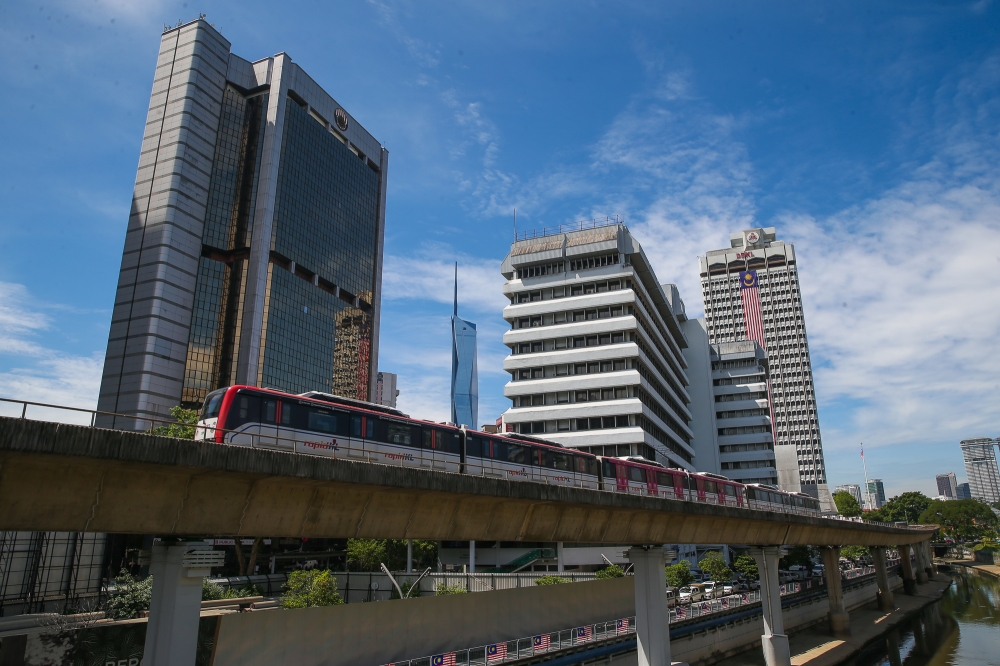
Kuala Lumpur residents have called for greater transparency and public participation in the city’s budgeting process to ensure more inclusive and sustainable urban development. — Picture by Yusof Isa
SDG 16 stresses transparent, accountable, and inclusive institutions. Yet when residents cannot see how priorities are set, which projects are funded, or how trade-offs are made, trust inevitably erodes. Transparency after decisions are finalised is insufficient; it must be embedded throughout the budget cycle. At a minimum, DBKL should improve transparency and accountability by establishing a dedicated webpage clearly explaining its budgetary process, spelling out timelines, and disclosing all relevant documents for easy public access.
Beyond the SDGs, Malaysia has also committed itself internationally under the United Nations’ New Urban Agenda (NUA). Paragraph 92 of the NUA explicitly commits governments to promote participatory, age- and gender-responsive approaches at all stages of urban policy and planning — from conceptualisation and design to budgeting, implementation, evaluation, and review — through permanent and well-resourced mechanisms of partnership between governments and civil society. Kuala Lumpur’s current budgetary process, where participation effectively stops before key decisions are made, falls short of this commitment.
Strengthening public participation in budget decision-making
This is where participatory budgeting (PB) offers a clear and globally tested alternative.
As articulated by the Participatory Budgeting Project, PB is a democratic process in which residents directly decide how part of a public budget is spent — giving people real power over real money. It goes far beyond collecting ideas or opinions. PB is a structured process that typically includes early disclosure of budget parameters, community proposal development, technical review, deliberation, resident voting or prioritisation, and transparent reporting on implementation.
In cities around the world, participatory budgeting has reshaped the relationship between local governments and communities. It improves the quality of public spending by aligning it with real needs, strengthens accountability by making decision-making visible, and builds civic capacity by enabling residents to understand constraints, trade-offs, and costs. Crucially, it shifts engagement from one-off consultations to an ongoing cycle of shared decision-making.
Participatory budgeting also directly advances SDG 17, which recognises that sustainable development depends on partnerships between governments and civil society. PB institutionalises these partnerships by creating formal, recurring spaces where communities, officials, and technical experts work together — not as adversaries, but as co-creators of public value. It treats residents as partners in city-building.
Malaysia is not starting from zero. Penang’s participatory and gender-responsive budgeting initiatives demonstrate that inclusive budgeting can work within our administrative context.
Kuala Lumpur, as the nation’s capital, should be setting the benchmark for transparent and participatory urban governance, not lagging behind smaller cities.
KLRA+SD’s intervention should therefore be understood as a constructive call for reform. Moving from one-off consultations to participatory budgeting would signal a decisive shift — from managing public input to genuinely sharing decision-making power, from silence to accountability, and from top-down planning to collaborative governance.
Towards a more inclusive budget process for Kuala Lumpur
DBKL and the Federal Territories Department (JWP) should commit to piloting participatory budgeting in Kuala Lumpur, beginning with a clearly defined portion of the city’s annual budget.
At a minimum, this should include early publication of budget timelines and parameters, structured engagement with residents’ associations and civil society, and transparent reporting on how public decisions are made and implemented.
Kuala Lumpur’s budget should not merely be announced — it should be co-created. If the city is serious about meeting its commitments under SDG 11, SDG 16, SDG 17, and the New Urban Agenda, participatory budgeting must move from aspiration to practice. Residents are ready to be partners in shaping the city’s future. It is time for DBKL and the Federal Territories Department to meet them at the table.
A city that aspires to be inclusive, sustainable, and well governed must treat its residents as partners, not spectators. Participatory budgeting is not a radical demand. It is a practical, proven pathway toward a more democratic, resilient, and sustainable Kuala Lumpur — a city for all.
* Joshua Low is honorary secretary of the Kuala Lumpur Residents Action for Sustainable Development Association (KLRA+SD), an NGO advocating for a more sustainable, equitable, and environmentally conscious Kuala Lumpur.
** This is the personal opinion of the writer or publication and does not necessarily represent the views of Malay Mail.