

MARCH 3 — When drones and missiles rain down on member states of the Gulf Cooperation Council (GCC), the tremors are not confined to the Middle East.
They reverberate across Asia’s sea lanes, energy markets, currencies and stock exchanges.
The nightmare scenario unfolding in the Gulf is not a distant war. It is a systemic shock.
And Asean Plus Three — comprising Asean, China, Japan and South Korea — is deeply exposed.
The escalation following Operation Epic Fury on February 28, 2026, which reportedly resulted in the assassination of 48 senior Iranian religious and political leaders, has fundamentally altered the strategic calculus.
Tehran, which had participated in earlier diplomatic engagements in Geneva and Muscat and was expecting further talks in Vienna, now feels humiliated and deceived.
Humiliation in geopolitics rarely produces restraint. It produces retaliation.
With Iranian drones and missiles striking various GCC states and even facilities linked to the United Kingdom in Cyprus, the theatre of conflict has widened rapidly in less than a week. The economic consequences are immediate.
Energy is the Achilles’ heel of Northeast Asia.
Japan, South Korea and China are among the world’s largest importers of hydrocarbons from the Gulf. At around US$80 per barrel — and volatile — oil prices are not yet catastrophic.
But volatility is the real enemy of growth.
Japanese economists are already warning that sustained higher energy costs could tip Japan into recession.
South Korea, heavily dependent on imported fuel for its industrial base, faces rising production costs and inflationary pressure.
China, the world’s largest crude importer, must absorb higher input costs that ripple across global manufacturing supply chains.
These three economies form the “Plus Three” of Asean Plus Three.
When they slow, Asean feels it.
Malaysia, Singapore, Indonesia, Thailand and Vietnam are tightly integrated into East Asian production networks.
If Japanese and Korean firms reduce output, Malaysian electronics exports weaken. If China’s manufacturing margins shrink, commodity demand softens.
The interconnectedness is structural, not optional.
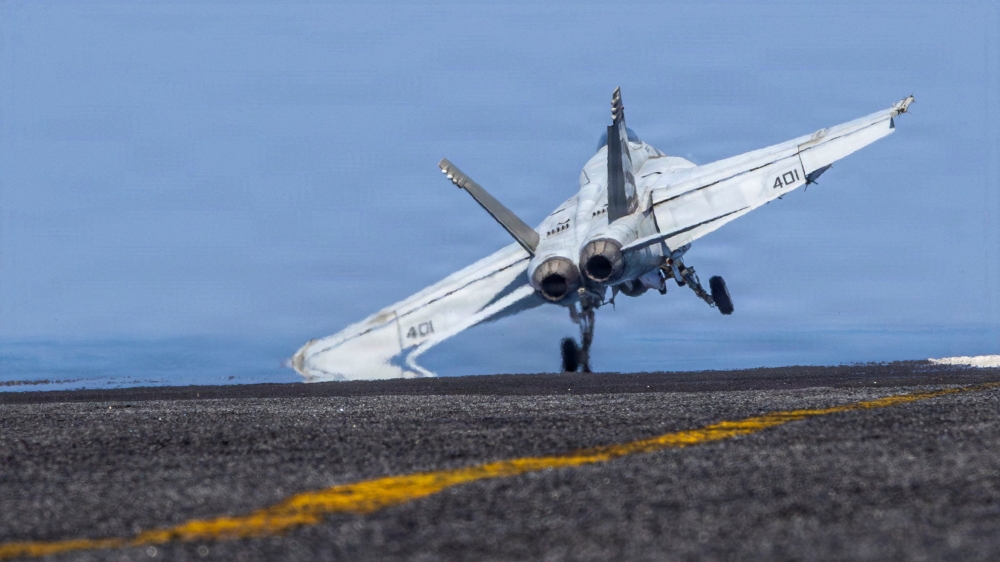
An F/A-18E Super Hornet prepares to launch from the flight deck of the US Navy Nimitz-class aircraft carrier USS Abraham Lincoln in support of the Operation Epic Fury attack on Iran from an undisclosed location March 2, 2026. — Reuters pic
Indonesia has already felt financial tremors.
On March 2, its central bank reportedly intervened to prevent further depreciation of the Rupiah against the US dollar. Currency instability often signals deeper anxieties among investors.
Singapore, as a refining and financial hub, faces exposure on multiple fronts — energy price swings, shipping disruptions and capital market volatility.
Senior Minister Lee Hsien Loong has long cautioned that conflicts in the Middle East are complex and difficult to decipher, especially for small, open economies whose prosperity depends on global stability.
Malaysia stands in a paradoxical position.
At US$80 oil, Petronas could see improved upstream revenues after several challenging years. Higher energy prices may provide temporary fiscal breathing space.
But windfalls can be deceptive.
Malaysia’s growth is not determined solely by oil receipts. It depends on robust trade flows, investor confidence and regional demand.
If Japan contracts, if China slows, if Indonesia’s currency weakens, Malaysia cannot remain insulated.
Moreover, Asean’s economic ties with the GCC are expanding.
The GCC is Asean’s 13th trading partner, with considerable room for growth in halal industries, petrochemicals, infrastructure investments and sovereign wealth collaboration.
A protracted conflict risks freezing that momentum.
Beyond trade lies the question of financial stability.
History shows that energy shocks often evolve into broader economic disruptions. Oil-importing countries see widening trade deficits.
Currencies weaken. Central banks intervene. Interest rates rise defensively. Growth slows.
Asean Plus Three was institutionalised partly in response to the 1997 Asian Financial Crisis.
Financial safety nets such as currency swap arrangements were designed to cushion liquidity shocks.
But a prolonged geopolitical war centred on energy supply presents a different category of risk — one that tests resilience across trade, finance and energy security simultaneously.
The most worrying feature of the current escalation is speed.
Within days, strikes have extended beyond initial targets. Insurance premiums for shipping through the Gulf could rise. Tanker routes may be reconsidered. Freight costs could increase. Commodity markets could destabilise.
For export-oriented economies in East and Southeast Asia, these developments matter profoundly.
Tehran’s sense of betrayal following diplomatic engagements in Geneva and Muscat — and the abrupt shift to military decapitation — intensifies the danger.
When states perceive themselves as having been lured into negotiations only to face force, retaliation becomes intertwined with national pride.
Yet retaliation carries costs that spill far beyond the battlefield.
What is bad for the GCC is equally bad for Asean Plus Three because energy flows and supply chains bind these regions together.
The Strait of Hormuz is not merely a geographic chokepoint; it is a lifeline for Asian growth.
The appropriate response for Asean and its Plus Three partners is not alarmism but prudence.
Diversifying energy sources, strengthening strategic reserves, reinforcing regional financial arrangements and maintaining diplomatic channels with all sides are essential steps.
Neutrality does not mean indifference.
It means recognising that Asia’s prosperity rests on stability in distant theatres.
The Gulf crisis is a reminder that in an era of deep interdependence, regional wars quickly become global economic stress tests. Asean Plus Three cannot control events in the Middle East. But it must prepare for their consequences.
In today’s interconnected world, conflict in one region rarely remains contained. It travels through markets, currencies and shipping lanes.
And when the Gulf trembles, Asia feels the quake.
* Phar Kim Beng is professor of Asean Studies and director of the Institute of International and Asean Studies, International Islamic University of Malaysia.
** This is the personal opinion of the writer or publication and does not necessarily represent the views of Malay Mail.
