

MARCH 12 — One of the most exciting developments in Kuala Lumpur of late is the re-opening of Bangunan Sultan Abdul Samad (BSAS), a milestone that has not received the attention it deserves. Few buildings in the country are as recognisable as this one. Sitting proudly beside Dataran Merdeka with its copper domes and clock tower, it has long been one of the most iconic sights not just in Kuala Lumpur, but in the whole country.
Like many Malaysians, particularly KL-ites, I have driven past the building countless times. Yet for many years, it was mostly something most of us admired only from the outside.
That has now changed. Following an extensive restoration under the Warisan KL initiative, BSAS has reopened its doors to the public. Visitors can now walk through galleries and exhibition spaces that tell the story of Kuala Lumpur’s growth, from its early beginnings to the modern city we see today.
Interactive displays, scale models of the city and curated exhibits allow people to better understand how the capital evolved over time. There are also cultural galleries, heritage exhibits and even cafés that bring new life into the historic building.
The positive response from visitors so far shows that these efforts have struck the right note. Credit must go to the parties involved in making this happen. Khazanah Nasional deserves recognition for leading the restoration. DBKL also played an important role, with Minister in the Prime Minister’s Department (Federal Territory) Hannah Yeoh, strongly supporting efforts to strengthen Kuala Lumpur’s cultural and heritage landscape.
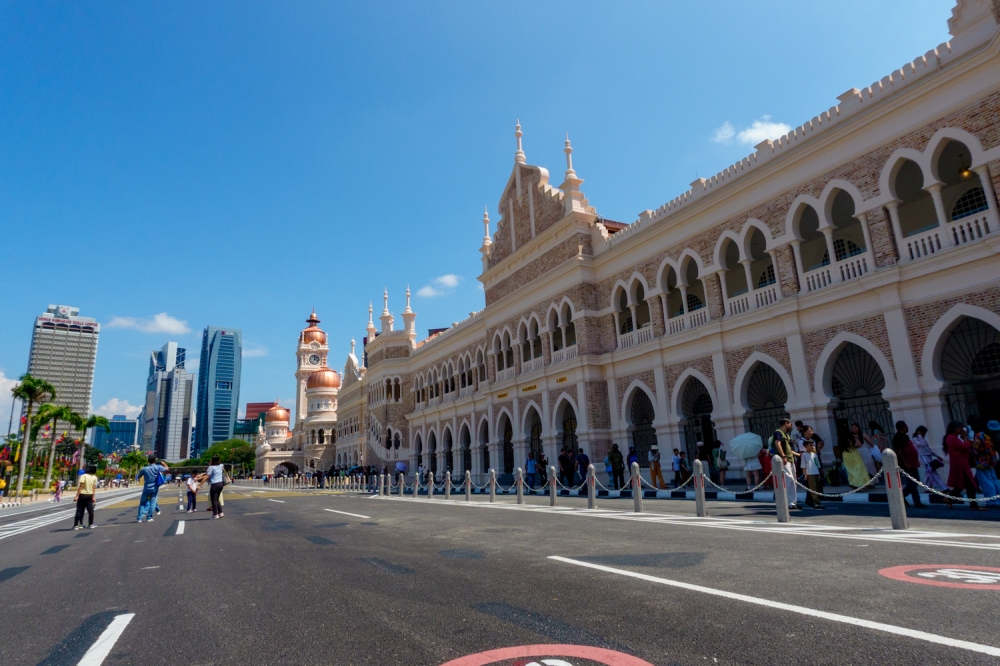
The author argues that the restoration and reopening of Bangunan Sultan Abdul Samad shows how preserving heritage landmarks can enrich Kuala Lumpur’s cultural identity while complementing the city’s modern development. — Picture by Raymond Manuel
BSAS is not just another old building. Completed in 1897, it once housed the administrative offices of British Malaya and later, the country’s courts. More importantly, it stands beside the historic field where the Union Jack was lowered and the Malayan flag raised for the first time in 1957, marking the birth of an independent nation.
Few places capture the story of Malaysia’s journey as clearly as this landmark. The restoration shows that heritage buildings can continue to play a meaningful role in modern cities. With thoughtful planning, they can become places where people gather, learn and reconnect with history.
Yet Kuala Lumpur is also a city that continues to grow and reinvent itself. Modern skyscrapers like the Petronas Twin Towers and Merdeka 118 show the ambition and progress of Malaysia as a modern nation.
Cities cannot rely on physical development alone. Cultural development matters just as much. Historic buildings and neighbourhoods help anchor a city’s memory. They remind us where we came from and help future generations understand the journey that brought Kuala Lumpur to where it is today.
The successful restoration of BSAS should encourage more efforts like this across the city. Many heritage buildings and historic streets still exist in Kuala Lumpur and beyond, and they deserve the same level of care and attention.
As someone who spends much of his time working with residents and community groups across Kuala Lumpur, especially Bukit Bintang where BSAS is located, I am often reminded that the city’s real character lies in its neighbourhoods.
For example, around Masjid Jamek, one of Kuala Lumpur’s oldest mosques located at the confluence of the Klang and Gombak rivers, the surrounding streets reflect the early communities that formed the foundation of the city. In Petaling Street, rows of old shophouses still stand as reminders of the migrants and entrepreneurs who helped transform Kuala Lumpur from a small tin mining settlement into a thriving metropolis. In Brickfields, the vibrant Little India district continues to showcase the culture, food and traditions that give the area an unmistakable identity.
Places like these form an important part of Kuala Lumpur’s identity, and the heritage they embody must be preserved. As Kuala Lumpur continues to grow, we should remember that progress is not measured only by the buildings we construct next. It is also measured by how well we protect the stories that built the city in the first place.
* Ben Fong Kok Seng is the chairman of the Bukit Bintang Parliamentary Zone Residents’ Representative Council.
** This is the personal opinion of the writer or publication and does not necessarily represent the views of Malay Mail.
