MARCH 14 — The Strait of Hormuz has long been one of the most strategically sensitive waterways in the world.
Nearly a fifth of global oil trade passes through this narrow maritime corridor linking the Persian Gulf to the Arabian Sea.
At a time when tensions in the Middle East are already dangerously elevated following the recent escalation between the United States, Israel and Iran, proposals or suggestions that Washington or any external power might “take over” or unilaterally secure the Strait risk compounding an already volatile geopolitical situation.
More importantly, such an act would undermine what remains of the rules-based international order – an order that is already under considerable strain from multiple directions.
The legal question surrounding the Strait of Hormuz is not trivial. Contrary to some assumptions, the United States has no jurisdiction over the Strait.
Under the United Nations Convention on the Law of the Sea (UNCLOS), the waters that make up the Strait fall largely within the territorial waters of Iran to the north and Oman to the south.
This means that any attempt by a foreign power to assume operational control of the Strait without the consent of these coastal states could be interpreted as a violation of sovereign jurisdiction.
Even if such a move is framed as a measure to guarantee freedom of navigation or to protect commercial shipping from missile or drone attacks, it would still raise serious legal and political concerns.
In international law, intent does not always negate the consequences of violating sovereignty.
Indeed, the principle of sovereign equality among states remains the cornerstone of the modern international system.
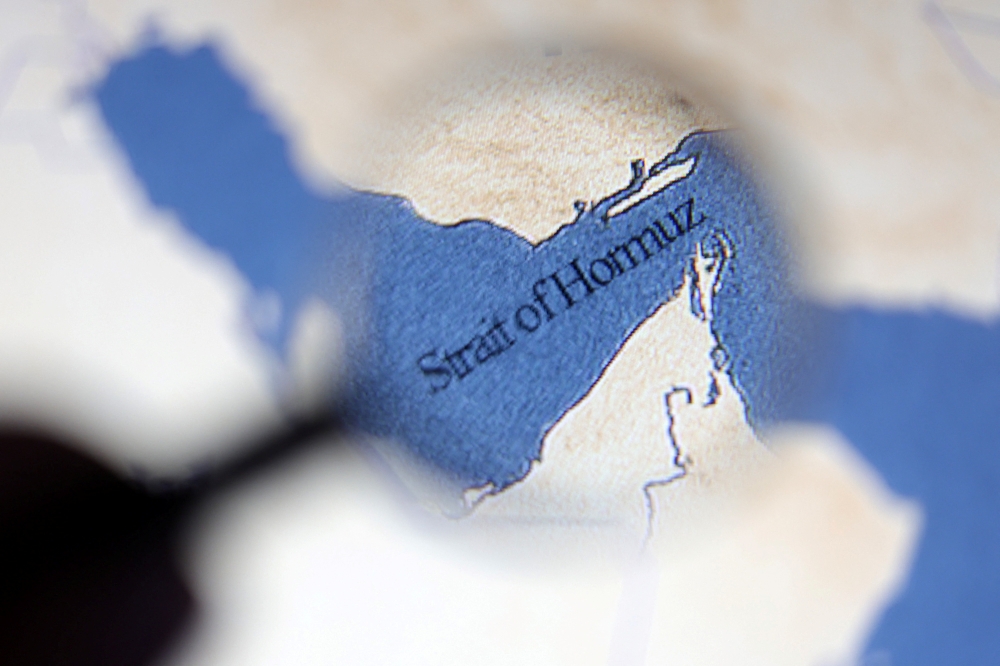
A map showing the Strait of Hormuz is seen in this illustration taken June 22, 2025. — Reuters pic
If powerful countries begin to assume that they can unilaterally control strategic maritime chokepoints whenever tensions escalate, the implications would be far-reaching.
The precedent would be difficult to contain.
Today it might be the Strait of Hormuz.
Tomorrow it could be other crucial waterways such as the Bab el-Mandeb, the Bosphorus, or even Southeast Asia’s Strait of Malacca.
Once the logic of unilateral enforcement replaces multilateral consent, the global maritime order would become dangerously unstable.
This is precisely why UNCLOS exists – to create a predictable framework governing navigation rights, territorial waters, and the responsibilities of coastal states and external powers alike.
Yet the rules-based order is already under severe pressure.
Russia’s war in Ukraine, China’s maritime assertiveness in parts of the South China Sea, and the growing willingness of major powers to bypass international institutions have all weakened confidence in global governance mechanisms.
If the United States were now to assert direct operational control over the Strait of Hormuz without the consent of Iran and Oman, it would reinforce the perception that even the leading architects of the rules-based order are prepared to circumvent it when strategic interests are at stake.
Such a development would further blur the line between rule-based governance and power-based geopolitics.
This does not mean that the security concerns surrounding the Strait of Hormuz should be dismissed.
Recent missile strikes, drone attacks and disruptions to shipping in the region have heightened fears about the safety of one of the world’s most vital energy corridors.
With global oil prices already rising – Brent crude recently exceeding US$102 per barrel – the stakes are enormous for both energy producers and consumers. Although as of March 10 2026, it also dropped to US$82. The situation is extremely volatile.
Countries across Asia, including Japan, South Korea, China and India, depend heavily on oil transported through this narrow passage.
Any sustained disruption would reverberate across global markets, pushing inflation higher and slowing economic growth.
Southeast Asia is not immune to these shocks.
For Asean economies, rising energy costs can translate into higher transport prices, food inflation and slower industrial activity.
Even energy exporters such as Malaysia cannot escape the broader macroeconomic consequences of global instability.
This is why preserving stability in the Strait of Hormuz must be a collective priority.
However, collective security should not be confused with unilateral control.
A more sustainable approach would involve multilateral maritime cooperation under internationally recognised legal frameworks.
Regional states, including Iran, Oman and members of the Gulf Cooperation Council, must remain central to any arrangement designed to secure the Strait.
External powers can assist in safeguarding navigation, but they should do so through cooperative mechanisms that respect the sovereignty of the coastal states.
This principle matters not only for the Middle East but also for the broader international system.
For smaller and middle powers such as Malaysia and many Asean countries, adherence to international law is not an abstract ideal – it is a practical necessity.
Without clear rules governing maritime conduct, smaller states would find themselves increasingly vulnerable to the unilateral actions of stronger powers.
The credibility of the rules-based order therefore depends on consistency.
It cannot be defended in one region while being disregarded in another.
If the world’s major powers wish to preserve freedom of navigation and maritime stability, they must do so in a manner that strengthens international law rather than weakening it.
The Strait of Hormuz is undeniably a global artery of energy trade. Its security matters to the entire international community.
But safeguarding this vital waterway should not come at the expense of the very legal norms that underpin global stability.
In moments of crisis, the temptation to act unilaterally is always strong.
Yet history shows that when rules are abandoned in favour of expediency, the consequences often extend far beyond the immediate conflict.
The international order is already fragile.
Turning strategic waterways into arenas of unilateral control would only accelerate its erosion.
* Phar Kim Beng is professor of Asean Studies and director of the Institute of International and Asean Studies, International Islamic University of Malaysia
** This is the personal opinion of the writer or publication and does not necessarily represent the views of Malay Mail.