MARCH 20 — The strengthening of the Malaysian ringgit against the Singapore dollar to its highest level in five years is more than a currency movement.
It is a signal—subtle yet powerful—that Malaysia may be better positioned than many of its regional peers to withstand the economic shocks emanating from the escalating conflict in the Gulf.
At 3.0615 against the Singapore dollar, the ringgit is not merely appreciating.
It is reflecting a deeper structural reality: Malaysia’s unique position as a net energy exporter at a time when global energy markets are tightening under geopolitical stress.
Energy is Malaysia’s strategic cushion:
Unlike many Asian economies that are heavily dependent on imported oil and gas, Malaysia occupies a more advantageous position.
It exports both crude oil and liquefied natural gas (LNG), making it one of the few countries in Asia that can benefit—at least partially—from rising global energy prices.
As tensions in the Strait of Hormuz disrupt supply chains and constrain shipping routes, global energy prices are expected to remain elevated. This is precisely where Malaysia gains.
Higher oil and LNG prices translate into stronger export revenues, improved fiscal buffers, and greater resilience in the face of external shocks.
In simple terms, what hurts energy importers may cushion Malaysia.
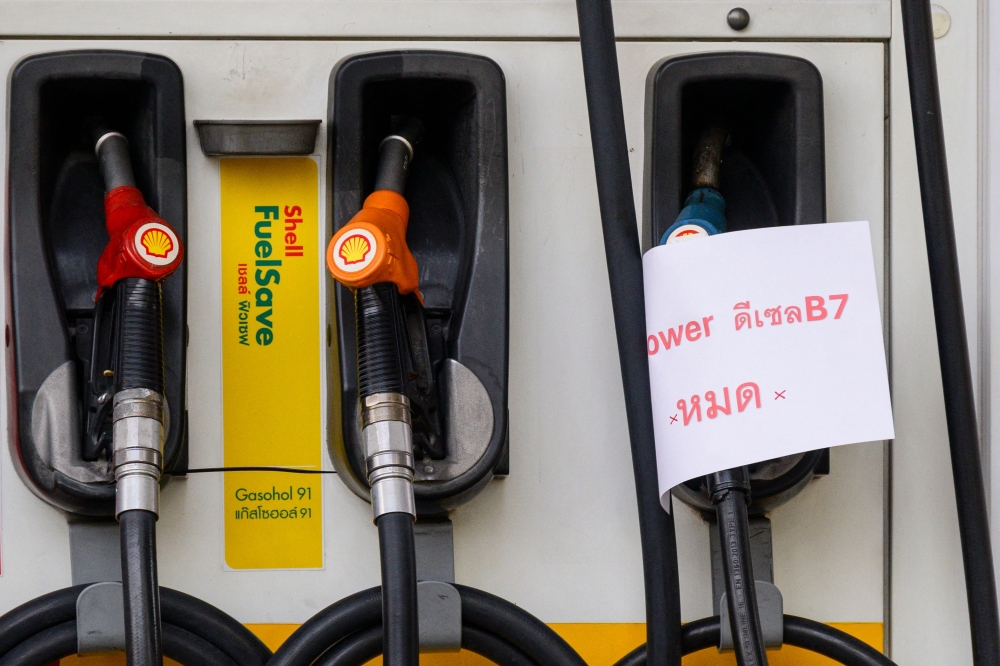
Gemini saidA notice (R) informing customers that B7 biodiesel has run out is displayed on a pump at a Shell petrol station in Bangkok on March 16, 2026, following import disruptions caused by the Middle East war. — AFP pic
Currency strength reflects market confidence:
The ringgit’s appreciation is also a reflection of investor confidence.
When global financial institutions such as Goldman Sachs Group Inc. project that the ringgit could be among the best-performing currencies in Asia, they are not merely making a speculative call.
They are assessing structural fundamentals—trade balances, commodity exposure, and macroeconomic management.
The logic is straightforward: in a world where energy prices are rising due to conflict, countries that export energy will see capital inflows and stronger currencies.
Malaysia fits that profile.
The Gulf war as an economic shockwave:
The war in the Gulf is not just a regional conflict. It is a global economic disruptor.
The Strait of Hormuz, through which a significant portion of the world’s oil and gas flows, has become increasingly volatile.
Even the perception of disruption is enough to send prices upward.
For energy-importing nations, this translates into inflation, trade deficits, and currency depreciation.
For Malaysia, however, the equation is more balanced.
While higher prices may still lead to domestic inflation and subsidy pressures, the country’s export revenues provide a counterweight that many others lack.
Artificial intelligence and structural optimism:
Beyond energy, the ringgit’s rise is also propelled by optimism in emerging sectors such as artificial intelligence.
Malaysia is increasingly positioning itself as a regional hub for data centers, semiconductor value chains, and digital infrastructure. These sectors are closely tied to the global expansion of AI.
The convergence of two forces—commodity strength and technological optimism—creates a rare dual tailwind for the Malaysian economy.
This is not accidental.
It reflects years of gradual integration into global supply chains, particularly in electronics and high-value manufacturing.
A word of caution: strength is not immunity:
Yet, it would be a mistake to assume that Malaysia is immune to global shocks.
A stronger ringgit does not eliminate inflationary pressures. Higher energy prices still affect domestic fuel costs, logistics, and food supply chains.
The government may also face increased fiscal burdens if subsidies are expanded to shield consumers.
Moreover, global demand could weaken if the war drags on, offsetting some of the gains from higher commodity prices.
Thus, Malaysia’s advantage is relative, not absolute.
Asean in contrast:
Within Asean, Malaysia’s position stands out.
Countries that rely heavily on imported energy—such as the Philippines or Thailand—are more exposed to rising costs and currency pressures.
Even highly developed economies like Singapore, despite their financial strength, are structurally dependent on energy imports.
Malaysia, by contrast, enjoys a hybrid advantage: resource endowment combined with a diversified economic base.
This combination is rare—and valuable in times of crisis.
Strategic implications for Malaysia:
The strengthening of the ringgit offers Malaysia more than just economic relief. It provides strategic breathing space.
First, it enhances Malaysia’s fiscal flexibility, allowing the government to manage subsidies and social spending more effectively.
Second, it strengthens the country’s external position, reducing vulnerability to capital outflows.
Third, it reinforces Malaysia’s credibility as a stable economic player in a volatile region.
However, this window of opportunity must be used wisely.
Structural reforms, investment in renewable energy, and continued diversification of the economy are essential to sustain this advantage.
Conclusion: Strength in a time of turbulence
When the ringgit does well, it is not merely a financial statistic—it is a reflection of Malaysia’s underlying resilience.
In a world shaken by conflict in the Gulf, rising energy prices, and uncertain global growth, Malaysia finds itself in a relatively stronger position.
Not untouched by the storm, but better equipped to weather it.
The challenge now is to ensure that this moment of strength is not fleeting—but transformed into long-term stability and strategic advantage.
Because in times of global crisis, resilience is not just about surviving the shock.
It is about emerging stronger from it.
* Phar Kim Beng, PhD is the Professor of Asean Studies at International Islamic University of Malaysia and Director of Institute of International and Asean Studies (IINTAS).
** This is the personal opinion of the writer or publication and does not necessarily represent the views of Malay Mail.