APRIL 28 — When the Government first introduced a monthly quota of 300 litres for RON95 under the BUDI95 targeted subsidy framework, it was calibrated to cover virtually all Malaysians.
Official data indicated that more than 99 per cent of drivers consume below this level, with the average Malaysian using only around 80 to 100 litres per month. The 300-litre threshold therefore represented a generous buffer in normal times, further reinforced by the reduction in pump price from RM2.05 to RM1.99.
In April, the quota was reduced to 200 litres in response to the escalating global energy crisis, while the price was maintained. By and large, Malaysians accepted this move with understanding.
There is broad recognition that this is a global crisis, where countries are competing to secure stable fuel supply under increasingly strained conditions.
The Government’s decision was necessary and responsible. Even at 200 litres, close to 90 per cent of users remain unaffected, as most Malaysians consume well below this level.
However, the scale and persistence of the current crisis suggest that this adjustment alone may not be sufficient. A more assertive approach is now required to encourage meaningful fuel savings for the collective good.
Malaysia’s fuel consumption remains structurally high. An estimated 10 million vehicles consume between 50 to 60 million litres of fuel daily, equivalent to about five to six litres per vehicle per day. At the same time, the Government continues to subsidise more than RM1.50 per litre of RON95, placing sustained pressure on public finances.
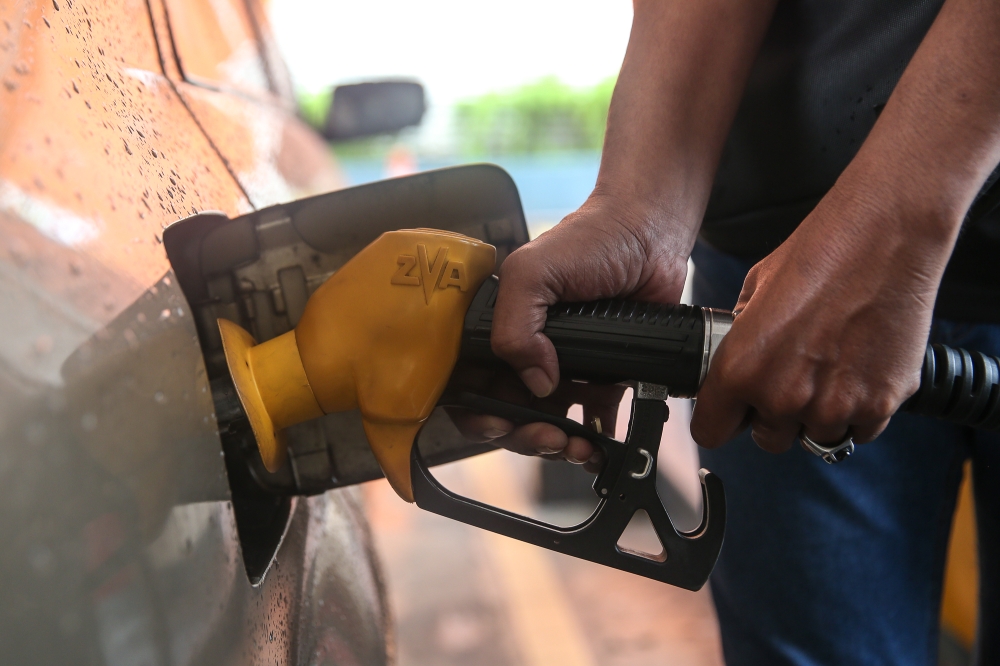
The author argues that reducing the RON95 subsidy quota further to 150 litres per month is a fairer and more effective way to curb fuel consumption during a prolonged energy crisis, as it drives behavioural change and preserves fiscal sustainability better than blanket price increases. — Picture by Yusof Isa
This is no longer a short-term fluctuation. It is a prolonged period of global energy disruption.
In this context, stronger signalling is necessary. Reducing the quota further from 200 litres to 150 litres per month is the more effective and equitable option. Unlike a blanket price increase, which imposes the same burden on all consumers regardless of usage, a quota adjustment introduces fairness. Those who consume more will need to adjust more.
More importantly, a lower quota compels meaningful behavioural change. It encourages more disciplined fuel usage through better planning, reduced discretionary travel, and improved efficiency. Small individual adjustments, when aggregated across millions, can significantly reduce national demand.
A price increase, by contrast, risks becoming a passive burden. Consumers may pay more, but consumption patterns may not adjust in a meaningful way, particularly among higher-income groups. Fiscal pressure would persist without the corresponding demand-side correction.
This is why the signal matters.
A calibrated reduction to 150 litres sends a clear message that Malaysia is preparing early, acting decisively, and sharing responsibility collectively. It reinforces the principle that resilience must be built ahead of impact, not after.
Such a measure must be clearly communicated as temporary and responsive to global conditions. The objective is not to impose hardship, but to strengthen preparedness.
Malaysia still has the advantage of acting from a position of relative strength. That strength must be matched with foresight. In uncertain times, the right signal, sent early, can make all the difference.
* This is the personal opinion of the writer or publication and does not necessarily represent the views of Malay Mail.