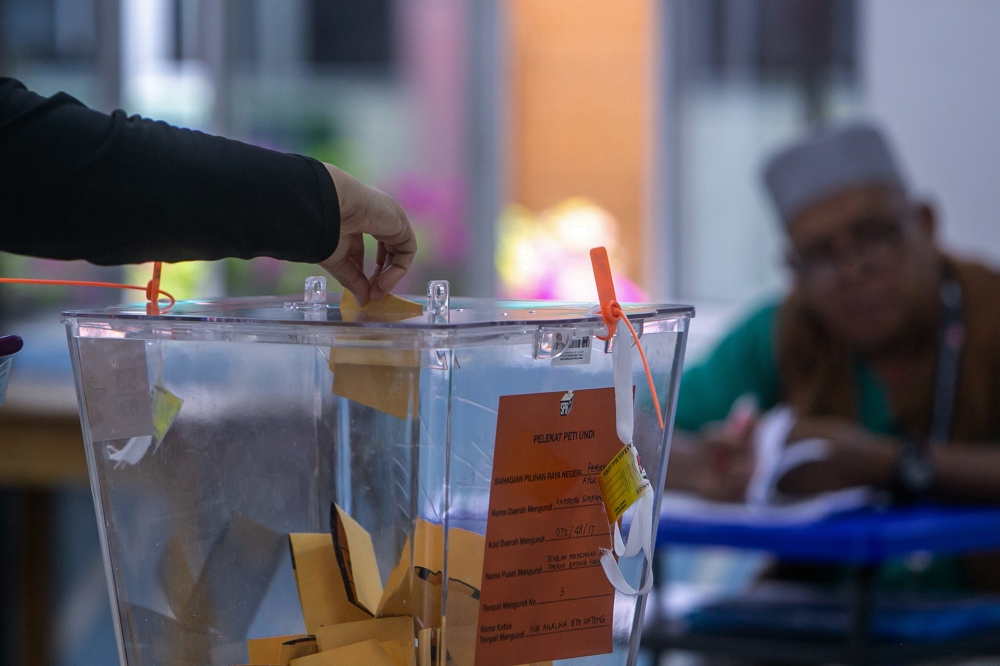
APRIL 28 — There is a film about GE14 that I have been thinking about lately: RISE: Ini Kalilah. Not because it was a good film by any measure, but because it captured the democratic tension surrounding the single act of voting. Malaysians abroad scrambling to get postal ballots home in time and physically transporting other people’s votes. The urgency of it. The idea that one ballot, lost somewhere between London and Kuala Lumpur, could mean something.
The belief that the vote was everything — that it was the whole of what democratic citizenship could be. And in 2018, in a country that had spent sixty years under the same government, you could understand why.
What I have been sitting with, though, is how much that belief has cost us since.
GE14 handed Malaysians a story about themselves: that voting is what changes things. That the ballot is where the fight lives and dies. It made sense in that moment. The scale of what happened — Barisan Nasional, out — was extraordinary enough that it seemed to confirm the whole framework. Vote, and the world shifts.
Then GE15 happened. You could vote for Pakatan Harapan; vote for reform, vote for everything BN was not—and somehow still wake up to a government that included Umno. Not because of a miscount in votes. But because in a hung parliament, the votes are only the beginning. What follows is coalition mathematics, backroom negotiation, and the exchange of one concession for another. None of that is visible to the voter. None of it is in your hands.
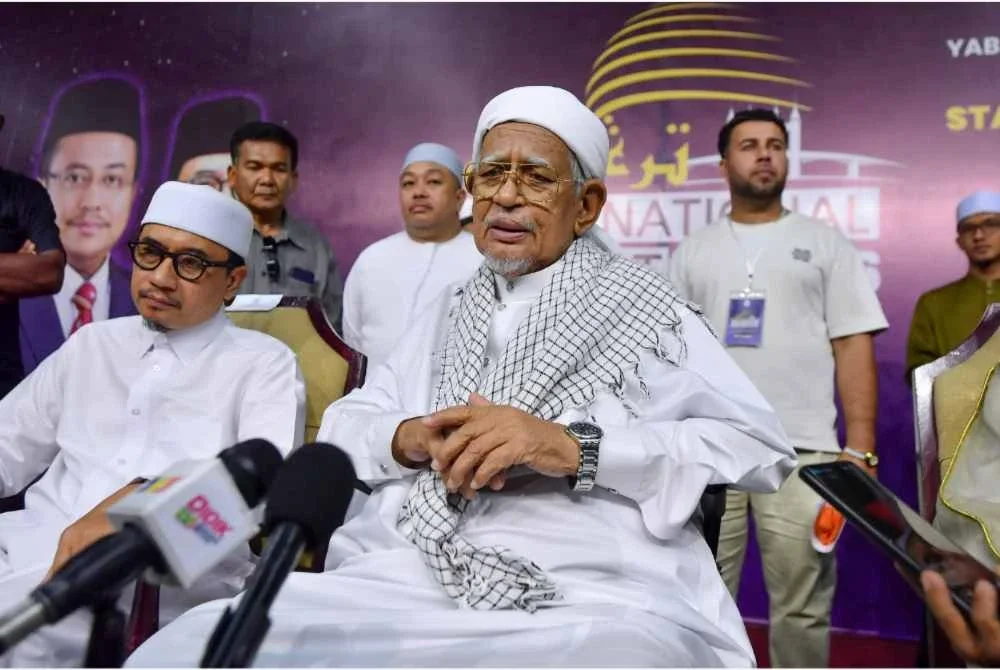
The author argues that voting alone is insufficient to sustain a meaningful democracy, and that real political change in Malaysia depends on continuous public engagement, stronger civic participation, and building lasting societal pressure that shapes political incentives beyond elections. — Bernama pic
The formation of the Madani government was an awakening for most of us. For a significant portion of Pakatan’s base, Umno was exactly what they’d been voting against for years. But political survival in a fractured parliament requires coalitions, and coalitions require compromise, and compromise does not stop to ask whether the act conflicts with the mandate your voters thought they were giving you.
What the vote does, I have come to believe, is get your chosen team through the door. Everything after that, such as questions about who they have to share power with, what they have to trade for it; you have no formal role in these decisions. For practical purposes, your democratic participation ends at the ballot box.
There is a structural reason for this, and it is worth naming clearly.
Politicians are not primarily driven by ideology (though one could argue differently for PAS). They are driven by what helps them survive. Once someone enters the seat of power, the calculation they are primarily running isn’t “what do my voters want?”. It is “What do I have to do to stay here?” Those are related questions, but they are not the same question.
This is not cynicism about individuals. It is just how systems work. The incentives within any structure of power — party hierarchy, coalition obligations, civil service inertia, the need to maintain relationships that span ideological lines — tend to reward staying in the game rather than disrupting it. Even the best-intentioned person who enters that environment will eventually have to choose between their convictions and their political survival.
When DAP supporters accuse the party of being muted on crucial issues since joining the Madani government (to the point of being accused as MCA 2.0), they are identifying something real. The observation is accurate. But the cause is not betrayal. It is the same pressure that bends every political actor who has to govern rather than just oppose. The room is different from the outside.
If you want politicians to make different decisions, you have to change what goes into their calculations. And that means the environment they’re operating in has to change — not just the people.
What I mean is not just policy or institutional reform, though those matter. I mean something closer to what people openly expect, what they tolerate, what they refuse. The norms of a political culture. Whether accountability is treated as a civic value or an opposition sport. Whether the ordinary person sees their role in democracy as choosing a team every five years, or as something more continuous.
Political parties respond to incentives. This is something that Prof Wong Chin Huat, one of Bersih’s founding members and a known political scientist, often repeats in his many public statements. And the most durable incentive is a public that has cultivated expectations clear enough and consistent enough that ignoring them becomes costly. This is not a new insight — it is how democratic norms have moved historically, everywhere. Not from the top down, but from the accumulated pressure of organised constituencies, making certain positions expensive to hold.
The Malaysian public has not, for the most part, built that kind of pressure. Though you see instances of this across some issues, such as allowing the emergency withdrawal of EPF funds during the height of the pandemic. But even here, the heavy reliance on political figures to champion this agenda was noticeable. The campaign was not naturally owned by the public.
Part of what makes this hard to say is that the expectation has been displaced elsewhere. The burden of pushing for democratic norms—for accountability, for equitable policy, for a political culture worth having — has landed almost entirely on civil society. NGOs and advocacy organisations carry expectations that are entirely disproportionate to the resources they receive.
What I hear from people in this space is consistent: the hardest problem is the public’s passivity. The public broadly agrees with what civil society is trying to do. Crucially, however, is the zero involvement. The public does not fund these causes, join them, or show up. International foundations typically end up filling the gap. And when those grants disappear, or when geopolitical winds shift, the entire infrastructure collapses.
This is what the belief that voting is enough produces. If the ballot is the full extent of democratic responsibility, everything else becomes someone else’s job. Something other people do. People who really care about “these things.” The ordinary citizen has discharged their civic duty; they can go home.
But democracy does not maintain itself. It requires people to care about it between elections. It requires the active work of building an environment — a culture, really — in which certain things are expected of those in power, because the public has made its expectations legible and durable.
I am not demanding that everyone become an activist. The costs of civic participation are real. In a country where people are stretched thin by the cost of living, stagnant wages, and a sense that the system is not really designed for them — asking someone to also become a civic organiser is a lot to ask. I know this. I have spoken to enough people in the last few years to understand how tired they are.
But there is a version of this that does not require anyone to become someone they are not. It starts with a shift in how democratic citizenship is understood. To appreciate what it means to be someone who is invested in how this country is governed. Not just during elections, but between them. In the small, cumulative ways that either do or do not build a culture of accountability.
What was extraordinary about GE14 was not just the votes. It was the energy that surrounded it. The conversations, the sense of shared purpose, the feeling that something mattered. That energy dissipated, in part, because there was no structure to hold it. No organisation, no community, and no platform that could direct this energy somewhere useful once the election was over.
But what if that energy had somewhere to go?
GE16 is likely coming in by the end of this year. There will be another surge of electoral energy: the voter registration drives, the social media campaigns, the familiar urgency of an impending election. Showing up still matters. I want to be clear about that.
But a vote cast once and nothing else, into a system whose incentive structures have not shifted, is not going to produce a different outcome from the one we already have. The vote is the base. What gets built on top of it; the entire civic infrastructure, organising, building community, and the cultivation of norms that politicians actually have to respond to — that is what determines whether Malaysian democracy develops into something real, or stays a performance we put on every few years.
After all, the most important question is not who wins the next election. It is what kind of public they will be governing — and whether that public has made itself impossible to ignore.
* Aziff Azuddin is the Research Director of IMAN Research.
** This article was originally published in Iman Research’s Substack.
*** This is the personal opinion of the writer or publication and does not necessarily represent the views of Malay Mail.