
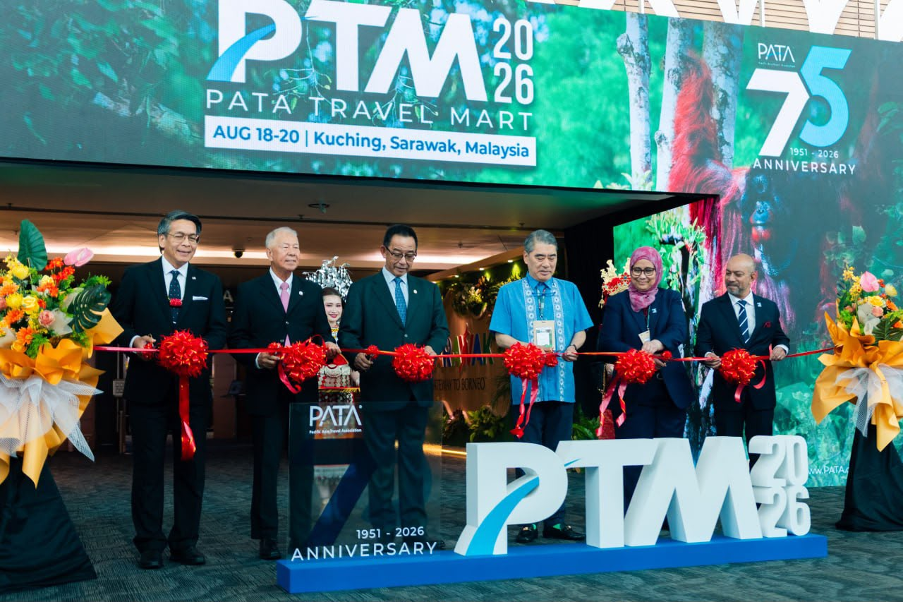
Hosting PATA Travel Mart 2026 in Malaysia marked a symbolic milestone in Russian–Malaysian tourism cooperation. There is already sustained mutual interest in travel between the two countries: Russian tourists are discovering Malaysia, while Malaysian travelers are showing growing interest in Russia as a new and distinctive destination.
The main opportunity, however, lies not so much in further expanding existing tourist flows as in creating a new, modern and sustainable tourism market between Russia and Malaysia. Achieving this requires moving from general mutual interest to specific itineraries, transport solutions, tailored tourism products and joint sales initiatives.
Tangible results already support the potential of this bilateral tourism market. In 2025, tourist flows between the two countries increased by 9% to 127,600 people. Malaysia continues to engage systematically with the Russian market through industry exhibitions, tour operators, media, and digital promotion. These consistent efforts provide a solid foundation for further growth.
The next essential step is to further develop two-way tourist flows.
Malaysia is an important Southeast Asian partner for Russia. At PATA Travel Mart 2026, the Russian delegation presented new tourism products designed to appeal to Malaysian travelers through their diversity and their contrast with familiar Southeast Asian destinations. Russia’s national tourism brand, Discover Russia, occupied the largest stand at the event. Over its two days of operation, it hosted more than 1,000 business meetings with international buyers, tour operators and representatives of tourism organizations from across the Asia-Pacific region.
Winter and snow, the Northern Lights and the Arctic, Moscow and St Petersburg, Kazan and Lake Baikal, the Russian Far East, natural landscapes, gastronomic routes and cultural heritage—all offer experiences fundamentally different from the tourism products traditionally available in Southeast Asia. Russia can offer Malaysian travelers more than a trip: it can provide a journey into an entirely different climatic, natural and cultural environment.
In practical terms, the Russian–Malaysian tourism partnership can develop across three main areas.
The first is transport connectivity. Building tourist flows begins with making it convenient to reach the chosen destination. The easier the route is to navigate, the more convenient the connections and the more predictable the travel costs, the easier it becomes to develop a tourism product with broad market appeal. Airlines, tour operators, airports and national tourism organizations should therefore work together to help generate demand, rather than waiting for it to emerge.
Transport accessibility is not solely about direct air services. It also encompasses coordinated schedules, convenient connecting routes, clear baggage policies, information support and the ability to book and pay for the main elements of a trip easily through channels familiar to travelers. When these elements are integrated into a single system, a destination becomes easier to navigate, more accessible and more competitive.
The second area is developing tourism products tailored to the Malaysian market. Simply translating an existing Russian itinerary into English is not enough. The optimal trip duration, seasonality, travelers’ culinary and cultural preferences, and their expectations regarding service, accommodation and travel formats all need to be considered.
When working with the Malaysian market, pay particular attention to the needs of Muslim travelers: access to halal food, prayer facilities, clear wayfinding, and essential information at every stage of the journey. Such adaptation must go beyond statements of intent and be reflected in practical provisions, supported by actual infrastructure and service quality.
For Malaysian travelers, Russia can become more than a single point on the map. It can offer an extensive journey spanning several cities and regions, with opportunities to discover a rich diversity of cultures, religious traditions and national heritage. Within one country, travelers can experience volcanoes, steppes, mountains, seacoasts, desert landscapes and Arctic territories. This diversity makes it possible to develop itineraries for different audiences, ranging from family holidays and cultural discovery trips to premium, nature-based, gastronomic and adventure tourism.
The third area is joint promotion and sales. In May 2026, Russia and Malaysia agreed to develop joint programs promoting the tourism potential of both countries. The most promising model is one in which national tourism brands, tour operators, airlines, digital platforms, regional stakeholders and local businesses operate as part of a coordinated system rather than in isolation.
Joint promotion should not be limited to image-building campaigns. It should guide travelers through the entire customer journey, from their first encounter with the country and their choice of itinerary to booking, payment, and the trip itself. Only then can interest be converted into an actual sale and a tourism campaign into a measurable economic outcome.
On the Russian side, Discover Russia can serve as a platform for this cooperation. A national tourism brand’s role is not only to introduce Russia to the world, but also to help international partners develop specific itineraries and tourism products that can be brought to market and sold.
The Center for Strategic Research’s key role within this system is to bring together market intelligence, tourism destinations, businesses and international partners. This work enables the transition from mutual interest to a market-ready product, from a product to an itinerary, and from an itinerary to a sustainable flow of tourists.
UN Tourism data show that the Asia-Pacific region continues to recover. In 2025, international tourist arrivals in the region increased by 6% to 331 million, although they remained 9% below 2019 levels. This suggests opportunities remain to develop new international tourist flows.
Malaysia should therefore be viewed not simply as another overseas market for Russian tourism, but as a potential partner in developing a new, sustainable two-way tourism offering—one that is economically viable and mutually beneficial to both countries.
The results of such a partnership should be measured against concrete indicators: new itineraries and jointly developed tourism products, expanded transport options, increased sales and growth in two-way tourist flows. One of the most important measures, however, will be travellers’ willingness to return and recommend the destination to their families, friends and colleagues.
A compelling example of this approach already exists. Participants in an international transcontinental motoring expedition organized by the Automobile Association of Singapore spent 33 days in Russia, covered more than 10,000 kilometers and visited approximately 30 cities. The expedition involved 24 travelers from Singapore and Malaysia in 13 vehicles. The Russian stage of the journey was supported by the Center for Strategic Research and took place under the Discover Russia national tourism brand.
The project proved to be much more than a road trip. It enabled international visitors to experience Russia on the move: traveling through dozens of regions and discovering its natural landscapes, cities, religions, culture and people. At the same time, the expedition provided valuable feedback on how easily international travelers can explore the country independently, use digital services, obtain information and navigate its tourism infrastructure.
Projects of this kind create a new format for promoting a country internationally through participants’ first-hand experiences. Travelers do not simply see an advertising image of Russia: they experience the route themselves, share their impressions with their audiences and help build trust in the destination.
These initiatives exemplify genuine cross-border partnership. The international partner brings knowledge of its audience, market access and established relationships with travelers. The Russian side provides expertise, itineraries, regional opportunities, infrastructure and organizational support.
The result is a new tourism product entering the market. This is where the future of cooperation between Russia and Malaysia lies: not simply in exchanging tourist flows, but in jointly designing journeys that appeal to travelers, meet market demand and remain sustainable over the long term.
