

MAY 5 — Osteosarcoma is the most common form of primary bone cancer affecting children and adolescents. This malignancy arises from bone tissue and typically develops at the ends of long bones, most often around the knee. It may also occur in the shoulder, pelvis, or skull, and in some cases, can spread to other parts of the body—a process known as metastasis.
While the medical aspects of osteosarcoma are well recognised, its profound impact on a child’s education and psychosocial development is often less discussed.
The impact on school life
A diagnosis of osteosarcoma frequently disrupts a student’s academic journey. Many children are required to miss an entire school year due to prolonged and intensive treatment. This extended absence places them at significant risk of academic delay, school avoidance, and even dropout.
Academic challenges may include frequent absences, declining performance, and difficulties with memory, planning, and organisation. Some children experience slowed processing speed, making it harder to keep up with new material. Others may struggle with reading comprehension, spelling, and mathematics. Visual memory issues, speech and language delays, and symptoms resembling attention-deficit/hyperactivity disorder (ADHD) are also not uncommon.
Psychosocial challenges are equally significant. Children may face low self-esteem, poor body image, and emotional distress, including depression and irritability. Social withdrawal and isolation can occur, alongside difficulty maintaining peer relationships and a loss of independence.
Physical effects of both the disease and its treatment further complicate daily functioning. Fatigue, anaemia, nausea, and mouth sores are common, while some children may experience fine motor difficulties, or even vision and hearing issues.
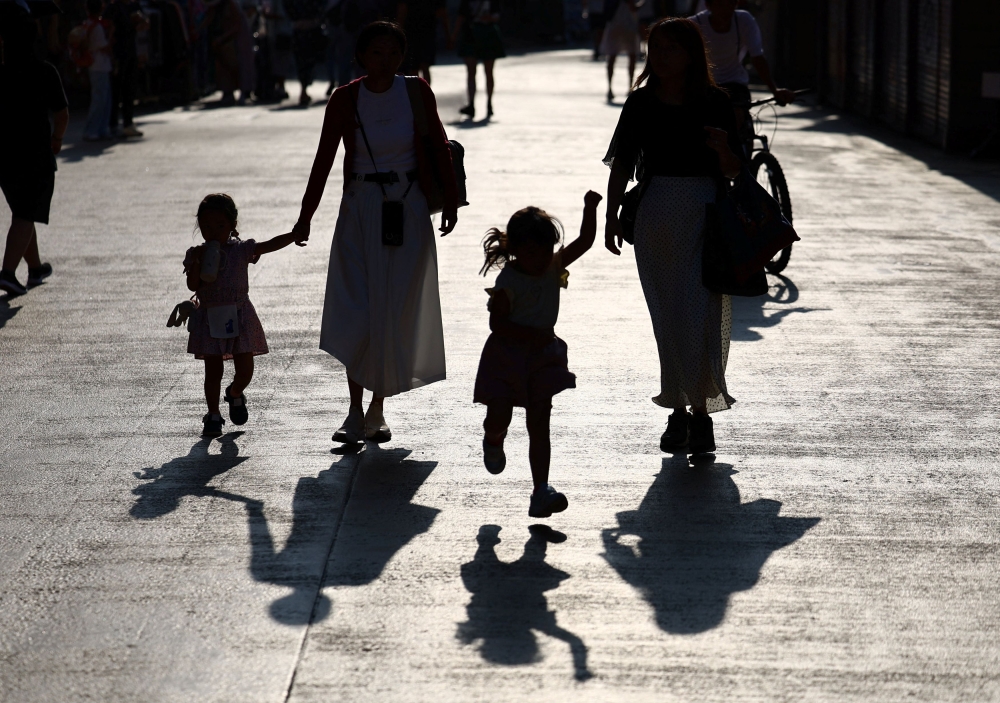
People with children walk in Tokyo, Japan on August 5, 2025. — Reuters pic
Treatment and recovery
The standard treatment for osteosarcoma involves a combination of chemotherapy and surgery, often spanning close to a year.
Chemotherapy is typically administered in cycles over several months prior to surgery, followed by additional cycles post-operatively. In selected cases, radiotherapy may be used as an adjunct.
Surgical management depends on the tumour’s size, location, and response to chemotherapy. When feasible, limb-sparing procedures are performed, involving wide local resection of the tumour with reconstruction using either an endoprosthesis or biological graft. However, in more advanced or unresponsive cases, amputation may be necessary. With rehabilitation and the use of prosthetic limbs, many children are able to regain a significant degree of independence.
Post-treatment, patients require close monitoring, particularly within the first two years, when the risk of complications such as infection or recurrence is highest. Long-term follow-up, often extending up to 10–15 years, is essential.
The role of schools and systems
Educational institutions play a critical role in supporting children through treatment and recovery. Government initiatives such as in-hospital schooling and facilitated access to national examinations (such as SPM and STPM) provide continuity in education. Policies allowing a year away from school for treatment also help ease the burden on students and families.
Schools themselves can further support these children through:
• Accessibility measures, including safe, easily navigable classrooms and designated rest areas
• Academic flexibility, such as modified workloads and extended deadlines
• Coordinated support, involving teachers, school nurses, and counsellors
• Social reintegration efforts, including peer support systems and encouragement of participation in clubs and activities
Such measures not only aid academic recovery but also promote emotional well-being and a sense of normalcy.
A story of resilience
Despite the challenges, some children demonstrate remarkable resilience. I recall a patient who, while undergoing his fourth cycle of chemotherapy, chose to sit for his SPM examinations. He later underwent surgery and continued his treatment, only to learn midway through his chemotherapy that he had achieved outstanding results—scoring 8 A1s.
His story is a powerful reminder that while osteosarcoma can disrupt a child’s life, it does not define their potential.
Beyond the physical illness
Cancer is not solely a physical disease. It carries a significant emotional and psychological burden, often extending well beyond the completion of treatment. For many young patients, the journey forward remains uncertain, requiring continued support, understanding, and compassion.
In the midst of these challenges, small acts of support—from families, schools, healthcare providers, and communities—can make a meaningful difference. By recognising the broader impact of osteosarcoma, we can better support these children not only to survive, but to thrive.
* Dr Eyrique Goh Boay Heong is a consultant orthopaedic oncology surgeon at Hospital Kuala Lumpur.
** This is the personal opinion of the writer or publication and does not necessarily represent the views of Malay Mail.


