APRIL 28 — Destructions to homes, infrastructures, livelihood and lives have put climate action at the centre of discussions, planning and investments.
Pledges to reach net-zero
Carbon dioxide emissions have been increasing since the 1700s and escalated significantly since the 1970s resulting in climate change severe climate related events including global warming and severe and frequent floods.
Recognising the severity of climate change escalating into climate crisis and climate catastrophe, nations, government and businesses have pledge to reach net-zero, with majority targeting to reduce carbon emissions to net zero by 2050, some a little earlier and others a little later, striving to achieve the Paris Agreement target of preventing temperature rise to 1.5 degrees C and worst case 2.0°C by 2050.
The IPCC of the UNFCC Reports and Meetings at Conference of Parties (COP) to the United Nations Framework Convention on Climate Change which was first organised in 1995 (COP1), had since its first session (COP1) in 1995 and till subsequent IPCC Reports and COPs decades later, focussed solely on Renewable Energies role in climate change.
Nuclear power was previously not included in the conversation on climate change until IPCC AR4, subsequent Special Reports in 2018 and IPCC Sixth Assessment Report ( of Working Group III in 2022) and COP28 held in Dubai, UAE.
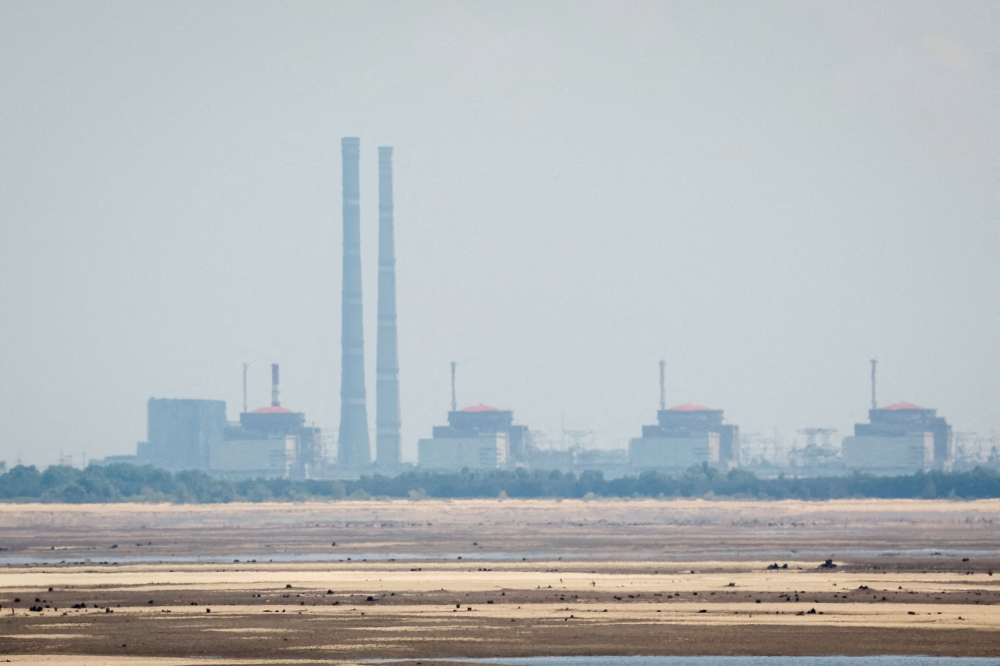
The author argues that nuclear power must be urgently integrated into Malaysia’s energy strategy to meet rising electricity demand and achieve net-zero targets, as global evidence shows it is a critical low-carbon solution alongside renewables. — Reuters pic
IPCC Sixth Assessment Report, International Energy Agency’s (IEA’s) World Energy Outlook and COP28 in UAE had ushered in a critical turning point for nuclear power
IPCC Assessment Reports
i) IPCC Fourth Assessment Report (AR4) released in 2007
A sea change in climate discussions and planning was reflected in the Intergovernmental Panel on Climate Change’s Report by its Working Group III which had acknowledged the role of nuclear energy as a ‘key mitigation technology’, but said that safety, weapons proliferation and waste remain as constraints.
World Nuclear Association reported in May 2007 that the report concludes that there are mitigation options available that could be used to stabilise atmospheric greenhouse gas emissions. Stabilisation between 445 and 710 parts per million of CO2-eq would, the IPCC projects, result in a change in global gross domestic product ranging between a 3 per cent decrease and a small increase.
The report notes that to achieve the lower stabilisation levels will require greater emphasis on low carbon energy sources “such as renewable energy and nuclear power.”
ii) IPCC Special Report on Climate Change released in 2018, outlining Nuclear Power’s Role in Climate Change
The World Nuclear Association (WNA) reported in 8 October 2018 that the IPCC has released a special report on the impacts of climate change. The Report concludes that achieving the 1.5°C goal will require global greenhouse gas emissions to start reducing almost immediately. This will require a faster switch to electricity for energy end use and for that greater electricity demand to be met by low-carbon generation, including nuclear. Nuclear generation increases, on average by around 2.5 times by 2050 in the 89 mitigation scenarios considered by the IPCC.
Achieving a rapid decarbonisation of the electricity sector will require, at first, deploying proven technology. The report recognises that the projected increase in nuclear generation can be realised through existing mature nuclear technology or through new options such as generation III/IV reactors and SMRs. Generation III reactors have already come into operation in several countries.
The report notes that, historically, ‘scalability and speed of scaling of nuclear plants have been high in many nations’, noting that France implemented a programme to rapidly get 80 per cent of its (electrical) power from nuclear. The report also notes that ‘comparative risk assessment shows health risks are low per unit of electricity production’ and land requirement is ‘lower than that of other power sources.’
The report states that nuclear economics have been improved in countries where the electricity system allows for reduced investment risks, the realisation of benefits from series build or through stable relations between regulators and industry. However, in some other countries market conditions have increased investment risks of high-capital expenditure technologies, such as nuclear. The report also notes that the current deployment pace of nuclear energy is constrained by ‘social acceptability’ in some countries.
iii) IPCC Sixth Assessment Report (AR6) released in 2001-2023
The IPCC had highlighted that during the sixth assessment cycle (October 2015 to July 2023) the IPCC produced the Sixth Assessment Report (AR6) with contributions by its three Working Groups and a Synthesis Report, three Special Reports, and a refinement to its latest Methodology Report, with the Working Group I of IPCC AR6 contribution released on August 9, 2021, the Working Group II and III contributions released on February 28 and April 4, 2022 respectively and the Synthesis Report released on March 20, 2023.
The IPCC Working Group III contribution, Climate Change 2022: Mitigation of Climate Change released on April 4, 2022 had advocated for a “broad-based approach to deploying energy sector mitigation options can reduce emissions over the next ten years and set the stage for still deeper reductions beyond 2030 and had also identified that “when switching to low-carbon energy sources — renewable sources, nuclear power, and fossil or bioenergy with CCS — electricity is expected to become a more pervasive energy carrier.”
In summary, the IPCC has identified nuclear power, in addition to renewable sources and fossil or bioenergy with CCS as key low carbon energy sources necessary to reduce carbon emission.
Conference of Parties (COP) to the United Nations Framework Convention on Climate Change (UNFCCC)
COP28 in Dubai, UAE in 2023 had ushered in a critical turning point for the nuclear industry as leaders from 25 countries had signed a pledge to triple nuclear capacity from nearly 400 GW to 1200 GW by 2025.
COP 29 in Baku Azaerbaijan and COP30 in Brazil had witness more countries signing this pledge; to tripling nuclear power by 2050; with six additional countries — El Salvador, Kazakhstan, Kenya, Kosovo, Nigeria, and Turkey — signed the declaration to triple global nuclear energy capacity by 2050 at COP29 which had brought the total number of signatories to 31 and with two additional countries Rwanda and Senegal as new signatories at COP30 which had brought the total number of signatories to 33.
And most recently at the second Nuclear Energy Summit in Paris, on March 10, 2026, China formally joined the international pledge to triple global nuclear energy capacity by 2050 bringing the total number of signatories to this pledge to 34.
With these global recognition by the IPCC, COP as well as Governments worldwide, thus it is testimony to the increasing important role of nuclear power in climate change mitigation.
Malaysia’s plans for Racing to Net Zero and its National Energy Transition Roadmap (NETR)
Recognising the paramount important of reaching net zero, the Government had introduced roadmaps and institutional changes to guide Malaysia’s transition to a clean energy system and a sustainable economy.
National Energy Transition Roadmap (NETR)
NETR developed by the Ministry of Economy was launched in 2023, with Phase 1 unveiled on July 27, 2023, and Phase 2 announced on August 29, 2023 and had identified six key energy transition levers to achieve net-zero emissions by 2050: Energy Efficiency (EE), Renewable Energy (RE), Hydrogen, Bioenergy, Green Mobility, and Carbon Capture, Utilisation, and Storage (CCUS).
Ministry of Energy Transition and Water Transformation (Petra)
Upon its creation on December 12, 2023, the Ministry of Energy Transition and Public Utilities was formed by a split from the previous Ministry of Natural Resources, Energy and Climate Change (NRECC) and On February 8, 2024, the ministry was renamed the Ministry of Energy Transition and Water Transformation (Petra).
Malaysia a hotspot for Data Centres
The Digital Gold rush spurred by the AI Revolution has resulted in the massive investments in/by Data Centres, in particular in specific locations of Johor and Kuala Lumpur Data Centre Asia had highlighted that as of 2025, Malaysia hosts a total of 125 operational data centres, according to Baxtel, distributed across various regions, with the majority located in Kuala Lumpur and Johor. Kuala Lumpur leads with 65 data centres, while Johor follows with 47.
Additionally, there are 18 data centres under construction in Kuala Lumpur and 15 in Johor, indicating ongoing growth in the sector.
Data Centres impacting energy demand and carbon emissions
The International Energy Agency (IEA) had reported that the rise of AI is accelerating the deployment of high-performance accelerated servers, leading to greater power density in data centres, and in 2024 electricity consumption from data centres is estimated to amount to around 415 terawatt hours (TWh), or about 1.5 per cent of global electricity consumption.
Precedence Research had spotlighted that the electricity consumption of data centres is set to grow rapidly, with a projected 945 TWh demand by 2030, contributing to 3 per cent of global electricity usage.
Additionally, IEA reported that data centres and data transmission networks are responsible for 1 per cent of energy-related GHG emissions.
The world cannot reach net-zero in time without nuclear power
At the Inaugural Nuclear Energy Summit 2023 in Brussels, Dr Birol Executive Director of the International Energy Agency (IEA) had remarked “The world cannot reach net zero in time without nuclear power”.
Additionally at the Singapore International Energy Week 2025 (2025) Dr Fatih had highlighted that nuclear power is undergoing a strong global comeback, driven by energy security concerns and rising demand from AI and electric vehicles.
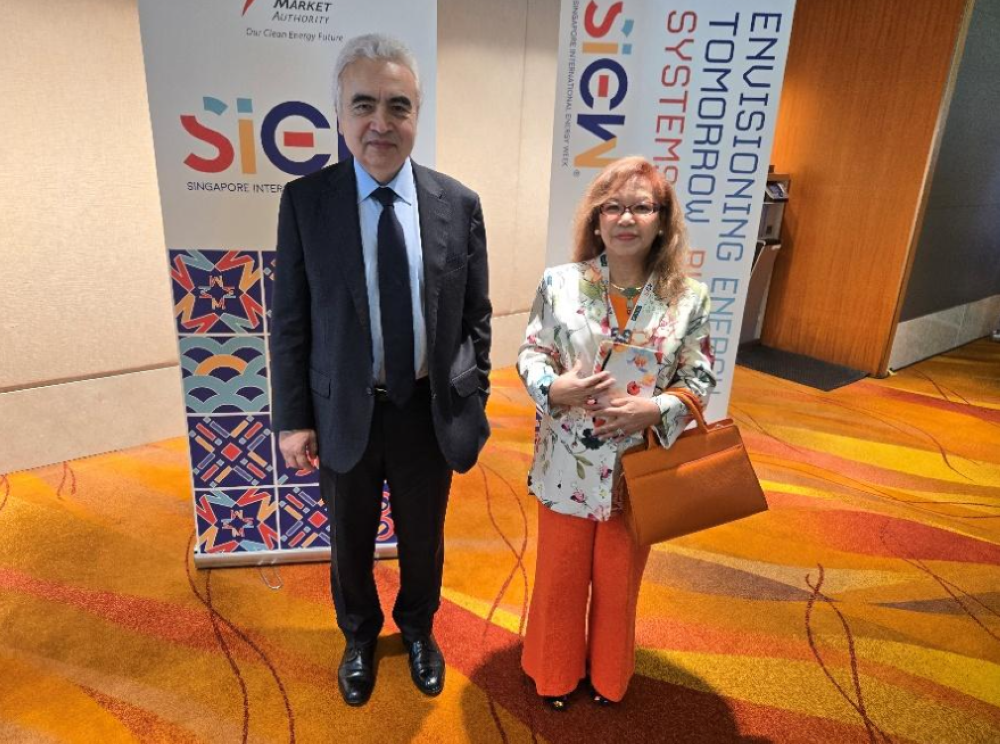
Ms Sheriffah had the honour to meet His Excellency Dr Fatih Birol at Singapore InternationalEnergy Week 2025 (SIEW 2025).
And at the International Conference on the Role of Nuclear Power in Climate Change, Dr Fatih had shared the prescription for Success for nuclear to effective contribute to net zero:
i) Continue Building Large proven reactors
ii) Extend the lifetime of present operating reactors
iii) Embrace in innovation such as Small Modular Reactors
Recommendations for Malaysia
In Malaysia’s quest to rise the wave of the AI revolution and supporting massive investments and new builds of data centres, the Government must be, and I am confident are already cognisant, of the fact that this will result in escalation in energy demand and increase in carbon emission which will impact and affect the nation’s energy transition pathways as well as climate and sustainable goals and target.
Thus, to ensure Malaysia races to net zero in time, I would like to offer the following recommendations to the Government:
1. Malaysia to shift from exploring and discussing about nuclear power to firmly deciding on diversifying the nation’s energy mix, investing first in large proven reactors to close the energy gap
2. NETR although initially developed by Ministry of Economy under previous Minister YB Rafizi Ramli must now be transferred to the Ministry of Energy Transition and Water Transformation (Petra) in view of this new Ministry’s role and mandate on Energy Transition
3. Malaysia to include Nuclear Power in Revised Updated NETR after Government makes a decision to Go Nuclear and further diversifying energy mix
4. After SMRs have proven to be cost effective and can be successfully built without issues, then Malaysia to decide on the choice of SMRS available, Russia’s Floating Nuclear Power Plant (FNPP) by Rosatom, China’s 125MWe Linglong One ACP-100 by China National Nuclear Corporation (CNNC), set to be the world’s first commercial on-shore SMR and expected to be commercialised by first half of 2026 or the western world’s 300MWe BWRX-300 developed by GE Vernova Hitachi especially to power Data centres which require smaller capacities. Larger nuclear power reactors would be suitable to power hyperscalers.
5. However a simultaneous extensive and effective public awareness and stakeholder Engagement programme must be initiated and conducted to assure public the justification and motivations for Malaysia investing in nuclear power and to ally their fears sharing safety mechanisms put in place to ensure safe operations of both large and small nuclear power reactors to diversity Malaysia’s energy mix for the benefit of the rakyat.
* Sheriffah Noor Khamseah Al-Idid Dato Syed Ahmad Idid is the Consultant (Nuclear Power) at Venture Capital and Innovation.
** This is the personal opinion of the writer or publication and does not necessarily represent the views of Malay Mail.