

APRIL 2 — When Prime Minister Anwar Ibrahim announced that Malaysia’s public sector and GLCs would begin work-from-home (WFH) starting April 15 to cushion the impact of a global energy crisis, many Malaysians may have viewed it as just another policy adjustment. It is actually a clear and urgent signal that what is happening thousands of kilometres away is already reshaping our daily lives.
The ongoing geopolitical tensions involving the United States, Israel, and conflicts in the Middle East are often framed as distant issues. For many Malaysians, it feels removed by assuming that something is happening “over there.”
But global systems do not operate in isolation. A disruption in critical chokepoints like the Strait of Hormuz triggers a cascading effect in oil prices surge, rising of energy costs, Government subsidies increase and public spending tightens.
Malaysia is already spending RM4 billion per month to cushion these shocks. That is not abstract economic, it is taxpayer money, national reserves, and future fiscal space.
For years, many have chosen to disengage from geopolitics with a common refrain: “I’m not interested in politics.” But today, that position is increasingly untenable. When fuel prices rise, and policies reshape how we work and live, geopolitics becomes personal. Silence does not make us neutral. It makes us passive participants in a system that often disadvantages smaller, developing nations like Malaysia.
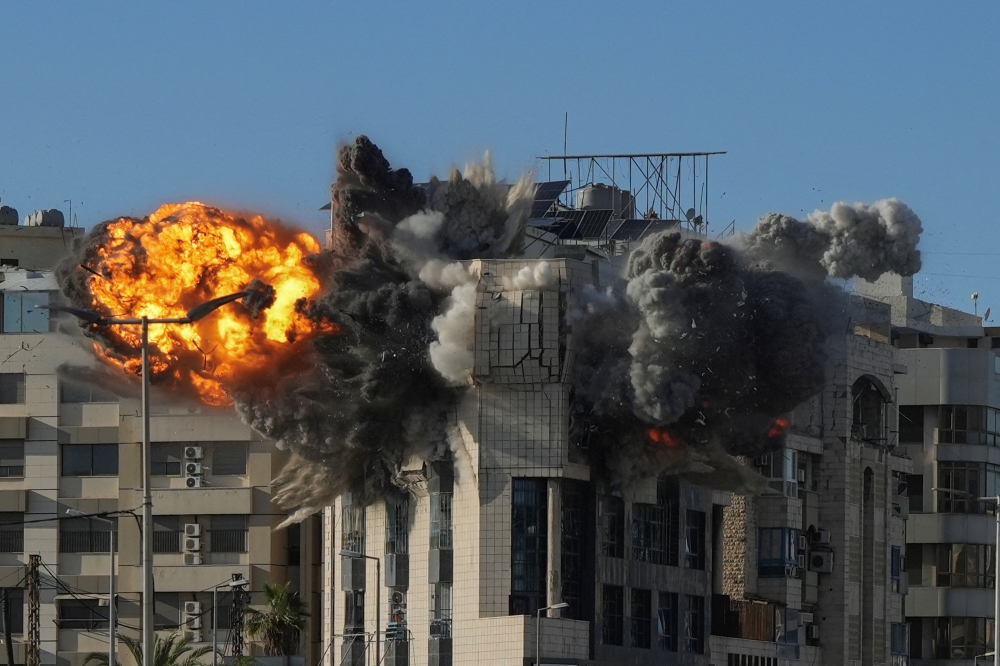
An Israeli strike triggered an explosion in a Beirut building on 31 March 2026. — Reuters pic
There is a growing global perception that powerful nations act with disproportionate influence in shaping outcomes and applying pressure beyond the rules expected of others. Regardless of where one stands, the consequences are clear, and the majority citizen bears the cost.
It is easy to feel insignificant in the face of global conflict. But public sentiment shapes national direction. Voices matter because they influence what leaders prioritise and build collective awareness and resilience
Taking a stance does not require grand gestures. It begins with simple actions just by talking about these issues with family and peers, engaging responsibly on social media, or even staying informed beyond headlines. But beyond individual voices, Malaysians must also organise and amplify collectively through unions, professional bodies, NGOs, student groups, and civil society platforms to send a stronger, more coordinated signal beyond our borders. Peaceful public expression, including rallies and demonstrations, remains one of the most visible ways societies around the world show solidarity and conviction. Compared to many countries, Malaysians have been relatively quiet on the streets. That should change not as a challenge to our own government, but as a message to the global community that our voices matter, our stance is clear, and we are paying attention.
The WFH directive reflects a deeper global shift where energy, geopolitics, and economics are tightly intertwined, and Malaysia is not immune to it. Decisions made by major powers ripple across borders and land directly in our homes, our wallets, and our daily routines.
We often think distance protects us. But in today’s world, distance is an illusion. What happens in the Middle East affects fuel prices in Kuala Lumpur.
What powerful nations decide affects policies in Putrajaya. What we ignore today will shape the realities we face tomorrow.
So, the question is no longer whether we should care; the question is: Can we afford not to?
* This is the personal opinion of the writer or publication and does not necessarily represent the views of Malay Mail.


