MAY 7 — Fashion has a way of arriving before we do.
Before a woman says a word, something about her has already been read. It might be the cut of her blazer, the colour she chooses, the way she carries herself, or even the decision to keep things simple. In a meeting, a classroom, or a formal dinner, these choices begin to speak long before introductions are made.
That quiet moment matters more than we often admit.
It is easy to dismiss fashion as surface, as something secondary to more serious concerns. But that view misses something fundamental. Fashion is not only about clothing. It is a way of communicating. It shapes how we are seen, and sometimes, how we are heard. In a world filled with images, it travels quickly, settling into memory long after words have faded.
This is where fashion moves beyond style. It begins to influence.
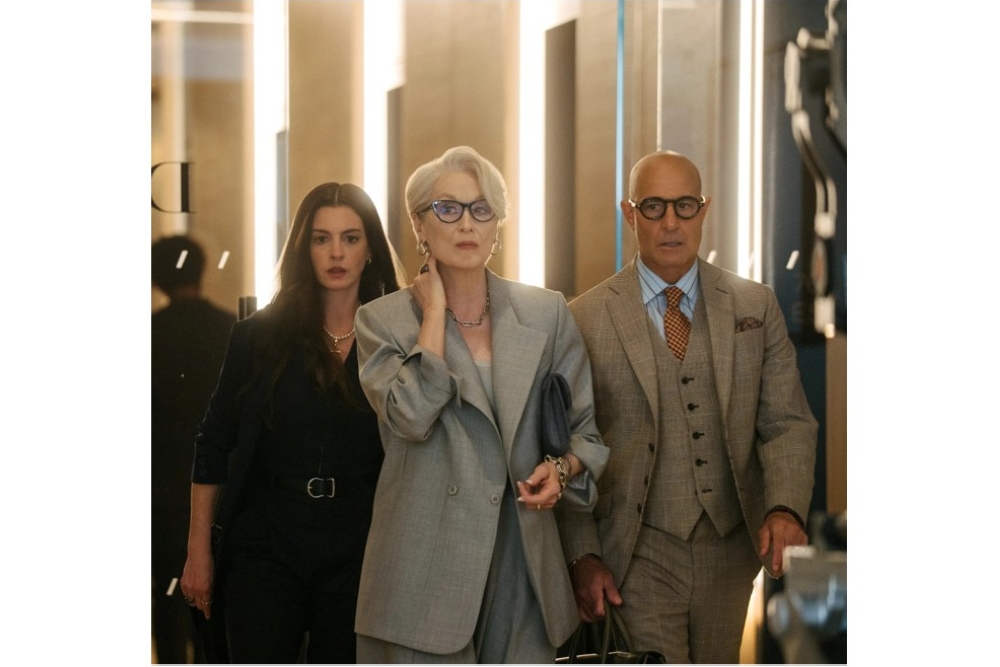
The upcoming The Devil Wears Prada 2 offers an interesting way into this idea. On the surface, it promises a return to familiar characters and a world many still associate with glamour and ambition. But beneath that, it also reflects a larger shift in how influence works today.
The first film left us with a lasting lesson. In the now-famous cerulean scene, Miranda Priestly explains how something that appears simple and personal is often shaped by decisions made far away, in rooms most people will never enter. What seems like an ordinary choice is part of a longer chain of taste, authority, and circulation.
That idea feels even more relevant now.
Influence no longer sits comfortably in one place. It moves. It appears in films, in social media feeds, in celebrity appearances, and in the images we scroll past without thinking too much about them. It rarely introduces itself as power, yet it shapes preferences, aspirations, and expectations all the same.
Miranda Priestly remains a compelling figure because she understands this instinctively. Her authority is not loud. It is controlled, deliberate, and precise. She does not need to insist. The room adjusts itself around her. What she represents is not just leadership within a magazine, but a deeper understanding of how perception works.
Today, however, the world she once dominated looks different. The influence of traditional gatekeepers has been challenged. Designers, editors, and magazines now share space with influencers, digital platforms, and audiences who participate more actively than before. Taste is still shaped, but it is also contested.
In many ways, this reflects a broader shift beyond fashion. Influence today is not only exercised by institutions. It is shaped by individuals, industries, and cultures that know how to tell a compelling story about themselves. A single image can travel across borders within seconds. A carefully chosen outfit can signal identity, solidarity, or even protest.
Fashion plays a role in all of this because it invites rather than instructs. It draws people in. When we admire a certain look, we are not only responding to aesthetics. We are responding to an idea of confidence, refinement, or belonging that comes with it.
This is why fashion often becomes part of how places and cultures are recognised. Paris suggests elegance. Italy suggests craftsmanship. Japan suggests discipline and simplicity. South Korea has built a global following through its ability to blend fashion with popular culture. The Philippines, too, tells its story through textiles, pageantry, and a distinct sense of identity shaped across communities.
These associations do not happen by accident. They are built over time, carried by images, and reinforced through repetition.
Seen this way, The Devil Wears Prada 2 is not only about a workplace or an industry. It is about visibility. It is about who gets to define what is desirable, and who is allowed to represent power.
Even the film’s promotional poster begins this work early. Before the story unfolds, the image sets a tone. It suggests a world of control, ambition, and precision. It tells the audience what to expect, but more importantly, it tells them how to feel about it.
Perhaps the most interesting way to read that image is to see it as a kind of kaleidoscope. Not fixed, but shifting. Not singular, but layered.
Women’s power often appears in that way. It does not always announce itself directly. It moves between roles, expectations, and spaces. It can be quiet or visible, strategic or intuitive, firm or adaptive. It does not need to look the same in every setting to remain real.
That complexity is sometimes overlooked, but it is also what makes it enduring.
In a world that increasingly runs on attention and perception, the ability to shape how something is seen becomes significant. Not everything that influences us does so through formal authority. Some of it comes through images, through culture, and through the subtle ways we learn what to admire.
Fashion sits comfortably in that space.
It reminds us that influence is not always loud. It can be worn. It can be seen. It can pass through a screen and settle quietly into how we think about ourselves and others.
So when The Devil Wears Prada 2 returns, it may offer more than nostalgia. It gives us a chance to notice something we often overlook. That what we choose to wear, and what we choose to admire, is rarely neutral.
Fashion speaks.
The question, especially now, is whether we are paying enough attention to what it is saying.
* The author is a Language Lecturer at the Faculty of Language and Linguistics, Universiti Malaya, currently pursuing her Master’s in European Studies, International Relations and Global Politics. She may be reached at [email protected]
** This is the personal opinion of the writer or publication and does not necessarily represent the views of Malay Mail.