

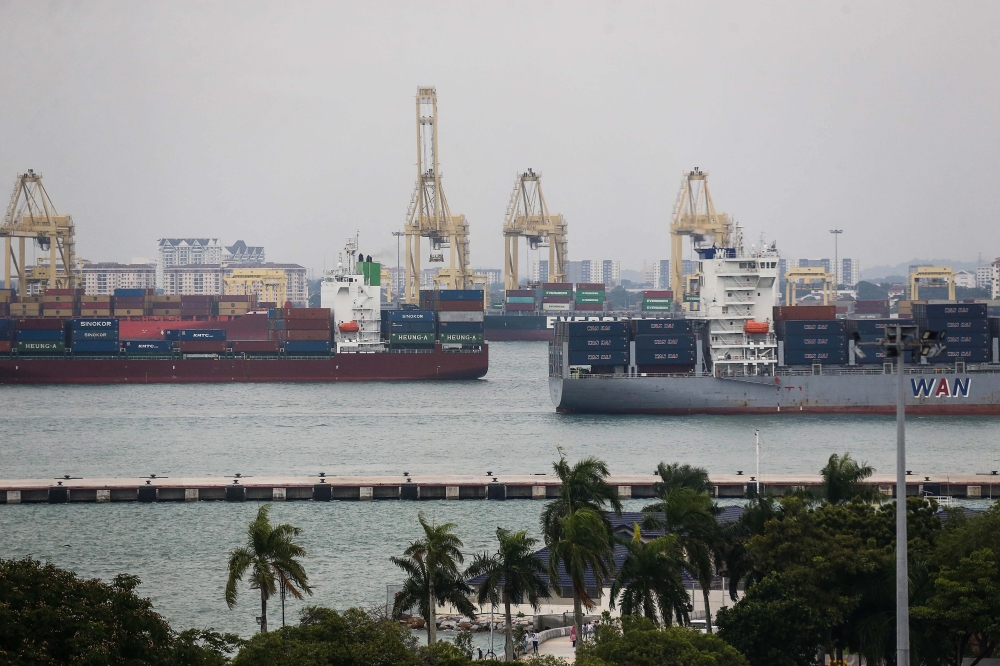
BANGKOK, April 23 — The closure of the Strait of Hormuz has pushed Asian policymakers to confront renewed questions over the security of other major maritime chokepoints, including the Strait of Malacca, the world’s busiest waterway for international trade.
What is the Malacca Strait?
The 900km Strait of Malacca, bordered by Indonesia, Thailand, Malaysia and Singapore, provides the shortest sea route linking East Asia with the Middle East and Europe.
It carries nearly 22 per cent of global maritime trade, according to the Center for Strategic and International Studies, including oil and gas shipments from the Middle East to China, Japan and South Korea.
The waterway is the world’s largest oil transit chokepoint, surpassing Hormuz, according to the US Energy Information Administration.
In the first half of 2025, around 23.2 million barrels of oil per day passed through the Strait of Malacca, accounting for 29 per cent of total maritime oil flows, compared with 20.9 million barrels per day through Hormuz.
Malaysia’s Marine Department said more than 102,500 ships, mostly commercial vessels, transited the strait in 2025, up from about 94,300 in 2024. Some very large vessels avoid the route because of draught restrictions and instead sail south around Indonesia.
That alternative route can bypass the Strait of Malacca if it were closed, but adds voyage time, delays shipments and increases costs.
What are the concerns about the Strait of Malacca?
At its narrowest point in the Phillips Channel of the Singapore Strait, the waterway is only 1.7 miles (2.7km) wide, creating a natural bottleneck and raising risks of collisions, groundings and oil spills.
Parts of the strait are relatively shallow, with depths of 25 to 27 metres, limiting the largest vessels, although very large crude carriers still make the passage.
The route has also long been vulnerable to piracy and attacks on merchant ships. The ReCAAP Information Sharing Centre said such criminal incidents rose to at least 104 last year, although they declined in the first quarter of this year.
The narrow and congested waterway is strategically important to Beijing, with around 75 per cent of China’s seaborne crude oil imports from the Middle East and Africa passing through it, according to tanker tracker Vortexa.
The Iran crisis has sharpened long-standing concerns over how chokepoints such as Malacca could be affected by any conflict in the South China Sea or Taiwan Strait, where another 21 per cent of global maritime trade passes, according to CSIS.
Malaysian authorities have also said the Strait of Malacca is increasingly being used for illegal ship-to-ship transfers, where oil is moved between tankers at sea to conceal its origin.
What are officials saying?
Indonesia’s Finance Minister Purbaya Yudhi Sadewa sparked debate on Wednesday after openly discussing whether countries could impose tolls on ships using the strait, before noting such an arrangement was not possible.
Asked about risks of tolls or restrictions, Singapore Foreign Affairs Minister Vivian Balakrishnan told CNBC that countries bordering the strait shared a strategic interest in keeping it open and had agreed not to impose tolls.
He added that Singapore had assured both the US and China that freedom of passage would be maintained, and that it would not take part in any effort to block the strait or levy tolls.
Malaysian Foreign Minister Mohamad Hasan said on Wednesday no unilateral decisions could be made over the strait, adding Malaysia was aligned with Singapore, Indonesia and Thailand, with joint patrols conducted to keep the waterway open. — Reuters


