APRIL 29 — Viktor Orbán’s recent defeat in Hungary’s 2026 parliamentary election is not merely a domestic setback. It is a geopolitical rebuke.
Even the appearance of the Vice President of the United States JD Vance, who stumped for Orban, could not forestall the party’s failure.
In fact, some analysts affirmed that Vance’s staunch support of Orban led to an even bigger loss to the latter.
Trump’s Make America Great Again (MAGA) platform is not necessarily inspiring. It is not just a majority of Hungarians standing up to it but Italians too especially after the spat between President Donald Trump versus the Pope in the Vatican.
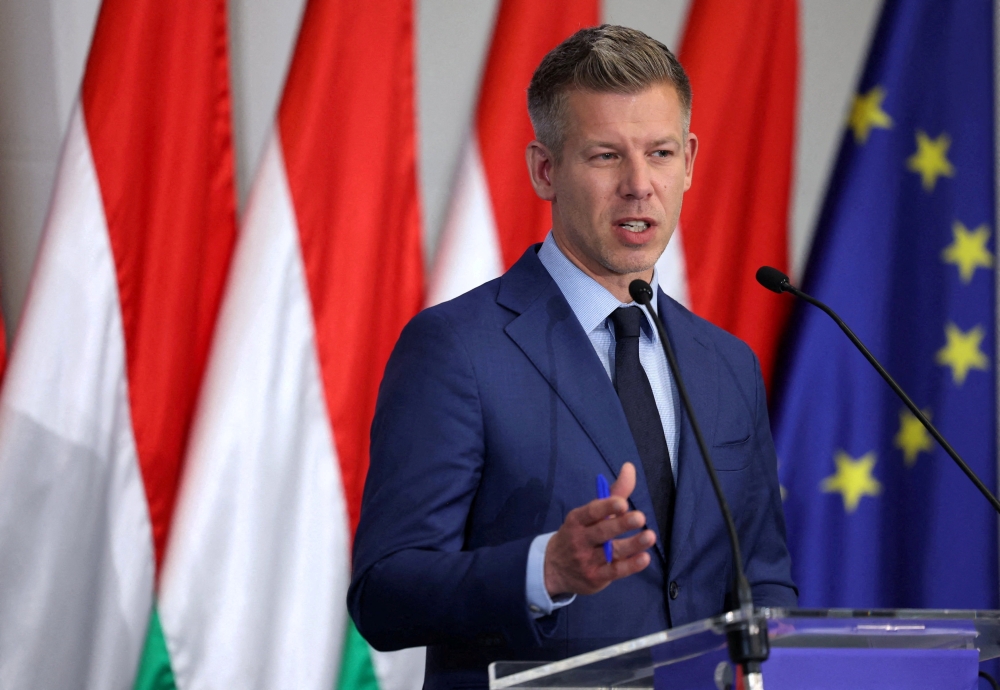
At any rate, after 16 years in power, Orbán and Fidesz were ousted by Péter Magyar’s Tisza party in what has been widely described as a political earthquake. The core meaning of the result is simple.
Hungarian voters were no longer willing to tolerate the fusion of nationalism, corruption, democratic backsliding, and geopolitical ambiguity that had come to define the Orbán era. The election was not about ideology alone.
It was about fatigue—sheer exhaustion with a system that promised strength but delivered stagnation, isolation, and institutional decay.
The “winners and losers” framing is therefore quite clear. Magyar is the immediate winner, having transformed himself from insider to reformist challenger.
The Hungarian electorate is the deeper winner, demonstrating that even entrenched political machines can be dismantled peacefully.
The European Union is also a beneficiary, as Orbán had long acted as an internal disruptor on issues ranging from rule-of-law enforcement to Ukraine and sanctions policy.
The losers extend beyond Orbán and Fidesz. What has suffered a far greater blow is the ideological confidence of ultra-nationalist movements across Europe and beyond. Especially France, Italy and the United Kingdom (UK).
Orbán had become more than a leader. He was a symbol of “illiberal democracy,” admired by segments of the far right in Europe and by parts of the MAGA movement in the United States.
His defeat punctures the myth of invincibility that surrounded such political models.
This is why the outcome represents a serious black eye for ultra-nationalist currents in Russia, the United States, and even parts of the European Union. For Russia, Orbán was among the most strategically valuable voices within Europe—one who diluted unity and complicated collective responses.
For the American ultra-nationalist right, he embodied a template: centralize authority, reshape institutions, dominate narratives, and remain electorally viable.
Hungary has now demonstrated that such a template is far more fragile than previously assumed.
Within the European Union, the implications are equally profound.
Orbán normalized the idea that one could enjoy the benefits of integration while hollowing out democratic norms from within.
His defeat reveals the limits of that strategy. Voters may tolerate nationalist rhetoric for a time, but they ultimately demand delivery—economic stability, institutional credibility, and international respect.
Yet one must not be naïve. Orbán’s defeat does not signal the end of ultra-nationalism.
His networks remain embedded in Hungary’s political economy. The system he constructed will take years to unwind.
Electoral victory is one thing; structural transformation is another.
It is precisely here that the lesson for Asean becomes both urgent and instructive.
Asean must learn that political durability cannot be built on personality, polarization, or performative nationalism alonetlhe Hungarian case shows that when governance is reduced to control—over media, institutions, and narratives—without corresponding improvements in economic welfare and transparency, the backlash can be swift and decisive.
For Southeast Asia, where several states are navigating tensions between strong leadership and democratic accountability, the Hungarian debacle offers three critical lessons.
First, institutional balance matters.
Orbán’s long tenure was marked by the consolidation of power across the judiciary, media, and electoral systems. Asean states must resist the temptation to allow executive dominance to hollow out institutional checks. Stability derived from over-centralization is often illusory.
Second, economic performance must be inclusive and credible. Hungarian voters turned not only against ideology but against perceived corruption and stagnation. In Asean, where growth remains uneven, governments must ensure that development is not captured by narrow elites. Otherwise, nationalist narratives will eventually lose their persuasive power
Third, external alignment cannot come at the expense of internal legitimacy. Orbán’s ambiguous positioning between Brussels and Moscow created strategic confusion.
Asean, long committed to neutrality and centrality, must ensure that its balancing between major powers does not translate into incoherence or loss of trust at home.
In this regard, Asean’s own doctrine of consensus and non-interference should not become a shield for complacency. Rather, it should evolve into a platform for mutual learning.
The Hungarian experience demonstrates that governance failures in one state can reverberate beyond borders—undermining regional cohesion and external credibility. The broader lesson is sobering.
Ultra-nationalism, often untethered from accountability, tends to overreach.
It thrives on narratives of strength but often neglects the fundamentals of governance.
When that happens, the electorate—sooner or later—responds.
Hungary has reminded the world that democratic fatigue cuts both ways.
Citizens can tire not only of liberal elites but also of leaders who confuse perpetual mobilization with perpetual legitimacy.
This is a lesson Asean cannot afford to ignore, especially as the region confronts its own mix of geopolitical pressure, economic uncertainty, and domestic political evolution.
Orbán’s defeat is not the end of nationalism. Nor is it the end of populism.
But it is a moment of reckoning. It shows that even the most entrenched systems can unravel when performance fails to match rhetoric.
For Russia, it is a strategic loss. For the American ultra-nationalist right, it is a symbolic blow. For the European Union, it is an opportunity for renewal.
For Asean, it should be a warning—and a guide.
If Southeast Asia is to remain resilient in an era of polycrisis and post-normality, which are replete by polytunities, opined a futurist, it must anchor its politics not in excess.
Rather, in balance; indeed, in credibility and substance. That is the enduring lesson of Hungary’s electoral shock which member states of Asean are advised to learn.
* Phar Kim Beng, PhD is the Professor of Asean Studies at International Islamic University of Malaysia and Director of Institute of International and Asean Studies (IINTAS).
** This is the personal opinion of the writer or publication and does not necessarily represent the views of Malay Mail.