

MAY 6 — Malaysia’s fuel subsidy regime – particularly for RON95 – has long been treated as a political necessity.
Indeed, most Malaysians could not imagine a life without fuel subsidies. But what was once a tool for social protection introduced at an advantageous time for Malaysia has now become a structural distortion to the Malaysian economy and an increasingly large financial burden to the government.
Over the past 40 years, Malaysia’s fuel subsidy scheme has quietly reshaped how Malaysians move, how cities grow, and how public funds are spent.
If we are serious about solving urban congestion, improving mobility, and safeguarding fiscal sovereignty, the path forward is clear: we must claw back RON95 subsidies – especially in urban areas – and reallocate the funding into a transformative expansion of public transport services across the country
At present, Malaysia’s land transportation spending reflects a deep imbalance. Billions are poured annually into road infrastructure – over RM8 billion for federal and state roads alone.
Meanwhile, nationwide allocations for KTM passenger rail, MyBas stage buses, and other subsidised operators do not even reach 10 per cent of road spending.
This is far from global norms. Across OECD countries, roughly one-third of land transport funding is directed toward public transport, because these societies and their governments, recognise that public transport is the most efficient way to move people.
The imbalance is even more stark in Greater Kuala Lumpur. Annual road maintenance spending easily exceeds RM1 billion – while operating subsidies for Prasarana rail and bus hover around RM600 million – barely enough to sustain current service levels.
In comparable metropolitan regions in Australia, New Zealand, and Canada – where suburban sprawl presents similar challenges – urban bus and rail operations alone receive about two-thirds of land transport subsidies.
That is the bare minimum level of commitment required not just to maintain services, but to make them competitive with private vehicles.
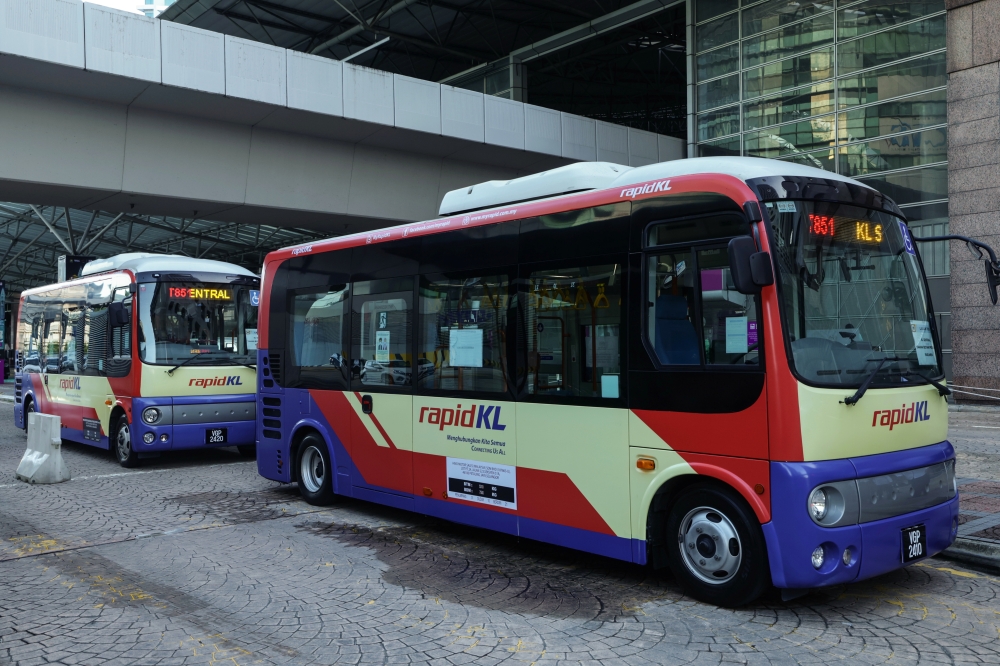
Urban congestion in the capital reflects long-standing transport policy choices, with experts urging a shift from fuel subsidies to mass transit investment. — Bernama pic
Yet Malaysia continues down the road of subsidising fuel which perversely encourages car ownership and usage, even in dense urban areas that cannot physically accommodate more vehicles.
The result is predictable: worsening congestion, declining bus reliability, and cities rebuilt around traffic flow at the expense of more sustainable ways to move.
We have created a vicious cycle, where walking, cycling and taking the bus becomes less attractive precisely because they are chronically underfunded, while Malaysia’s government uses Malaysians’ money to rebuild cities so Malaysians can sit in traffic jams and burn subsidised petrol.
The impact of these choices is not just inconvenience, inefficiency or waste – it is fiscal danger for Malaysia.
Congestion already imposes a significant drag on Greater Kuala Lumpur’s GDP, wasting time, fuel, and productivity.
Persistently high subsidy spending contributes to rising national debt, constraining the government’s ability to respond to economic shocks such as the US-Iran War.
This is an even more significant challenge now that Malaysia has become a net importer of fuel, exposing the country more heavily to international fuel price and supply shocks.
It has been recently reported that the Malaysian government is now spending RM4 billion or more monthly on fuel subsidies as a result of the closure of the Strait of Hormuz.
In contrast, many developed energy-importing economies – particularly in Europe – are more well-buffered against such external shocks, as fuel consumption, car ownership and road use are taxed to cross-subsidise public transport.
As a result, they have already built the frequent, affordable urban transit systems and active transport infrastructure that reduce reliance on private vehicles, strengthen economic resilience and provide protection against sudden economic shocks.
Indeed, there is no more powerful cost-saving and resiliency tool available to any government than investing in public transport.
Globally, cities that succeed in managing congestion typically invest around 1-2 per cent of metropolitan GDP into public transport systems – covering both operations and infrastructure – and seeing significant results.
Malaysia is nowhere near that threshold and unsurprisingly, congestion is getting worse while the cost of driving skyrockets
Part of the problem lies in how we conceptualise transport funding. Federal grants to municipalities treat infrastructure that facilitates traffic flow as mandatory, while public transport is framed as an optional “social service.”
This is a fundamental misclassification. Roads and highways primarily serve private vehicles whereas complete streets and multimodal corridors prioritise public movement. In space-constrained urban environments, the latter is vastly more efficient.
The institutional structure of government further compounds the issue. The Public Works Ministry has been candid about its mandate: to facilitate the movement of cars.
As its minister recently noted in an Instagram post earlier this year, the ministry will continue building roads until the Ministry of Transport presents viable alternatives informed by its pending public transport study.
But this division of responsibility is itself the problem. Countries with world-class public transport systems do not separate road infrastructure from broader transport planning in this way.
Integrated governance ensures that every investment – whether in roads, rail, or buses – serves a unified mobility strategy.
In Malaysia, road design often creates barriers to public transport uptake. Car-centric infrastructure makes it harder for pedestrians to access stations, for buses to operate efficiently, and for cyclists to travel safely.
These “first- and last-mile” challenges fall squarely within the domain of road planning, yet they are rarely treated as such.
Meanwhile, tens of billions had already been spent on urban rail megaprojects without corresponding investments in bus networks, sidewalks, and dedicated lanes that would attract more riders to public transport.
If we are to break this cycle, reform must go beyond funding – it must address governance. Authority over urban transport planning should be consolidated within independent metropolitan-level statutory bodies, empowered to coordinate infrastructure, operations, and spatial development in the public interest.
Such institutions would prioritise the movement of people over vehicles, ensuring that buses, pedestrians, and cyclists are no longer afterthoughts.
This vision aligns with the Madani government’s commitment to justice and balance. Urban mobility justice means allocating space and resources according to need and efficiency, not inertia.
The Islamic protocol of initiating greetings (i.e. the rider greeting the walker, the individual greeting the group) suggests that the person with the most mechanical advantage to dominate the road space (the car driver) has the greatest responsibility to yield to other more space-efficient modes (the pedestrians, cyclists and bus drivers).
Our increasingly strained surface transport infrastructure should be designed to move people and not cars.
Clawing back RON95 subsidies – particularly in urban areas – is therefore not simply a fiscal adjustment. It is a moral and strategic imperative.
The savings must be ring-fenced and channeled into a comprehensive upgrade of public transport across Malaysia: expanding bus fleets, increasing service frequency, building dedicated bus lanes and linkages, and creating continuous, accessible pedestrian networks and active transport infrastructure.
When this happens, public transport will become a viable mobility choice for more Malaysians.
Malaysia’s cities will move more people, more efficiently, with less congestion and lower emissions.
Productivity will increase and we will reclaim control over our fiscal future and energy sovereignty together.
The choice is stark: continue subsidising congestion and go down the fiscally irresponsible road to socio-economic disaster, or invest in public transport that places sustainability at the core of national development.
* M Zulkarnain Hamzah is Chair, Association for the Improvement of Mass Transit Malaysia (Transit Malaysia).
** This is the personal opinion of the writer or publication and does not necessarily represent the views of Malay Mail.


