APRIL 10 — Global uncertainty is often discussed in abstract terms, but recent events have made it tangible. The escalation of conflict in the Middle East, particularly around the Strait of Hormuz, has shown how quickly external shocks can reshape economic realities. Within a matter of weeks, global oil prices moved from relative stability at around US$65 to 70 per barrel to levels exceeding US$110, at one point nearing US$120. Such a sharp increase is not simply a market fluctuation. It is a reminder of how fragile stability can be when critical global supply routes are disrupted.
For countries like Malaysia, these developments are not distant geopolitical events. They translate directly into domestic economic pressure. Energy prices feed into transportation costs, food prices, and most significantly, government spending through subsidies. Under the current fiscal framework, total expenditure exceeds RM420 billion, with a targeted deficit of around 3.5 per cent of GDP. Even in stable conditions, this requires careful balancing between supporting households and maintaining fiscal discipline.
The recent surge in oil prices has made that balance significantly more difficult. Malaysia’s fuel subsidy bill has risen sharply to around RM3.2 billion per month, more than four times earlier levels. If sustained, this could exceed RM35 billion annually. What was previously manageable now becomes a major fiscal pressure point. This is how macroeconomic uncertainty manifests itself. It does not unfold gradually. It arrives quickly and forces immediate consequences.
At this stage, the range of policy choices narrows. Maintaining subsidies helps cushion households, but it increases fiscal pressure and borrowing needs. Reducing subsidies helps contain the deficit, but it raises the cost of living. There is no option that avoids trade-offs. The question is not whether adjustment is needed, but how quickly it is undertaken.
It is also important to recognise that placing expectations solely on the government does not resolve this tension. Governments, like households, operate within constraints. If subsidies are to be sustained despite rising global costs, the funding must come from somewhere. That source is ultimately either higher revenue or higher borrowing.
This leads to a question that is often avoided. Are we prepared to accept higher taxes in order to maintain the same level of subsidies? If not, the alternative is borrowing. And borrowing is not without consequence. It must eventually be repaid, either through future taxation or reduced public spending. In that sense, the issue is not whether the cost exists, but when it is recognised and who bears it.
If current conditions persist, the implications are not abstract. Higher borrowing today means higher interest payments tomorrow, leaving less room for healthcare, education, and development. It means future taxpayers carrying obligations created in the present. These are not distant risks. They are the predictable outcome of delaying adjustment in the face of rising costs.
Speed therefore matters. When adjustment is delayed, fiscal pressures accumulate. Deficits widen, debt levels rise, and the eventual correction becomes more abrupt. What could have been managed gradually becomes compressed into a shorter and more difficult adjustment. The recent oil shock illustrates this clearly. Within weeks, fiscal assumptions were overtaken by events. In such an environment, waiting is not neutral. It shapes the outcome.
While much of the discussion focuses on policy, the effects of macroeconomic uncertainty do not remain at the national level. They flow directly into households. Higher energy prices translate into higher transport costs, higher food prices, and increased daily expenses. These are not abstract outcomes. They are reflected in everyday financial decisions.
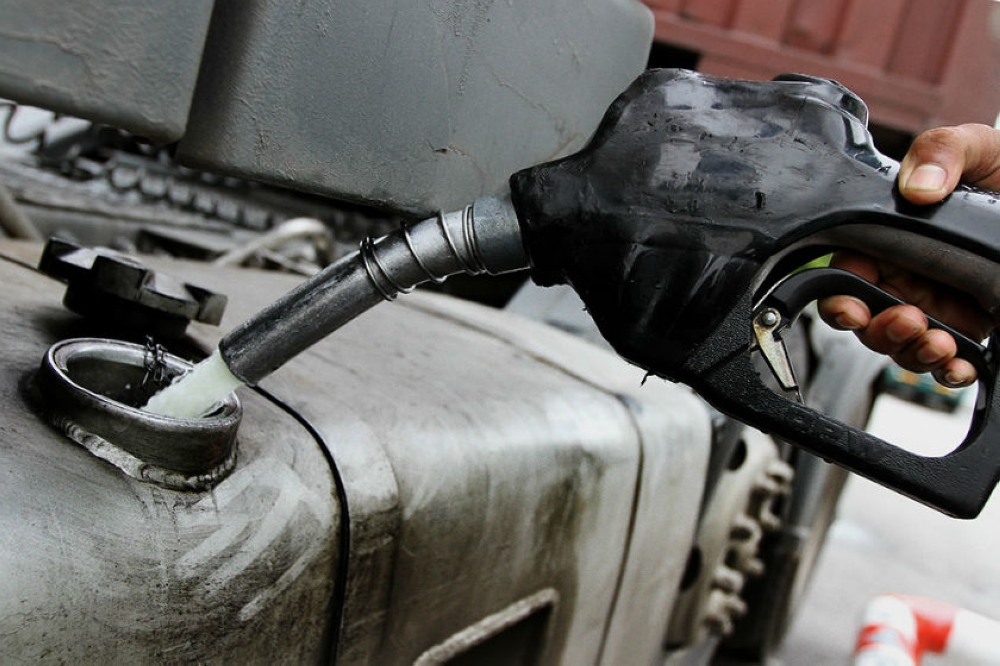
Fuel prices rising globally are adding pressure to subsidies and household costs in Malaysia, highlighting the need for timely economic adjustment. — Picture by Raymond Manuel
This is where adjustment at the household level becomes unavoidable. Families may need to reassess spending, reduce discretionary expenses, delay major commitments, or seek additional sources of income. These are not easy choices, but they reflect the same constraint faced at the national level. Resources are finite.
A simple analogy helps illustrate this. A household that consistently spends more than it earns can continue for a time by relying on debt. But over time, that position becomes harder to sustain. Adjustment becomes inevitable, and the longer it is delayed, the more difficult it becomes. The same principle applies at the national level.
In a world shaped by global uncertainty, it is increasingly unrealistic to expect stable prices, low inflation, and generous subsidies to coexist indefinitely. Many of the forces driving costs are external and beyond the control of any single country. What remains within control is the response.
Money does not fall from the sky. Higher costs must be matched by higher revenue, reduced spending, or borrowing, each with its own consequences. Avoiding these choices does not remove them. It only postpones them.
The central issue, then, is not whether adjustment will occur, but whether it is undertaken early and deliberately, or later and under greater strain. For governments, this determines fiscal sustainability. For households, it determines financial resilience.
In uncertain times, adjustment is not a sign of failure. It is a recognition of reality. The sooner that reality is acknowledged, the more manageable the path forward becomes.
* The author is a senior lecturer at the Department of Economics, Faculty of Business and Economics, Universiti Malaya and may be reached at [email protected]
** This is the personal opinion of the writer or publication and does not necessarily represent the views of Malay Mail.