

MAY 6 — In Checks and balances in Negeri Sembilan State Constitution safeguard against abuse of power I wrote of the “constitutionalisation” of the adat perpatih on the customary ruling structure in the State.
Chapter 6 is on the Dewan Keadilan dan Undang (DKU) or The Council of the Yang di-Pertuan Besar and the Ruling Chiefs. The whole chapter can be explained in the following paragraphs.
The DKU serves “to advise on questions relating to Malay Custom in any part of the State including questions relating to the election or succession to or removal from or vacation of office of any of the Ruling Chiefs referred to in Article 14 or on other matters which may be referred to it by His Highness or any of the Ruling Chiefs and to exercise such functions as may be conferred upon it by this Constitution or any other written law”.
The Menteri Besar (MB) may refer to the DKU for its advice on the custom, and when the DKU gives its advice, the advice “shall be final and shall not be challenged or called in question in any court on any ground”.
The DKU is comprised of the Yang di-Pertuan Besar, the Ruling Chiefs – that is, the Undang of the Luak of Sungai Ujong, the Undang of the Luak of Jelebu, the Undang of the Luak of Johol, the Undang of the Luak of Rembau and the Tengku Besar of Tampin, the Tengku Besar of Sri Menanti, Dato Shahbandar of Sungai Ujong and “such other Malay member or members as may from time to time be appointed for such period as may be prescribed by His Highness and the Undangs” provided that where the DKU on State or National policy the MB must be invited to attend.
The DKU must meet at least three times a year. The Yang di-Pertuan Besar presides at all meetings of the DKU and, in His absence, the members must choose one from among themselves to preside. The quorum of the meeting is not “less than one-half of the members present” besides the presiding member.
Subject to the provisions of the State Constitution, the DKU may determine its own procedure and appoint its own Committee to carry out its functions.
The minutes of the meetings must be kept of all the proceedings of the DKU. At every meeting of the DKU, the minutes of the previous meeting must be confirmed with or without amendment as the case may require, before the meeting proceeds to other business.
The official language of the DKU is Malay. The DKU may invite any person to attend any of its meetings if it considers that the presence of such a person is desirable. The Yang di-Pertuan Besar may from time appoint a Secretary to the DKU Dewan. The latter holds office during the pleasure of the former.
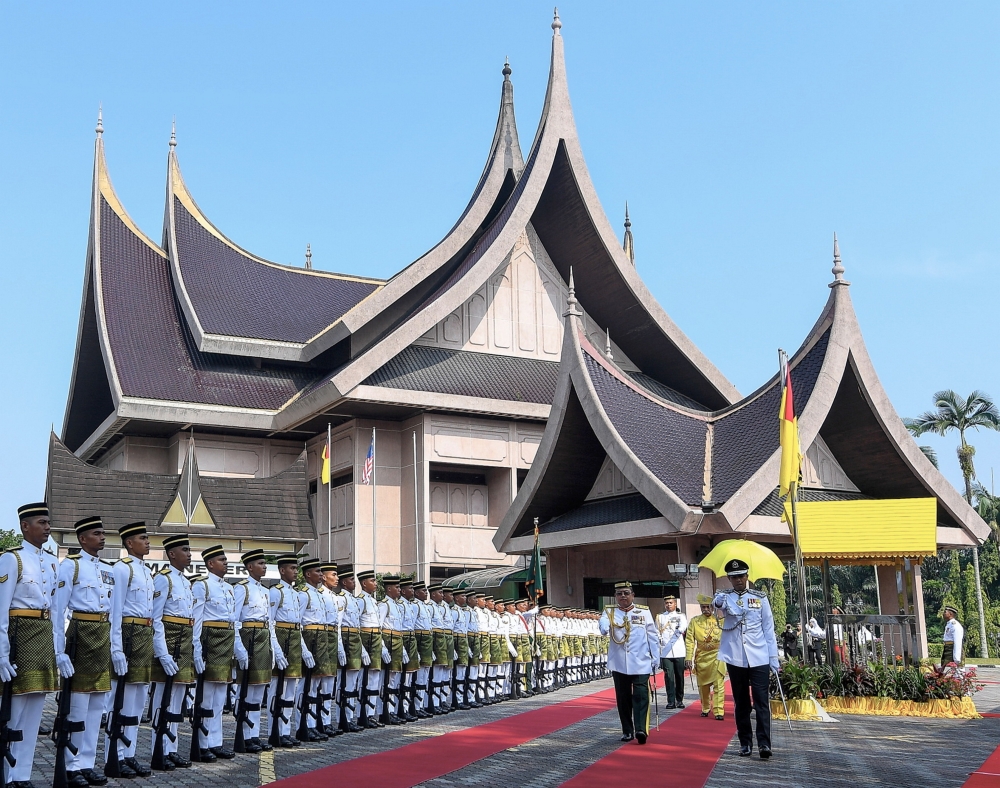
Unlike other states in Malaysia, Negeri Sembilan practises the adat perpatih, which has the customary ruling structure in the State. — Bernama pic
From the above, one may say that proceedings of the DKU must be minuted or recorded and that members of the DKU are entitled to the minutes of the proceedings. The minutes can be said to be like Hansard – that is, the official report of all Parliamentary debates.
But that is not all – the DKU is also like Parliament that is mandated to determine its own procedure. And significantly as well, if a proceeding of the DKU is on questions relating to Malay Custom in any part of the State including advice on any question relation to the election or succession to or removal from or vacation of office of any of the Ruling Chiefs, the advice “shall be final and shall not be challenged or called in question in any court on any ground”.
Adat is unwritten law, but law nonetheless if it has the force of law. When adat becomes written law, more so when written into the highest law of the land, it takes precedence over adat the unwritten law.
* This is the personal opinion of the writer or publication and does not necessarily represent the views of Malay Mail.
