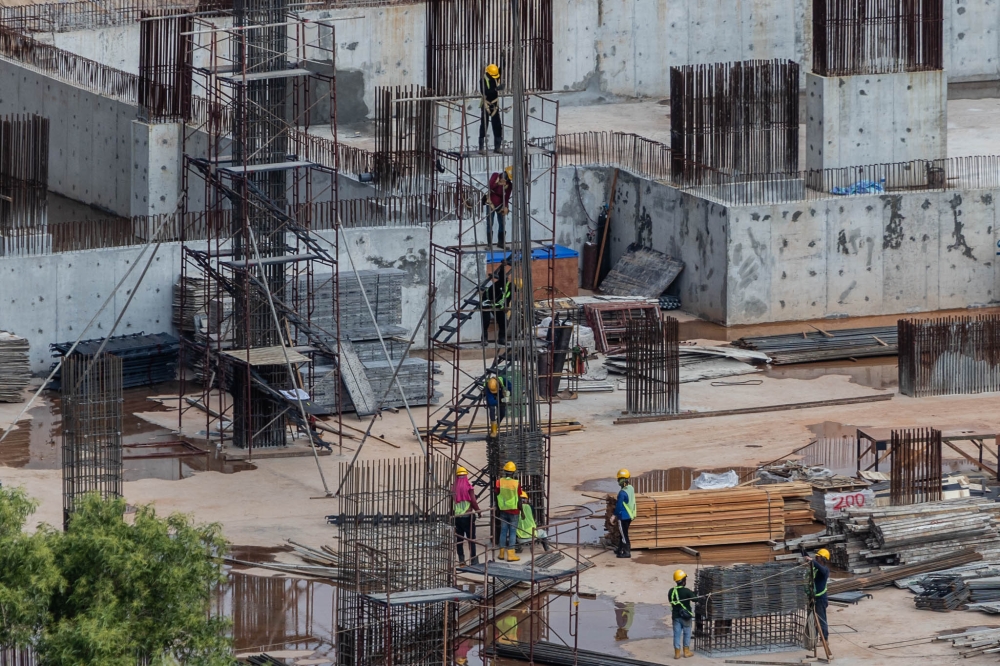
KUALA LUMPUR, April 28 — Economy Minister Akmal Nasrullah Mohd Nasir today said the construction sector is coming under mounting pressure from rising fuel and building material costs.
He said data from the Malaysian Construction Industry Development Board (CIDB) to the National Economic Action Council (MTEN) showed an average increase of about 12 per cent across seven key materials, namely bitumen, concrete, sand, aggregate stone, steel, and bricks.
“Since late March 2026, the industry has reported cost pressures arising from increases in the prices of diesel, bitumen, premix, logistics and other construction inputs.
“Feedback from the industry presented to MTEN indicates a risk to construction projects should these cost pressures persist.
“Based on data from CIDB collected when oil prices were at their highest level last month, the average increase in the prices of seven key materials was recorded at around 12.59 per cent,” he said in an online briefing on the global supply crisis.
Cement remained stable, he said.
Akmal said with materials accounting for the bulk of construction expenditure at 64.2 per cent, followed by labour at 32.8 per cent and machinery at 3 per cent, even modest increases in input prices are having a direct impact on contractors’ cash flow and overall project costs.
He said the government is taking the situation seriously, stressing that public development projects go beyond budget figures and directly affect essential infrastructure such as roads, schools, clinics and community facilities.
He also said MTEN has agreed that any interventions must be implemented in phases while maintaining fiscal discipline.
The government, he added, remains committed to ensuring projects are completed as planned, noting that delays or disruptions could ultimately increase costs further due to supply chain pressures and potential extensions of project timelines.
“Discussions between the government and industry stakeholders are ongoing to address the cost implications, including potential adjustments to project delivery mechanisms.
“Financial institutions have also indicated readiness to assist affected contractors through loan restructuring arrangements,” Akmal added.
He also said the Government Guarantee Schemes for Business Loans allow companies to restructure their repayments to help ease cash flow problems, especially for small and medium-sized contractors struggling with tighter profits.
He said the government is also laying the groundwork to strengthen the resilience of public development projects against future cost shocks, including more realistic project planning, targeted risk-sharing mechanisms, increased use of alternative materials, digital monitoring of project progress and enhanced support for smaller contractors.
He said the objective is to ensure that nationally important infrastructure projects are not left delayed or abandoned due to external cost volatility.
Akmal said that the labour market remains broadly stable, although the delayed effects from the global energy situation may become more visible in the second quarter of 2026.
“Employment Insurance System data under Socso shows a slight decline in job losses, with 5,734 workers reported to have lost employment in the first three weeks of April, compared with 5,855 in March and 7,512 in February.
“Five sectors have been identified as the most affected between January and March 2026, namely manufacturing, other services, information and communications, accommodation and food services, as well as transportation and storage,” he said.
He said the government will continue to strengthen the job market through social protection, skills training, job placement programmes, support for gig workers, and efforts to develop young talent and help small and medium businesses grow.