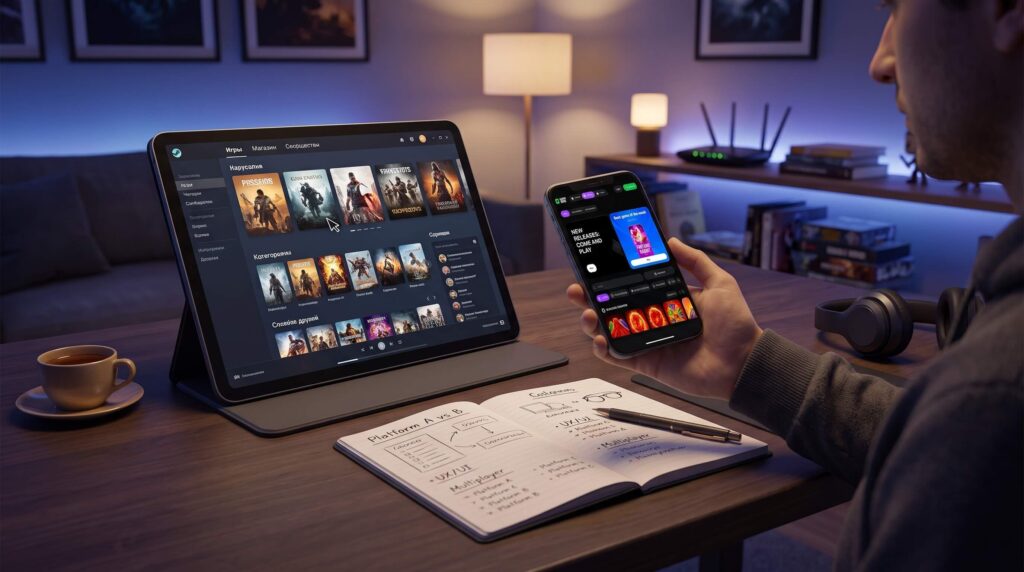
Malaysia’s digital landscape has transformed rapidly over the past decade, driven by widespread 5G connectivity, high smartphone penetration, and an increasingly tech-savvy population. As mobile-first habits reshape leisure time, online gaming and sports betting have become prominent segments of the broader digital entertainment economy. When exploring this expanding market, selecting an operator with verified licensing, transparent terms, and regional payment support is essential. Platforms such as Lucky Star Casino exemplify this localized approach, providing Malaysian users with direct Malaysian Ringgit (MYR) account support alongside a library of more than 11,500 games and comprehensive sports coverage. However, navigating modern gaming platforms safely requires a clear understanding of financial ecosystems, mathematical game structures, mobile software distribution, and disciplined personal boundaries.
Localized Financial Infrastructure in Malaysia
Historically, accessing international online gaming platforms presented logistical hurdles for Malaysian users, including unfavorable currency conversion fees and slow cross-border bank transfers. Today, the industry standard is deep financial localization that mirrors everyday digital commerce in Malaysia.
Baca juga: Pemilik City boleh dipaksa jual kelab
Modern platforms allow players to register and manage balances directly in Malaysian Ringgit (MYR), eliminating exchange rate friction. Deposits are processed instantaneously through familiar domestic fintech channels, ensuring smooth and secure transactions:
- FPX Malaysian Banks: Direct online banking transfers supporting deposits between MYR 20 and MYR 5,000.
- Leading Local E-Wallets: Instant integration with Touch ‘n Go (MYR 30–1,000), DuitNow (MYR 30–1,000), GrabPay (MYR 30–3,000), and Boost (MYR 40–1,000).
- Cryptocurrency Gateways: Support for digital assets including Bitcoin (BTC), Ethereum (ETH), Litecoin (LTC), Toncoin (TON), TRON (TRX), and Tether (USDT) for users seeking blockchain-based transfers.
For withdrawals, local Malaysian bank transfers and cryptocurrency channels handle payouts up to MYR 5,000 within 72 hours. Before processing any withdrawal, licensed operators enforce strict Know Your Customer (KYC) and Anti-Money Laundering (AML) protocols. Submitting standard identity and address verification documents ensures that funds are released exclusively to the verified account holder.
Comparing Mechanics: Sports Betting vs. Casino Games
A foundational step for any digital entertainment consumer is recognizing the structural and mathematical differences between sports betting and casino gaming. Although both formats coexist on unified platforms, they operate under entirely different rules.
In sports and esports betting, player knowledge plays an active role. Analyzing team form, player statistics, and match conditions across football leagues, badminton, or esports titles like CS2 and Dota 2 can help bettors evaluate odds more accurately. While bookmakers build a margin into their odds, informed research allows enthusiasts to approach sports markets analytically.
Conversely, casino games operate on fixed mathematical probabilities. Whether playing online slots, virtual roulette, or fast-paced crash games like Aviator and Lucky Jet, outcomes are generated by certified Random Number Generators (RNG) or cryptographic Provably Fair algorithms. Every round is statistically independent of previous results. Each game features a defined Return to Player (RTP) percentage and a corresponding house edge—the mathematical margin retained by the operator over high volumes of play. No betting progression or intuition can alter the underlying odds of an RNG-certified game.
Mobile Access: Native APKs and Progressive Web Apps
Because mainstream app marketplaces such as the Google Play Store and Apple App Store restrict real-money gaming software in many jurisdictions, operators rely on alternative distribution methods to deliver mobile-optimized experiences.
Android users typically install lightweight native APK files downloaded directly from the operator’s verified website. For instance, a native Android package can be just over 5 MB to download and roughly 11 MB once installed, caching graphical assets locally on the smartphone. Local caching accelerates loading speeds, conserves mobile data, and stabilizes high-definition video streams during live dealer sessions. For iOS devices, where manual APK installations are restricted, platforms deploy Progressive Web Apps (PWAs). By adding the web application to the iPhone home screen via Safari, users gain full-screen navigation and stable session persistence without needing an App Store download.
Psychological Awareness and Responsible Boundaries
The convenience of instant mobile payments and rapid game cycles makes psychological self-regulation essential. Players should remain mindful of common cognitive biases that affect decision-making during gaming sessions:
- The Gambler’s Fallacy: Assuming that a win is overdue after a series of losses ignores the statistical independence of certified random outcomes.
- The Sunk Cost Trap: Increasing bet sizes to recover previous losses exposes a player’s budget to additional negative expected value rather than guaranteeing recovery.
- Confirmation Bias: Remembering occasional large wins while overlooking cumulative small losses distorts a player’s perception of overall performance.
To support healthy habits, reputable platforms holding recognized regulatory credentials—such as a Curaçao license (No. OGL/2024/587/0621)—provide built-in responsible gaming tools. Users can configure daily, weekly, or monthly deposit limits, complete self-assessment tests, or activate temporary and permanent self-exclusion protocols. Treating online gaming strictly as a budgeted leisure expense rather than an income strategy ensures a balanced and sustainable digital entertainment experience.